
 Services
 Solutions
 Main platform
 Technology
 White Label
  Offshore
 Hire developers



Shopify has become the default choice for ecommerce in Australia, and it’s easy to see why. You can get a store up and running quickly, without having to think about hosting, security, or the technical side of things. On top of that, the app ecosystem is huge, so most features you need are already one click away.
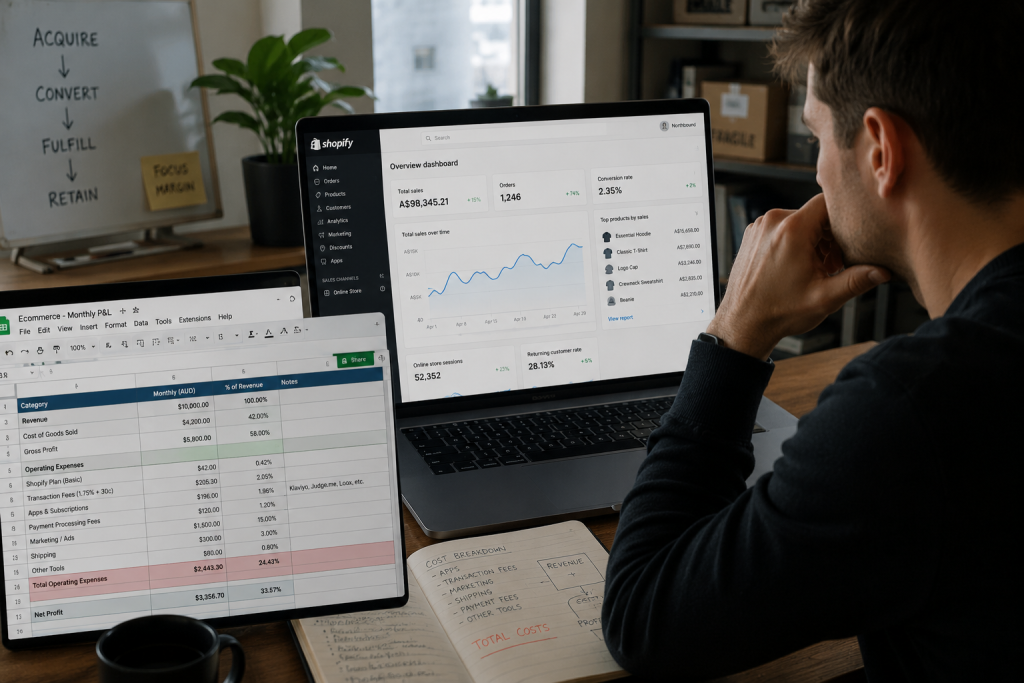
Once a store starts doing around A$10,000-A$20,000 in monthly revenue, the real costs begin to show up. It’s rarely just the subscription fee. Apps start stacking, transaction fees kick in, and if you’re not using Shopify Payments, there are extra charges on top. Add premium themes and third-party tools into the mix, and the monthly bill can quietly end up being 3-4 times higher than what most people expected when they signed up.
In this guide, we’ll look at seven Shopify alternatives for Australian businesses in 2026. The focus isn’t just features, but what actually matters in practice: real costs in AUD, the trade-offs you only notice once you’re live, and a three-year total cost comparison. All figures are referenced so you can trace them back.
Why Australian businesses leave Shopify?
If you spend enough time reading through r/ecommerce or r/shopify, a pattern starts to show up pretty clearly. It is rarely about Shopify being broken. It is more about what happens when a store grows and the real cost structure starts to feel different from what people expected at the beginning.
1. Fees stack up faster than expected
Shopify Basic sits at around A$42 per month on annual billing, which feels fairly reasonable when you are just getting started.
But the real picture only shows up once you start running the store properly:
- Transaction fees: 1.75%+30c per online sale when using Shopify Payments. If you use a third party gateway like PayPal or Stripe directly, Shopify adds an extra fee on top, 2% on Basic, 1% on Grow, and 0.6% on Advanced
- App costs: most stores end up running 5 to 10 paid apps for things like email marketing, reviews, upsells, SEO tools, and loyalty programs. In practice, this usually lands somewhere between A$100 and A$300 per month
- Premium themes: typically A$150 to A$400 as a one time purchase if you go beyond free options
When you add it all up, a store doing around A$10,000 per month in revenue can easily end up paying close to A$500 per month in real operating costs, even before you factor in anything extra.
People who have actually run stores often describe the same feeling. One r/ecommerce store owner put it simply as “it adds up faster than expected”. Another operator running a mid seven figure business on an OsCommerce based setup claimed they were saving over A$50,000 per year mainly by avoiding app subscriptions and platform surcharges.
2. Checkout control is limited unless you upgrade
This is one of those limitations that does not feel important at the start, but becomes a real constraint once you scale.
If you need to add custom fields at checkout for compliance, invoicing, or specific delivery instructions, you quickly run into a hard limitation. On standard Shopify plans, checkout customization is tightly restricted.
To go beyond that, you need Shopify Plus, which starts at around A$3,700 per month. For most small and mid sized Australian businesses, that is simply not a realistic upgrade path, so they end up adapting their processes around the platform instead of the other way around.
3. You are building on rented infrastructure
Shopify is powerful, but it is still rented infrastructure. You are operating on their hosting, their checkout system, their data structure, and their rules.
If you stop paying, the store goes offline. If Shopify changes pricing, policies, or API behavior, you have to adapt or move.
There are also ongoing discussions in r/ecommerce where merchants talk about sudden account suspensions or strict enforcement decisions that directly impacted live stores, sometimes with limited room to appeal.
It is not about Shopify being unstable. It is more about where control sits. In this model, most of it stays with the platform, not the merchant.
Shopify alternatives Australia 2026 comparison
| Platform | Starting price (AUD) | Transaction fee | Best for |
| WooCommerce | Free + A$15–50/month hosting | Payment processor only | Control, flexibility, high revenue stores |
| BigCommerce | ~A$60/month (US$39) | 0% | Scaling stores, B2B |
| Square Online | Free | 2.2% per transaction | Brick and mortar going online |
| Ecwid | Free (up to 10 products) | 0% | Adding ecommerce to an existing site |
| Magento (Adobe Commerce) | Free (open source) | Payment processor only | Enterprise, complex catalogues |
| Maropost (Neto) | ~A$120/month | Varies | Australian retail and wholesale |
| Custom built (Next.js) | $9,997+ one off | Payment processor only | Stores outgrowing SaaS platforms |
1. WooCommerce
WooCommerce is a free, open source plugin for WordPress and still one of the most widely used Shopify alternatives in Australia. Roughly speaking, it powers a meaningful share of local online stores, especially businesses that want full control over their setup.
Pricing is simple on paper, but depends heavily on how you run it:
- Plugin: free
- Hosting: A$15–50/month for shared or managed WordPress hosting, or around A$42+/month for managed providers like WP Engine
- Domain: A$15–40/year for .com.au
- Extensions: anywhere from $0 to $300+/year depending on features
- Payments: Stripe at 1.75% + 30c per transaction, with no platform surcharge
The appeal is obvious. No platform subscription, no extra transaction fees, and full ownership of your code, hosting, and database. On top of that, you have access to a massive ecosystem of plugins and strong SEO control through tools like Yoast or Rank Math. Practically every Australian payment option is supported, including Stripe, PayPal, Afterpay, Zip, and Square.
But it is not plug and play. You either need technical skills or a developer you trust. Security, updates, and plugin conflicts are all your responsibility, and they are not optional. Performance can also vary wildly depending on hosting and how “heavy” your setup becomes. There is a reason only a portion of WordPress stores consistently pass Core Web Vitals on mobile.
In practice, WooCommerce makes the most sense for stores doing around A$250,000+ per year that already have technical support in place. At that level, avoiding platform fees and transaction surcharges starts to become meaningful.
One common sentiment from operators on r/ecommerce is that WooCommerce is stable and cost efficient, but only if you treat it like infrastructure, not a side project. Otherwise, maintenance can quietly eat into any savings.
2. BigCommerce
BigCommerce sits in that middle ground between Shopify’s simplicity and WooCommerce’s flexibility. It is a hosted SaaS platform, but with one key difference that matters quickly: zero transaction fees on all plans.
Pricing is in USD and tiered by revenue:
- Standard: US$29/month (up to US$50K annual sales)
- Plus: US$79/month (up to US$180K)
- Pro: US$299/month (up to US$400K)
- Enterprise: custom pricing
The main advantage is straightforward. You pay only your payment processor fees, nothing extra on top. For growing stores, that alone can change the cost structure quite a bit.
It also handles multi currency, multi storefront setups, and B2B features natively, which often require paid apps or Shopify Plus on Shopify. SEO tools are also stronger out of the box compared to Shopify, especially around URL control and site structure.
The trade offs are more subtle. The app ecosystem is much smaller than Shopify, and in Australia the ecosystem is thinner overall, which can mean fewer agencies and developers familiar with it. Pricing is also USD based, which adds a bit of friction when forecasting costs locally.
BigCommerce tends to work best for Australian stores doing roughly A$100,000 to A$1,000,000 per year that want a hosted platform without transaction fees eating into margin, especially in B2B or wholesale scenarios.
Read more: BigCommerce Australia Review: Is It Right for Your Business in 2026?
3. Square Online
Square Online is basically the ecommerce extension of Square’s payment ecosystem. If you already use Square in store, this is often the most natural online extension.
Pricing in Australia:
- Free plan: A$0, 2.2% per transaction
- Plus: A$36/month, still 2.2%
- Premium: A$79/month, still 2.2%
The biggest advantage is simplicity. You can go from physical store to online store without rebuilding anything, and inventory sync just works if you are already inside Square POS.
But the trade off is clear. You are always paying 2.2 percent per transaction, and there is limited flexibility beyond basic ecommerce needs. It is not designed for complex catalogues, advanced promotions, or serious scaling.
Square Online fits best for brick and mortar businesses like cafes, retail shops, or service businesses that want a lightweight online presence rather than a full ecommerce operation.
4. Ecwid
Ecwid takes a different approach. Instead of replacing your website, it simply embeds ecommerce into what you already have.
Pricing is USD based:
- Free: up to 10 products
- Venture: ~US$25/month (100 products)
- Business: ~US$45/month (2,500 products)
- Unlimited: ~US$82.50/month
There are no platform transaction fees, and setup is very fast, especially if you already have a WordPress, Wix, or custom site.
The downside is that it feels like a layer, not a full platform. Design flexibility is limited, and SEO control is weaker because product pages often sit inside embedded structures rather than fully native pages. The free plan is also very restrictive.
Ecwid works best for small businesses that already have a website and just want to test ecommerce with a small product range, not for stores where ecommerce is the main business model.
5. Magento (Adobe Commerce)
Magento is an enterprise grade open source platform, and in practice it is rarely used by small businesses anymore. It is powerful, but heavy.
Costs vary widely:
- Open source: free
- Hosting: A$100–500+/month
- Development: A$20,000–100,000+ upfront
- Adobe Commerce: typically US$22,000+/year and up
Magento can handle extremely complex catalogues, multi store setups, and advanced B2B workflows. It is fully customisable and has no platform transaction fees.
But it comes with serious overhead. You need dedicated developers, proper infrastructure, and ongoing maintenance. For most Australian businesses under several million in revenue, it is often overkill. In fact, many agencies now migrate clients away from Magento because maintenance costs become too hard to justify.
Magento only really makes sense for large enterprises with complex requirements and in house technical teams.
6. Maropost (Neto)
Maropost, previously known as Neto, is one of the few Australian born ecommerce platforms on this list. It is built around local retail needs, including Australia Post integration, GST handling, and local logistics.
Pricing starts around A$120/month, although recent pricing changes and a shift in billing structure have made costs less predictable for some merchants.
Strengths include native Australian integrations, combined POS and ecommerce, and built in B2B functionality. It also supports marketplace integrations like eBay and Amazon Australia.
The challenges are on the other side. The ecosystem is small, design flexibility is limited, and recent pricing changes have frustrated some long term users. Compared to Shopify or WooCommerce, momentum in the market is clearly weaker.
It still makes sense for some Australian retailers with strong offline operations, but new adoption has slowed.
7. Custom built (Next.js + Stripe)
This is the option most comparison lists avoid, but it is increasingly common for higher revenue stores.
Instead of renting a platform, you build your own stack using something like Next.js and Stripe.
Costs typically look like this:
- Build: A$9,997 to A$50,000+
- Hosting: A$20–50/month (Vercel or similar)
- Payments: Stripe at 1.75% + 30c, no platform surcharge
- Maintenance: optional or on demand
The upside is full ownership. No app subscriptions, no platform limits, no checkout restrictions. Everything is custom, from product logic to checkout flows. Performance can also be significantly better because the entire stack is built for your use case.
The downside is obvious. Upfront cost is higher, and you need developers for ongoing changes. It is also not ideal for early stage validation.
In practice, this model makes most sense for stores doing A$500,000+ per year that are already paying meaningful Shopify or SaaS fees and want to control infrastructure instead of renting it.
3-year ecommerce platform cost comparison (Australia)
This is usually where the decision actually gets made. Monthly pricing looks clean on paper, but it does not reflect how these platforms behave once a store is running at scale. What matters more is the total cost over a longer period, including fees, apps, infrastructure, and the cost of keeping everything running.

The model below assumes a store doing A$30,000 per month in revenue, around A$360,000 per year, with an average order value of A$75 and roughly 400 orders per month.
| Cost item | Shopify Basic | WooCommerce | BigCommerce Standard | Custom (Next.js) |
| Platform subscription (3 years) | A$1,512 | $0 | ~A$2,160 (US$1,044) | $0 |
| Hosting (3 years) | $0 (included) | A$1,800 (A$50/month managed) | $0 (included) | A$1,080 (A$30/month) |
| Transaction fees (3 years) | A$22,680 (1.75% + 30c) | A$19,440 (Stripe 1.75% + 30c) | A$19,440 (Stripe 1.75% + 30c) | A$19,440 (Stripe 1.75% + 30c) |
| App or plugin costs (3 years) | A$5,400 (A$150/month avg) | A$1,800 (A$50/month avg) | A$2,160 (A$60/month avg) | $0 |
| Build cost | $0 (theme) | A$5,000 (agency setup) | $0 (theme) | A$9,997 |
| Maintenance (3 years) | $0 (self managed) | A$3,600 (A$100/month avg) | $0 (self managed) | A$1,800 (A$50/month avg) |
| Three year total | A$29,592 | A$31,640 | A$23,760 | A$32,317 |
A few things stand out once you look at the full picture instead of just subscription pricing.
First, Shopify’s transaction fees are the dominant cost driver. Over three years, they add up to A$22,680 on their own, which is far more than the subscription itself. In reality, the monthly plan is a small fraction of total spend.
Second, BigCommerce comes out ahead at this revenue level mainly because it removes platform transaction fees entirely and reduces dependency on paid apps. The advantage tends to widen as revenue grows.
Third, WooCommerce and custom builds end up in a similar total range here, but the structure is very different. WooCommerce spreads costs across hosting, maintenance, and plugins over time, while custom development concentrates cost upfront and keeps ongoing spend relatively low.
Finally, the custom-built approach starts to separate as revenue increases. At around A$50,000 per month, Shopify’s three-year cost moves closer to A$47,000, while a custom build remains around A$33,000 because it is not tied to percentage-based platform fees. At A$100,000 per month, the difference becomes material, with more than A$30,000 in favour of owning the stack.
How to choose the best ecommerce platform in Australia
There is no universal “best” platform here. The right choice depends less on features and more on where your business is in its lifecycle, and how much control versus simplicity you actually need.
Stay on Shopify if:
- You are still under roughly A$10,000 per month in revenue, and the convenience is worth more than optimising cost
- You rely heavily on Shopify’s app ecosystem for features you would struggle to rebuild elsewhere
- You do not have access to a developer and need something fully managed
- You are still validating a product and need to get online quickly without overthinking infrastructure
At this stage, Shopify is usually less about efficiency and more about speed and reducing friction.
Move to WooCommerce if:
- You already run on WordPress, or you already have a WordPress developer
- You want full ownership of your store, from code to data to hosting
- You are comfortable managing updates, plugins, and security, or you can budget someone to handle it properly
- You are doing around A$250,000+ per year and platform fees are starting to feel meaningful
WooCommerce starts to make sense when you are willing to trade simplicity for control and long term cost flexibility.
Move to BigCommerce if:
- You want a hosted platform but do not want Shopify’s transaction fee structure
- You are running or planning B2B or wholesale operations with needs like tiered pricing, customer groups, or purchase orders
- You are scaling past roughly A$100,000 per year and approaching Shopify’s higher plan thresholds
BigCommerce tends to sit in that middle ground where you still want SaaS convenience, but with fewer hidden costs tied to growth.
Move to Square Online if:
- You already run a physical store on Square POS and want online ordering with clean inventory sync
- Your catalogue is small, usually under 50 products, and fulfilment is straightforward
- You are not trying to build a complex ecommerce system, just add an online channel
Square works best as an extension of retail, not as a full ecommerce engine.
Build custom if:
- You are already paying A$500+ per month in Shopify or BigCommerce fees and the cost structure no longer scales cleanly
- You need checkout flexibility that would otherwise push you into Shopify Plus territory
- You want full ownership of your stack and zero dependency on SaaS platforms
- You are building something that does not fit standard ecommerce templates, like subscriptions, product configurators, or complex pricing rules
Custom builds only really make sense when ecommerce is no longer “a store on a platform” but a system you want to fully control.
One final note:
A lot of comparisons miss this part: the decision is rarely permanent. Many stores start on Shopify for speed, move to WooCommerce or BigCommerce when costs become visible, and only consider custom builds once scale justifies it.
It is less about choosing the perfect platform, and more about matching the platform to the stage of the business.
Shopify migration guide for Australian businesses
Switching platforms is never just a “move the store and you’re done” kind of job. Once you start digging into it, you are dealing with products, customers, order history, URLs, SEO, and payment setups all at once. If anything is missed or handled poorly, you do not just get technical issues, you can lose months of organic traffic and real revenue.
If you are thinking about moving off Shopify, there are a few things that usually need proper attention:
- URL preservation. Every product, collection, and blog URL needs to be mapped and redirected properly if anything changes. Google does not update overnight, and broken links will drag rankings down faster than most people expect.
- Data export. Shopify lets you export products, customers, and orders through CSV or API, but the real issue is whether the new platform can actually import everything cleanly, especially variants, images, metafields, and stock levels.
- Payment continuity. If you are running subscriptions or have saved payment details, you need to make sure billing does not get interrupted during the transition.
- Staging and testing. The new store should be built and tested on a staging domain while the existing one stays live. Only switch DNS once everything is confirmed. With proper setup, downtime can be close to zero.
- Post migration monitoring. Google Search Console needs to be watched closely for crawl errors, 404s, and indexing issues for at least a few weeks after launch, because most problems show up after the fact, not on day one.
In terms of cost, it varies quite a bit depending on complexity. In Australia, a WooCommerce migration is typically somewhere between A$5,000 and A$15,000 depending on catalogue size and how messy the data is. BigCommerce has built in migration tools that can reduce some of the manual work, but it still needs setup and validation. With custom builds, migration is usually bundled into the overall project because the system is being designed around your existing data from the start.
For many Australian businesses, migration is also where technical risk becomes more important than the platform choice itself. Even if a platform looks cheaper on paper, a poorly executed migration can result in lost rankings, broken tracking, and revenue disruption that far outweighs any short-term savings.
Because of this, businesses often work with external specialists or managed service providers to handle the process end-to-end. This typically includes data migration, SEO preservation, staging setup, payment configuration, and post-launch monitoring to ensure continuity of traffic and sales during the transition.
Managed service providers such as ONEXT DIGITAL Managed IT Services are commonly engaged for this type of migration work, particularly for businesses moving between platforms like Shopify, WooCommerce, BigCommerce, and custom builds, where both technical execution and revenue continuity are critical.
Why Shopify alternatives articles miss real cost analysis
Most “Shopify alternatives” articles tend to look the same. They are either written by platforms trying to rank for traffic, or by affiliates pushing signups. The result is usually a clean feature table that does not really answer the question most business owners actually care about: what does this cost over three years, and what am I actually left with at the end of it.
The pattern that shows up once you strip everything back is fairly consistent. Shopify is often the easiest platform to start on, but it becomes harder to justify purely on cost as revenue grows. The reason is structural. A percentage based fee model means your costs scale directly with your sales, even though the underlying platform cost does not change much for Shopify itself.
That tension becomes more obvious in a market like Australia, where ecommerce is still growing quickly. Australians spent around A$82.6 billion online in 2025, up roughly 14 percent year on year. If your store is tracking anywhere close to that kind of growth, your platform costs are not static. They move with you.
At a certain point, the question stops being “which platform has more features” and becomes something more practical. Do you keep renting infrastructure that scales with your revenue, or do you shift toward owning more of it, pay a fixed build cost, and keep more of the margin that would otherwise be absorbed by platform fees.
Conclusion
Choosing an ecommerce platform in Australia is less about features and more about long-term economics.
Shopify remains the fastest way to launch and validate a store, but as revenue grows, its percentage-based fees, app dependency, and limited checkout flexibility can quietly increase total operating costs. At that stage, platforms like BigCommerce and WooCommerce often become more attractive due to lower transaction overhead and greater control. For businesses at higher scale or with complex requirements, custom builds can offer full ownership and better cost efficiency over time.
The key takeaway is simple: the cheapest platform is not the one with the lowest monthly fee, but the one with the lowest total cost relative to your revenue and operational needs over a 2–3 year horizon.
If you’re unsure whether your current setup is still the right fit, ONEXT DIGITAL helps Australian ecommerce businesses benchmark real costs, evaluate alternatives, and plan migrations in a way that protects both revenue and SEO performance.