
 Services
 Solutions
 Main platform
 Technology
 White Label
  Offshore
 Hire developers



When decision-makers search for custom medical software development, they are rarely looking for surface-level information. Most are facing operational bottlenecks, compliance pressure, or technology that no longer supports how healthcare is actually delivered.
Hospitals and clinics often invest heavily in off-the-shelf systems, only to discover that rigid workflows, limited integrations, and rising licensing costs slow innovation instead of enabling it. Over time, these constraints lead to fragmented data, frustrated clinicians, and increasing regulatory risk.
Custom medical software development emerges at this point not as a trend, but as a strategic response. In 2026, healthcare organizations pursue custom solutions to regain control over workflows, data, and long-term digital transformation without being locked into vendor-driven roadmaps.
What Is Custom Medical Software Development and Why Does Healthcare Need It?

Custom medical software development is the process of designing, building, and maintaining healthcare software that is tailored specifically to an organization’s clinical workflows, regulatory obligations, and strategic goals. Instead of forcing teams to adapt to generic systems, custom software adapts to how care is actually delivered. This approach becomes essential when compliance, interoperability, and scalability are core business requirements rather than optional features.
Custom development is especially relevant in healthcare because no two organizations operate in exactly the same way. Differences in patient populations, specialties, regulatory environments, and internal processes make one-size-fits-all software increasingly ineffective.
1. How does custom medical software differ from off-the-shelf healthcare solutions?
Custom medical software is built around specific workflows and integrations, while off-the-shelf solutions are designed for mass adoption with limited flexibility. Commercial healthcare platforms prioritize standardization, whereas custom solutions prioritize precision and control. Over time, this difference has a major impact on efficiency, compliance, and total cost of ownership.
Off-the-shelf systems often require organizations to modify clinical processes to fit predefined software logic. Custom software reverses this relationship by modeling real-world workflows, reducing workarounds, manual steps, and user resistance. This is particularly important when integrating with large EHR platforms such as Epic Systems or Cerner, where native customization options are often limited or costly.
2. What business drivers are forcing hospitals to choose custom development in 2026?
Healthcare organizations are increasingly driven toward custom development by regulatory pressure, integration complexity, and the need for digital agility. In 2026, compliance audits, data security expectations, and interoperability mandates are more demanding than ever. At the same time, patients expect digital-first experiences that generic platforms struggle to deliver.
Additional drivers include rising SaaS licensing fees, slow vendor update cycles, and the growing importance of telemedicine, remote monitoring, and AI-assisted decision-making. Custom software allows healthcare leaders to innovate on their own timelines rather than waiting for vendor roadmaps.
3. Which healthcare workflows benefit most from custom software?
Custom medical software delivers the highest value in workflows that are complex, data-intensive, or tightly regulated. These include patient engagement platforms, telemedicine systems, clinical data management, and internal hospital operations. When workflows involve multiple systems or strict compliance requirements, customization significantly reduces friction and risk.
Common high-impact use cases include patient portals, care coordination tools, medical CRM systems, analytics dashboards, and custom modules layered on top of existing EHR environments.
How Much Does Custom Medical Software Development Cost?
The cost of custom medical software development typically ranges from $100,000 to over $1,000,000, depending on system scope, compliance requirements, and integration complexity. Healthcare software is more expensive than standard enterprise applications because it must meet strict regulatory standards and undergo extensive testing. While the upfront investment is significant, many organizations recover costs through long-term efficiency gains and reduced licensing dependency.
1. What factors influence the total cost of development?
Cost is driven by regulatory compliance, security architecture, integration depth, and functional complexity. Every additional system integration, compliance requirement, or advanced feature increases development and validation effort. Healthcare software costs reflect risk mitigation as much as technical work.
Key cost drivers include HIPAA or GDPR compliance, HL7 FHIR integration, encryption standards, audit logging, AI features, and multi-platform support across web and mobile environments.
2. Offshore vs. onshore development costs
Offshore development typically costs $25–$50 per hour, while onshore teams in the US or EU range from $100–$200 per hour. Offshore teams offer significant cost savings, but require strong governance and communication structures. Many healthcare organizations adopt hybrid models to balance cost efficiency with regulatory confidence.
| Development Model | Typical Hourly Rate | Best Use Case |
|---|---|---|
| Offshore (APAC) | $25 – $50 / hour | Long-term projects, cost optimization, scalable teams |
| Nearshore | $50 – $90 / hour | Better time-zone alignment, balanced cost & collaboration |
| Onshore (US/EU) | $100 – $200 / hour | High regulatory requirements, complex compliance, close client interaction |
3. Budget ranges by project type
Different types of medical software fall into predictable budget tiers. Smaller patient-facing tools cost less, while core clinical systems require larger investments due to compliance and integration scope.
- Patient portals: $100K–$250K
- Telemedicine platforms: $250K–$500K
- Custom EHR modules or hospital systems: $500K–$1M+
4. How do healthcare organizations calculate ROI?
ROI is measured through efficiency gains, reduced operational risk, and long-term cost avoidance. Many organizations report 30–50% improvements in workflow efficiency after deploying custom systems. Reduced licensing fees and fewer compliance incidents further strengthen the business case.
What Is the Complete Development Process and Timeline?
The complete custom medical software development process typically spans 6 to 18 months, from initial discovery to full production deployment. This extended timeline reflects the need for regulatory compliance, deep system integration, and rigorous validation rather than slow execution. While longer than projects in less regulated industries, this process dramatically reduces clinical, legal, and operational risks after launch.
In healthcare, software is not considered complete when features are built. It is considered complete only when it is safe, compliant, interoperable, and usable in real clinical environments. For this reason, medical software projects follow a clearly defined lifecycle that prioritizes accuracy and reliability over speed.
1. The 7 Essential Phases of Medical Software Development
Custom medical software development follows a structured, sequential lifecycle designed to control risk, ensure compliance, and align technology with clinical workflows. Each phase builds on validated outcomes from the previous stage, preventing costly rework and regulatory failures later. Skipping or rushing any phase often leads to delays, budget overruns, or compliance issues.
Below is a breakdown of the seven phases commonly used in successful healthcare software projects.
- Requirements Gathering and Workflow Analysis
This phase focuses on understanding how clinicians, administrators, and patients actually work. Development teams map clinical workflows, data flows, regulatory constraints, and integration points with existing systems such as EHRs or lab platforms. Clear requirements at this stage prevent scope creep and misalignment later.
- UX/UI Design with Clinical Input
Healthcare software must balance usability with safety. UX designers work closely with clinicians to ensure interfaces reduce cognitive load, minimize errors, and support real-world clinical decision-making. Early prototypes and usability testing help validate assumptions before development begins.
- Architecture and Security Design
During this phase, teams define system architecture, data models, and security controls. Decisions around cloud infrastructure, access control, encryption, and audit logging are finalized here. A strong architecture ensures scalability while meeting HIPAA, GDPR, and other regulatory standards.
- Agile Development and Iteration
The software is built in iterative cycles, allowing stakeholders to review progress regularly. Agile development helps teams adapt to evolving requirements without compromising stability. Each iteration is tested against both functional and compliance criteria.
- Integration and System Testing
Healthcare systems rarely operate in isolation. This phase focuses on integrating the new software with EHRs, billing systems, labs, and third-party services using standards such as HL7 FHIR. Extensive testing ensures data accuracy, reliability, and interoperability.
- Regulatory Validation and Documentation
Regulatory compliance is formally validated during this stage. Teams prepare documentation required for audits, certifications, and internal governance. This includes test reports, risk assessments, and traceability matrices that demonstrate software safety and compliance.
- Deployment and Post-Launch Support
Once validated, the system is deployed to production environments. Training, monitoring, and support processes are put in place to ensure smooth adoption. Post-launch support is critical for handling updates, regulatory changes, and ongoing optimization.
2. Why Do Healthcare Software Projects Take Longer Than Average?
Healthcare software projects take longer because they must meet strict standards for safety, security, and regulatory compliance. Extensive validation, documentation, and user training add time but significantly reduce the risk of clinical errors or legal issues. In healthcare, a slower, controlled timeline is often safer and more cost-effective than rapid deployment.
Unlike consumer or enterprise software, medical applications directly affect patient care and sensitive data. Every feature must be traceable, testable, and defensible during audits. This level of scrutiny extends timelines but ensures that the final system is reliable, compliant, and sustainable in real-world healthcare environments.
How Do You Ensure HIPAA Compliance and Data Security?
HIPAA compliance and data security must be embedded into system architecture from the start. Retrofitting compliance after development increases risk and cost. Successful projects treat security as a foundational requirement rather than a final checklist item.

1. Mandatory HIPAA requirements
Every HIPAA-compliant system must enforce access control, encryption, and auditability. These safeguards protect patient data and support regulatory audits.
Core requirements include role-based access, AES-256 encryption, audit logs, and secure authentication mechanisms.
2. GDPR compliance for European markets
GDPR emphasizes patient consent, data minimization, and transparency. Medical software serving EU users must support consent tracking, data access requests, and secure deletion workflows.
3. Beyond HIPAA: medical software standards
Many healthcare systems must also comply with IEC 62304, FDA validation rules, and regular security audits. These standards ensure software safety throughout its lifecycle.
Which Technology Stack and Integration Capabilities Should You Prioritize?
Healthcare software should use proven, scalable, and compliant technologies. Stability and interoperability matter more than trend-driven frameworks. The goal is long-term maintainability in a regulated environment.
1. Recommended technology stacks in 2026
Modern healthcare systems commonly use Python, Java, or .NET on the backend, with React-based frontends and RESTful APIs. These technologies balance scalability with ecosystem maturity.
2. HL7 FHIR and EHR integration
HL7 FHIR enables standardized data exchange across systems, reducing vendor lock-in and simplifying interoperability. It is now a core requirement for custom medical software interacting with EHR platforms.
3. Cloud platforms for healthcare
AWS, Azure, and Google Cloud all support HIPAA-eligible services when properly configured. Cloud infrastructure enables scalability, resilience, and disaster recovery.
4. AI and predictive analytics
AI can enhance diagnostics, risk scoring, and operational forecasting, but requires explainability and strict governance. In healthcare, accuracy and transparency matter more than automation alone.
How Do You Choose the Right Custom Medical Software Development Partner?
The right partner combines healthcare domain knowledge with proven engineering discipline. Technical skill alone is not enough in regulated environments. Experience with compliance, integration, and post-launch support is critical.
1. Key vendor evaluation criteria
Reliable partners demonstrate healthcare case studies, compliance expertise, transparent pricing, and long-term support commitments. Vendor credibility should be validated through independent reviews and references.
2. Local vs. offshore development teams
Local teams offer proximity and regulatory familiarity, while offshore teams offer cost efficiency. Hybrid engagement models often provide the best balance when managed effectively.
3. Proven Case Studies and ROI Examples
Organizations deploying custom patient management systems frequently report efficiency gains of up to 40%. Telemedicine platforms reduce no-show rates and improve access to care. These outcomes are rarely achievable with generic software alone.
4. Biggest Risks and Common Mistakes
Most failures result from poor planning rather than technical limitations. Underestimating integration complexity, choosing inexperienced vendors, and neglecting post-launch support are common pitfalls.
How to Scale and Future-Proof Custom Medical Software?
Scaling and future-proofing custom medical software requires designing the system to grow in users, data volume, and functionality without requiring major architectural rewrites. This is achieved through modular architecture, cloud-native infrastructure, and well-defined integration layers. Equally important is planning for regulatory evolution and emerging healthcare technologies to ensure the software remains compliant and relevant over time.
In healthcare, software that works well today can quickly become obsolete if scalability and adaptability are not considered early. Future-proof systems are not built for current needs alone, but for how care delivery, regulations, and technology will change over the next decade.
1. Architectural Decisions That Enable Long-Term Scalability
A scalable medical software system starts with its core architecture. Modular design allows individual components, such as patient portals, analytics, or billing modules, to scale independently. This reduces the risk that growth in one area will destabilize the entire system.
Cloud-native architecture also plays a critical role. By leveraging elastic infrastructure, healthcare organizations can handle increasing patient volumes, peak usage during emergencies, and expanding data storage needs without service disruption.
2. Designing for User Growth and Performance Stability
Scalability is not only about servers; it is also about user experience. As systems grow from hundreds to thousands of users, performance degradation can directly impact clinical workflows. Load balancing, caching strategies, and database optimization ensure that response times remain consistent as demand increases.
Proper role-based access control also supports scalability by ensuring that growing user bases do not introduce security or usability issues.
3. Preparing for Regulatory and Compliance Changes
Healthcare regulations are not static. New data protection laws, interoperability mandates, and reporting requirements emerge regularly. Future-proof software anticipates these changes by using configurable compliance rules, centralized audit logging, and flexible consent management systems.
This approach allows organizations to adapt to regulatory updates without extensive redevelopment or downtime.
4. Planning for Emerging Healthcare Technologies
Technologies such as wearable device integration, remote patient monitoring, predictive analytics, and blockchain-based health records are becoming increasingly relevant. Future-proof medical software incorporates extensible APIs and integration layers that allow new technologies to be added without disrupting core systems.
By planning for innovation early, healthcare organizations avoid costly rebuilds and remain competitive as digital health continues to evolve.
5. Maintenance, Updates, and Long-Term Ownership
Long-term viability depends on more than architecture alone. Clear maintenance strategies, DevOps pipelines, and update policies ensure that software remains secure and performant after launch. Contracts should explicitly address ongoing support, regulatory updates, and system enhancements to protect the organization’s investment over time.
A future-proof system is not one that never changes, but one that can change safely and predictably as healthcare demands evolve.
Types of Custom Medical Software You Can Build
Healthcare organizations can build a wide range of custom medical software solutions tailored to specific clinical, operational, and strategic needs. These systems range from core clinical tools such as EHR modules to patient-facing platforms like telemedicine and engagement apps. Each type supports a different stage of the healthcare value chain and delivers value when aligned with real-world workflows and compliance requirements.
Rather than replacing all existing systems, custom medical software is often developed to extend, enhance, or integrate with current healthcare infrastructure. Below are the most common and high-impact types of custom medical software built by hospitals, clinics, and healthtech organizations.
1. Custom EHR and EMR Modules
Custom EHR or EMR modules are designed to address gaps in commercial EHR platforms. Instead of rebuilding a full EHR from scratch, organizations often create tailored modules that integrate seamlessly with existing systems.
These modules may focus on specialty-specific workflows, advanced reporting, or interoperability layers that standard platforms do not support. Custom EHR extensions help organizations maintain compliance while gaining flexibility where it matters most.
2. Telemedicine and Virtual Care Platforms
Telemedicine platforms enable remote consultations, virtual follow-ups, and hybrid care models. Custom development allows healthcare providers to design virtual care experiences that align with clinical protocols, reimbursement models, and patient populations.
Unlike generic telehealth tools, custom platforms can integrate directly with EHRs, scheduling systems, and billing workflows, reducing administrative overhead and improving continuity of care.
3. Patient Portals and Engagement Applications
Patient portals are central to modern healthcare experiences. Custom patient engagement software allows organizations to control features such as appointment scheduling, secure messaging, access to medical records, and personalized care plans.
Well-designed portals improve patient satisfaction, reduce inbound administrative requests, and encourage long-term engagement, especially when tailored to specific demographics or conditions.
4. Medical CRM and Care Coordination Systems
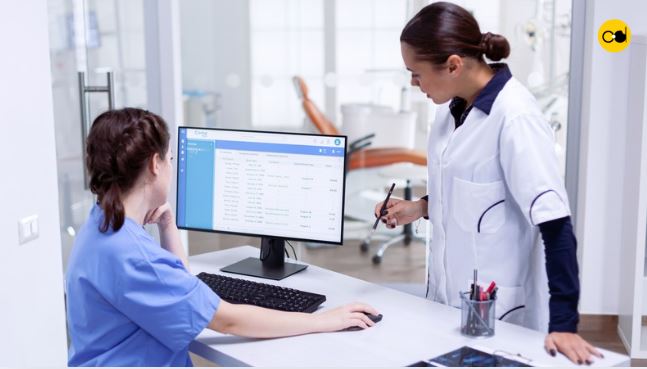
Medical CRM systems focus on managing patient relationships, referrals, and care coordination across departments or provider networks. Custom CRM solutions help organizations track patient journeys, automate follow-ups, and improve communication between care teams.
These systems are particularly valuable for organizations with complex referral patterns, multi-location operations, or value-based care models.
5. Clinical Data Management and Analytics Tools
Custom clinical analytics platforms enable healthcare organizations to collect, analyze, and visualize data from multiple sources. These tools support quality reporting, operational decision-making, and population health management.
By building analytics solutions tailored to internal KPIs and compliance requirements, organizations gain insights that generic reporting tools often fail to provide.
6. Supporting the Healthcare Value Chain
Each type of custom medical software addresses a specific link in the healthcare value chain, from patient intake and care delivery to follow-up and outcomes analysis. When designed strategically, these systems work together to improve efficiency, reduce risk, and support better clinical outcomes without disrupting existing infrastructure.
Custom development allows healthcare organizations to invest where impact is highest, rather than forcing all workflows into a single monolithic system.
Frequently Asked Questions
Q1: How long does it take to build a HIPAA-compliant patient portal?
Building a HIPAA-compliant patient portal typically takes 4 to 6 months for an initial MVP. The timeline depends on factors such as EHR integrations, authentication requirements, and security validation. More advanced features or multi-system integrations can extend development time.
Q2: Can small clinics afford custom medical software development?
Yes, small clinics can afford custom development by adopting a phased approach. By focusing first on high-impact workflows and essential features, clinics can control costs while still gaining long-term flexibility and efficiency.
Q3: What is the difference between custom and white-label medical software?
Custom medical software is built specifically for an organization’s workflows and offers full control over features, data, and future scaling. White-label solutions enable faster deployment but often come with limitations in customization, integration, and long-term differentiation.
Q4: What happens if regulations change after the software is launched?
Well-designed custom medical software anticipates regulatory change through modular architecture and configurable compliance controls. Ongoing maintenance and support contracts allow systems to be updated efficiently without major redevelopment or service disruption.
Final Thoughts
Custom medical software development is rarely just a technical decision. It usually begins when existing systems no longer fit real clinical work. Processes feel constrained. Integrations become unreliable. Compliance adds pressure instead of confidence.
When built with care, custom software restores control. It aligns technology with how teams actually operate, supports growth without constant rework, and adapts more calmly to regulatory change. The real value lies in stability and clarity, not in customization for its own sake.
Execution makes the difference. Healthcare software demands discipline, context, and long-term thinking. Teams with experience in regulated environments tend to build more quietly, focusing on what will still work years later.
That mindset matters. At ONEXT DIGITAL, the emphasis is on building medical software that holds up over time, without unnecessary complexity or shortcuts. For organizations considering custom solutions in 2026, the key is choosing an approach that remains reliable long after launch.