
 Services
 Solutions
 Main platform
 Technology
 White Label
  Offshore
 Hire developers



Developing medical software goes far beyond simply writing code it’s about creating solutions that enhance patient care, optimize hospital workflows, and ultimately save lives. From electronic health records (EHR) to telemedicine platforms and AI-powered diagnostic tools, medical software plays a critical role in the modern healthcare ecosystem.
Every stage of development, from initial concept to final deployment, matters. A misstep in design, compliance, or usability can lead to inefficiencies, errors, or even serious risks to patients. On the other hand, well-designed, secure, and scalable software can empower healthcare providers, streamline operations, and improve patient outcomes.
In this guide, we’ll take you through the medical software development journey step by step. You’ll gain a clear understanding of how to transform an idea into a reliable, compliant, and efficient solution that works in the real-world healthcare environment.
Let’s dive into what it truly takes to build software that not only functions well but also makes a meaningful difference in healthcare.
What is Medical Software Development?
Medical software development is the process of designing, building, and maintaining software solutions specifically for the healthcare industry. Unlike standard applications, medical software must meet rigorous standards for security, compliance, and accuracy while addressing the unique needs of healthcare providers and patients.
These solutions can take many forms, including:
- Electronic Health Records (EHR) and Electronic Medical Records (EMR): Systems that securely store patient medical history, lab results, prescriptions, and treatment plans.
- Telemedicine Platforms: Tools that allow doctors and patients to connect remotely through video calls, chat, or secure messaging.
- AI-Powered Diagnostic Tools: Software that assists healthcare professionals in identifying patterns, predicting risks, and supporting clinical decisions.
- Hospital Management Systems (HMS): Platforms that manage patient flow, staff scheduling, inventory, and administrative workflows.
The primary goals of medical software development are to:
- Ensure Patient Safety and Compliance: Follow regulations like HIPAA in the U.S., GDPR in Europe, and FDA guidelines for medical devices.
- Enhance Operational Efficiency: Streamline workflows for hospitals, clinics, and healthcare teams.
- Improve Patient Experience: Provide accessible, user-friendly interfaces for patients and healthcare providers alike.
- Enable Scalability and Integration: Ensure the software can grow with the organization and integrate seamlessly with existing systems and devices.
Medical software is more than a technological solution it’s a critical component in delivering high-quality, efficient, and safe healthcare services. Understanding its purpose and scope is the first step toward developing software that truly makes a difference.
Medical Software Market Trends & Stats
The healthcare software industry is expanding rapidly, fueled by advances in digital health, artificial intelligence (AI), and telemedicine. Understanding these trends is essential for anyone looking to invest in or develop medical software solutions.
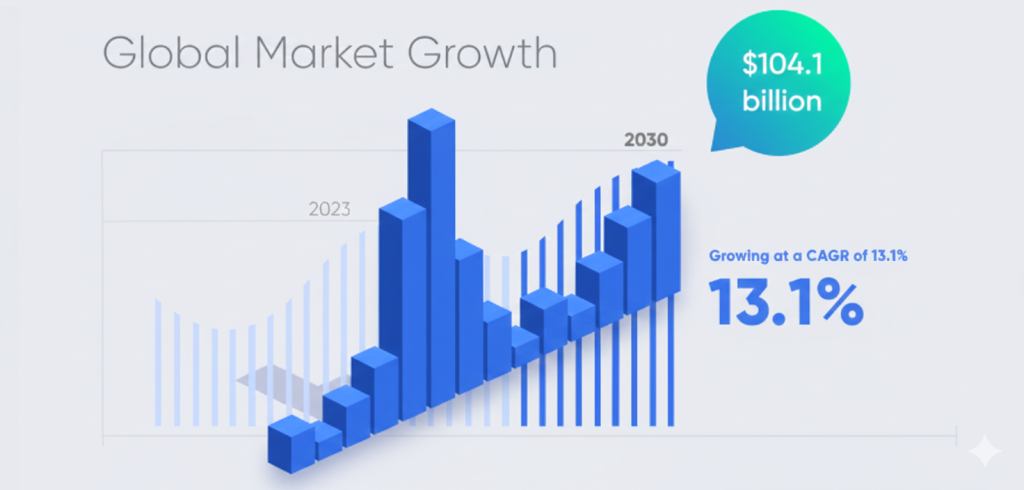
1. Global Market Growth
- The global healthcare software market is projected to reach over $104.1 billion by 2030, growing at an annual rate of around 13.1%.
- Electronic Health Records (EHR) alone are expected to surpass $40 billion by 2027, driven by widespread adoption in hospitals, clinics, and private practices.
2. Telemedicine and AI Adoption
- Telemedicine is on the rise, with the market estimated to reach $225 billion by 2030, as patients increasingly seek remote care options.
- AI in healthcare, including diagnostics, predictive analytics, and workflow automation, is projected to grow to $188 billion by 2030.
3. Regulatory and Compliance Trends
- Over 80% of healthcare organizations prioritize compliance with regulations such as HIPAA and GDPR when implementing software solutions.
- In 2023, the FDA approved 91 AI-based medical devices, reflecting a growing trend toward AI-driven healthcare solutions.
4. Cybersecurity in Healthcare
- In 2023, more than 45 million patient records were exposed in healthcare data breaches, highlighting the critical importance of secure medical software.
- Protecting sensitive patient data is no longer optional security must be an integral part of the software development process from the start.
Exploring the Key Types of Medical Software: Tools That Transform Healthcare
Medical software comes in many forms, each designed to address specific challenges in healthcare. From patient management to AI-driven diagnostics, understanding the types of software available is essential for developing solutions that truly make an impact.
| Type | Purpose | Key Features | Examples |
| Electronic Health Records (EHR) & EMR | Store and manage patient medical history, prescriptions, lab results, and treatment plans. | Secure data storage, interoperability with other systems, HIPAA/GDPR compliance | Epic, Cerner, Meditech |
| Telemedicine & Telehealth Software | Facilitate remote consultations between doctors and patients. | Video conferencing, messaging, e-prescriptions, appointment scheduling | Doxy.me, Teladoc Health, MDLIVE |
| Medical Billing & Revenue Cycle Management (RCM) | Automate billing, insurance claims, and financial reporting. | Automated invoicing, insurance claim tracking, payment integration | Kareo, AdvancedMD, DrChrono |
| Healthcare CRM | Improve patient engagement, scheduling, and communication. | Patient reminders, appointment tracking, data analytics | Salesforce Health Cloud, Zoho CRM for Healthcare |
| Medical Imaging & Diagnostic Software | Support analysis of medical images for accurate diagnostics. | AI-powered image recognition, PACS integration, 3D visualization | Siemens syngo.via, GE Healthcare Edison AI |
| Hospital Management Systems (HMS) | Manage hospital workflows, staff, inventory, and administration. | Staff & inventory management, appointment scheduling, analytics | eClinicalWorks, SAP Healthcare |
| AI-Powered & Predictive Analytics Software | Predict patient risks and support clinical decisions. | Real-time monitoring, AI-based diagnostics, integration with wearables | IBM Watson Health, Tempus |
| Wearable & Remote Patient Monitoring Software | Track patient vitals in real-time using IoT devices. | Continuous health tracking, data sync, alerts for abnormalities | Fitbit Health Solutions, Apple HealthKit |
Each of these software types addresses unique needs within healthcare, helping hospitals, clinics, and providers optimize their operations and deliver better patient outcomes.
Step-by-Step Medical Software Development Process
Developing medical software requires a structured approach to ensure the final product is secure, compliant, and user-friendly. Each stage in the process plays a vital role in transforming an idea into a reliable healthcare solution.

1. Requirement Analysis & Planning
Planning is the foundation of any successful medical software project. Without it, even the best ideas can fail.
- Identify the Problem: Determine what issue the software will solve. Is it streamlining hospital workflows, enabling remote patient monitoring, or reducing medical errors?
- Compliance Considerations: Incorporate regulatory standards from the beginning, such as HIPAA, GDPR, or FDA requirements. Ignoring compliance can lead to costly delays and legal issues.
- Technology Stack & Architecture: Decide between cloud-based or on-premise solutions, choose programming languages, and define the system architecture to ensure scalability and security.
2. UI/UX Design & Prototyping
Healthcare professionals need intuitive, easy-to-use interfaces. Poor design can lead to frustration or even critical errors.
- User-Centered Design: Create wireframes and prototypes tailored to doctors, nurses, and patients.
- Accessibility: Ensure the software is usable for all patients, including the elderly or visually impaired.
- Feedback Loop: Gather input from real users before coding begins to refine functionality and design.
3. Software Development & Integration
This phase transforms designs and plans into working software. Choosing the right development approach is crucial for performance and long-term success.
- Development Approaches:
- Monolithic: All-in-one system, easier initially, but harder to scale.
- Microservices: Breaks software into independent modules for flexibility and scalability.
- Cloud-Based: Accessible anywhere, supports remote healthcare and telemedicine.
- Serverless Computing: Scales automatically based on demand, reducing infrastructure costs.
- AI-Powered Systems: Incorporates machine learning for diagnostics, predictive analytics, and personalized care.
- Integration with Other Systems:
- EHR/EMR systems
- Telemedicine platforms
- Billing & insurance systems
- IoT devices & wearables
- Pharmacy management software
4. Security & Compliance
Security is critical in healthcare software. A single breach can expose sensitive patient data and harm both patients and organizations.
- Security Measures: End-to-end encryption, role-based access control (RBAC), multi-factor authentication (MFA), data anonymization, and regular security audits.
- Compliance Standards: HIPAA (USA), GDPR (Europe), FDA (for medical devices), HL7, FHIR for data exchange.
5. Testing & Quality Assurance (QA)
Testing ensures the software operates safely and effectively under real-world conditions.
- Unit Testing: Verifies individual components.
- Integration Testing: Confirms modules and third-party systems work together.
- System Testing: Ensures overall functionality meets requirements.
- Security Testing: Protects patient data and confirms regulatory compliance.
- Usability Testing: Assesses how easily healthcare professionals can navigate the system.
- Performance Testing: Confirms the software runs efficiently under peak loads.
6. Deployment & Implementation
After testing, the software is ready for rollout. A clear deployment strategy ensures minimal disruption.
- Pilot Testing: Launch with a small user group to gather feedback and identify issues.
- Full-Scale Rollout: Deploy across departments or facilities, including data migration, user training, and system integration.
- Deployment Options: Cloud-based or on-premise, depending on security, scalability, and compliance requirements.
- Post-Deployment Support: Monitor performance and resolve issues in real time.
7. Maintenance, Updates & Support
Development doesn’t end after launch. Continuous support ensures long-term performance and compliance.
- Bug Fixes & Updates: Address issues promptly and enhance functionality.
- Security Patches: Regular updates to stay compliant with changing regulations.
- Feature Upgrades: Add new features or integrate with emerging medical devices.
- Compliance Monitoring: Ensure the software meets evolving standards (HIPAA, GDPR, FDA).
- User Support: Provide ongoing assistance to healthcare professionals and patients.
Key Factors to Consider in Medical Software Development
Developing medical software is a high-stakes task. Every decision from design to deployment can impact patient safety, compliance, and operational efficiency. To ensure success, here are the key factors you should consider:
1. Regulatory Compliance
Healthcare is one of the most heavily regulated industries in the world. Your software must adhere to standards like HIPAA (USA), GDPR (Europe), and FDA guidelines for medical devices. Compliance is not just a legal requirement; it protects patient privacy and prevents costly penalties.
2. Data Security & Privacy
Medical software handles highly sensitive information. Security must be built into every layer:
- Encryption: Protect data in transit and at rest.
- Role-Based Access Control (RBAC): Ensure only authorized users can access sensitive data.
- Multi-Factor Authentication (MFA): Add an extra layer of protection against unauthorized access.
3. User Experience (UX)
Doctors, nurses, and patients need intuitive interfaces. A complicated or slow system can lead to errors and frustration. Focus on:
- Easy navigation
- Accessible designs for all user groups
- Fast performance, even under high workloads
4. Interoperability
Medical software must communicate seamlessly with other systems, such as EHRs, EMRs, telemedicine platforms, and wearable devices. Interoperability ensures smooth workflows, reduces errors, and improves overall patient care.
5. Scalability
As your healthcare organization grows, your software should scale with it. Consider:
- Ability to handle more users and patients
- Support for additional features or modules
- Cloud-based infrastructure for easy expansion
6. Accuracy and Reliability
In healthcare, accuracy is non-negotiable. Software must deliver reliable results consistently to support critical decisions. Extensive testing, validation, and monitoring are essential.
7. Integration with IoT & Wearables
With the rise of wearable devices and remote patient monitoring, your software should be able to collect and process real-time data. This enables proactive care and better patient outcomes.
8. Ongoing Maintenance & Support
Healthcare technology is constantly evolving. Regular updates, security patches, and feature improvements are crucial to keep your software compliant, functional, and aligned with industry needs.
By carefully considering these factors, you can create medical software that not only meets technical requirements but also truly enhances patient care and operational efficiency.
Essential Features of Medical Software
To create medical software that delivers real value, certain features are essential. These features ensure efficiency, patient safety, and a seamless experience for healthcare providers and patients alike.
1. Electronic Health Records (EHR) Integration
Your software should integrate smoothly with existing EHR systems, allowing healthcare providers to access and update patient histories, prescriptions, lab results, and treatment plans effortlessly.
2. Appointment Scheduling & Management
An intuitive scheduling system helps patients book, reschedule, or cancel appointments easily while enabling providers to manage calendars efficiently. Automated reminders can reduce no-shows and improve clinic workflow.
3. Telemedicine Capabilities
Remote consultations have become crucial in modern healthcare. Video calls, secure messaging, and virtual check-ups ensure patients can receive care even if they cannot visit in person.
4. Secure Patient Portals
Patients should have access to their medical records, test results, and prescriptions through user-friendly portals. This empowers patients and reduces administrative workload for healthcare staff.
5. HIPAA-Compliant Security & Data Protection
End-to-end encryption, role-based access control, and secure data storage are critical to protect sensitive patient information and comply with industry regulations.
6. AI-Powered Decision Support
AI features can analyze patient data, predict potential risks, and assist healthcare professionals in making informed clinical decisions faster and more accurately.
7. Billing & Insurance Processing
Integrated billing and insurance processing streamline invoicing, claims, and payments, reducing administrative errors and saving time for both patients and providers.
8. Real-Time Communication & Notifications
Automated reminders, alerts for critical test results, and secure messaging ensure that doctors and patients stay informed at all times, enhancing care coordination.
9. Mobile Accessibility
Healthcare professionals and patients need access on the go. Mobile-friendly platforms allow doctors to review records, patients to book appointments, and staff to monitor operations anytime, anywhere.
10. Analytics & Reporting
Built-in analytics tools help hospitals and clinics track patient trends, optimize resource allocation, and make data-driven decisions to improve outcomes and operational efficiency.
How to Choose the Right Medical Software Development Company?
Selecting the right development partner is critical to the success of your medical software project. With so many companies claiming expertise, it’s important to focus on a few key factors:
1. Industry Expertise & Regulatory Knowledge
Choose a company with proven experience in healthcare software development. They should understand the specific regulations and compliance standards, such as HIPAA, GDPR, and FDA guidelines.
2. Proven Track Record & Portfolio
Review past projects, case studies, and client testimonials. A reliable company should demonstrate successful implementations of EHR systems, telemedicine platforms, or other medical software solutions.
3. Customization & Scalability
Your healthcare organization has unique needs. The right company should offer customizable solutions that can scale as your patient base, data, or feature requirements grow.
4. Strong Security Measures
Security is non-negotiable in healthcare. Ensure the development partner prioritizes encryption, role-based access, secure data storage, and regular security audits.
5. Interoperability & Integration Capabilities
The software must work seamlessly with existing systems, including EHRs, telemedicine platforms, billing systems, and IoT devices. A good development company will focus on smooth data exchange and integration.
6. UI/UX Expertise for Healthcare Users
The software should be intuitive for doctors, nurses, and patients. Look for a company experienced in designing user-friendly interfaces tailored for healthcare environments.
7. Post-Launch Support & Maintenance
Development doesn’t end at deployment. Your partner should provide ongoing support, updates, and security patches to keep your software running smoothly and compliant over time.
8. Transparent Communication & Collaboration
Effective communication is key. Choose a company that keeps you informed with regular updates, welcomes feedback, and collaborates closely throughout the development process.
Conclusion
Medical software development is far more than coding it’s about creating solutions that improve patient care, streamline healthcare operations, and ensure compliance with strict industry regulations. From planning and design to development, integration, and ongoing maintenance, every stage plays a critical role in delivering a secure, reliable, and user-friendly system.
Choosing the right development partner, understanding regulatory requirements, and incorporating essential features like EHR integration, telemedicine capabilities, and AI-powered decision support are key to building software that truly transforms healthcare.
Investing in high-quality medical software not only enhances operational efficiency but also empowers healthcare professionals to provide better care and achieve improved patient outcomes.
Ready to bring your healthcare software idea to life? Partner with experts to create a solution that is scalable, compliant, and designed to meet the evolving needs of modern healthcare.
FAQs About Medical Software Development
1. Why should I build custom medical software?
Off-the-shelf solutions may not fully meet your organization’s needs. Custom medical software allows you to:
- Tailor features to your workflow
- Ensure seamless integration with existing systems and devices
- Enhance security and compliance with regulations like HIPAA and GDPR
- Scale as your practice or hospital grows
- Improve user experience with interfaces designed for your staff and patients
2. How much does medical software development cost?
Costs vary depending on several factors:
- Complexity & Features: A simple appointment scheduling app may cost $30,000–$50,000, while a full EHR or telemedicine platform can exceed $200,000.
- Compliance Requirements: Ensuring HIPAA, GDPR, or FDA compliance adds to development costs.
- Development Team & Location: Hiring developers in the U.S. or Western Europe is typically more expensive than in Asia or Eastern Europe.
- Technology Stack: Advanced features like AI analytics or blockchain increase costs.
- Ongoing Maintenance: Post-launch updates, security patches, and hosting fees add to the long-term budget.
3. What tech stack is commonly used for medical software development?
- Frontend:js, Angular, Vue.js, Swift (iOS), Kotlin/Flutter (Android)
- Backend:js, Python (Django), .NET, Java (Spring Boot)
- Databases: PostgreSQL, MySQL, MongoDB, Firebase
- Cloud & Hosting: AWS, Google Cloud, Microsoft Azure
- Security & Compliance: End-to-end encryption, OAuth, HL7, FHIR
- AI & Analytics: TensorFlow, PyTorch, IBM Watson
- Integration Tools: HL7, FHIR, API gateways for EHRs and third-party systems
4. How large is the medical software industry?
The medical software industry is booming. As of 2024:
- The global healthcare IT market is valued around $400 billion and projected to exceed $1 trillion by 2030.
- Key growth drivers include telemedicine adoption, AI in diagnostics, EHR implementation, and the need for cloud-based secure solutions.
5. How long does it take to develop medical software?
Typically, 3-6 months for medium complexity solutions. Large-scale platforms, like full EHR systems or AI-driven telemedicine apps, can take 6-12 months or more, depending on complexity and compliance requirements.