
 Services
 Solutions
 Main platform
 Technology
 White Label
  Offshore
 Hire developers



Did you know that nearly 78% of web development projects fail due to poor planning or unclear processes? Launching a website without a roadmap is like building a house without a blueprint delays, extra costs, and low quality are almost inevitable.
The Web Development Life Cycle, or WDLC, acts as a strategic guide, aligning business goals, user needs, and technical execution. By following a clear life cycle, companies can streamline development, reduce costs, and create websites that function flawlessly while delivering engaging digital experiences.
In the next section, we will explore what the modern WDLC looks like in 2025 and why it is essential for successful web projects.
What is Web Development Life Cycle in 2025?
At its core, the Web Development Life Cycle (WDLC) is a structured roadmap that guides a website or web application from a simple idea to a fully functional, high-performing digital product. It ensures that every decision from design to deployment aligns with business goals and user expectations.
In 2025, web development is no longer limited to basic coding and static pages. Modern WDLC integrates Agile methodologies, DevOps practices, AI-driven testing, and cloud deployment, making the process faster, more flexible, and more reliable. These advancements allow teams to respond to changing requirements, automate repetitive tasks, and maintain continuous improvement even after launch.
Think of WDLC as a website’s lifecycle, similar to a living organism. Each stage planning, analysis, design, development, testing, deployment, and ongoing maintenance ensures that the product grows sustainably, adapts to new technologies, and remains relevant to users. By following this lifecycle, businesses can minimize errors, optimize performance, and deliver digital experiences that truly resonate with their audience.
In the next section, we will break down the seven core stages of the modern WDLC, showing how each step contributes to building successful, user-friendly websites and applications.
7 Core Stages of the Modern Web Development Life Cycle
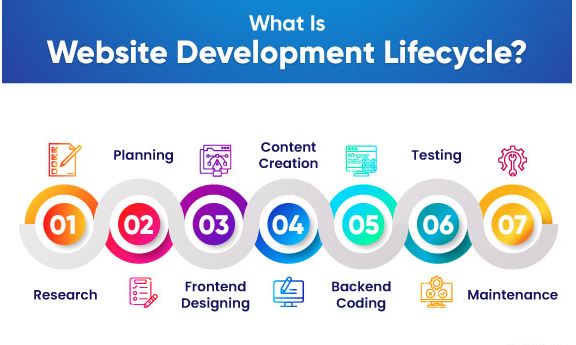
Building a website today is more than coding pages it is a strategic journey where every stage shapes the final experience for users and business outcomes. A modern Web Development Life Cycle (WDLC) ensures that this journey is organized, efficient, and adaptable, transforming ideas into a robust, scalable, and engaging digital product. Let’s explore the seven essential stages that make this possible.
1. Research and Strategy
Before a single line of code is written, understanding the market, users, and business goals is critical. This stage forms the foundation for all future decisions.
- User Insights: Identify the audience’s needs, behaviors, and preferences. This goes beyond demographics it involves studying their motivations, online habits, and pain points.
- Competitor Analysis: Examine similar websites and digital solutions. Spot what works, what doesn’t, and uncover opportunities for differentiation.
- Brand Positioning: Align the website with your brand’s identity and unique value proposition to ensure every element reflects your core message.
A carefully researched strategy prevents wasted effort, guides content creation, and ensures that the website resonates with its target audience from the very first interaction.
Key tools: Google Analytics, Hotjar, SEMrush, user surveys, competitor benchmarking tools.
2. Planning and Requirement Analysis
Planning turns strategy into a tangible blueprint. At this stage, clarity and foresight are paramount.
- Defining Objectives: Establish SMART goals (Specific, Measurable, Achievable, Relevant, Time-bound) to guide every development decision.
- Technology Selection: Choose the optimal front-end and back-end frameworks, databases, and API solutions based on the project’s scale and complexity.
- Timeline and Resources: Map tasks, milestones, and allocate resources effectively. Identify potential risks and plan contingencies.
- Documentation: Maintain detailed records of requirements and expectations to keep stakeholders aligned and minimize scope creep.
Effective planning ensures that development proceeds efficiently, avoids misunderstandings, and sets clear expectations for the project team.
Key tools: Jira, Confluence, Notion, Trello.
3. UI/UX Design
Design is not just about looks; it’s about creating intuitive and enjoyable experiences.
- Wireframing and Prototyping: Start with low-fidelity wireframes to map structure and navigation, then move to high-fidelity prototypes that resemble the final interface.
- Visual Design: Apply typography, color schemes, imagery, and interactive elements that align with the brand and appeal to the target audience.
- Usability and Accessibility: Ensure the website is navigable for everyone, including users with disabilities, through features like keyboard navigation, screen reader compatibility, and alternative text.
This stage bridges creativity and functionality, ensuring the website is visually appealing, easy to use, and accessible across devices.
Key tools: Figma, Adobe XD, Sketch, InVision, Zeplin.
4. Front-End Development
Front-end development transforms design into a tangible user experience.
- Frameworks and Libraries: Use modern frameworks like React, Vue.js, or Next.js to build interactive and responsive interfaces.
- Responsive Design: Ensure the website adapts seamlessly to all devices, from desktops to mobile phones.
- Performance Optimization: Minimize load times, implement lazy loading, and optimize images and scripts for fast user experiences.
The front-end is where users interact with your brand directly. Smooth animations, intuitive navigation, and responsive layouts enhance engagement and retention.
Key tools: VS Code, React, Vue.js, Next.js, Bootstrap, Tailwind CSS, Webpack.
5. Back-End Development
The back-end powers the website, ensuring that every interactive element functions correctly and securely.
- Server-Side Logic: Handle requests, process data, and manage workflows efficiently.
- Database Management: Structure and optimize databases for speed, scalability, and reliability.
- Security and Authentication: Implement secure login, data encryption, and role-based access controls.
- API Integration: Facilitate seamless interaction between front-end and back-end systems or third-party services.
A strong back-end creates a foundation for growth, ensuring reliability and robustness even under high traffic and complex operations.
Key tools: Node.js, Python, PHP, Ruby on Rails, MySQL, PostgreSQL, MongoDB, REST/GraphQL APIs.
6. Testing and Quality Assurance
Testing is about validating that everything works as intended before the website reaches real users.
- Functional Testing: Verify that features perform correctly.
- Performance Testing: Check load times, response under stress, and server reliability.
- Security Testing: Identify vulnerabilities and protect sensitive user data.
- Cross-Browser and Device Testing: Ensure consistent experiences across platforms.
- User Acceptance Testing: Involve real users to confirm usability, navigation, and satisfaction.
A comprehensive testing process prevents costly errors, improves user trust, and guarantees a polished, professional digital presence.
Key tools: Cypress, Selenium, Google Lighthouse, BrowserStack, OWASP ZAP.
7. Deployment and Continuous Improvement
Deployment marks the website’s official entry into the digital world, but the lifecycle doesn’t end there.
- Live Launch: Deploy the website on a secure hosting environment, ensuring domain, server, and DNS configurations are correct.
- CI/CD and Cloud Hosting: Automate updates and maintain uptime through continuous integration and delivery pipelines.
- Monitoring and Analytics: Track performance, user behavior, and errors to guide ongoing enhancements.
- Iterative Improvements: Regularly update content, optimize features, and adopt emerging technologies to stay relevant and competitive.
Continuous improvement transforms a one-time launch into a living, evolving digital experience that grows with users’ needs and technological advances.
Key tools: AWS, Azure, Docker, GitHub Actions, Google Analytics, Hotjar, New Relic.
Common Mistakes in the Web Development Life Cycle and How to Avoid Them
Even the most experienced development teams can fall into common traps during the web development process. Identifying and addressing these pitfalls early ensures smoother execution, reduced costs, and higher-quality websites. Here are the most frequent mistakes and actionable ways to avoid them:
1. Lack of Clear Documentation
Without proper documentation, teams often work with assumptions, leading to misunderstandings, duplicated efforts, and inconsistent implementations.
How to avoid it:
- Create comprehensive technical documentation, including functional requirements, user stories, and design specifications.
- Keep records updated as changes occur to ensure all stakeholders are aligned.
- Use collaborative tools like Jira, Confluence, or Notion to centralize documentation and maintain version control.
2. Skipping Testing Before Deployment
Rushing to launch without thorough testing leads to bugs, broken features, and poor user experiences, damaging credibility and trust.
How to avoid it:
- Implement multiple layers of testing: unit, integration, system, user acceptance, and performance testing.
- Automate repetitive tests using tools like Cypress or Selenium to reduce human error.
- Include real users in testing to validate usability and navigation.
3. Ignoring SEO and Page Load Speed
A beautifully designed website that loads slowly or is invisible to search engines fails to reach its audience.
How to avoid it:
- Optimize images, scripts, and stylesheets for fast loading times.
- Implement SEO best practices, including meta tags, structured data, clean URLs, and proper heading structures.
- Regularly monitor website performance using Google Lighthouse or PageSpeed Insights.
4. No Post-Launch Maintenance Plan
Many projects consider a website “complete” after launch, but websites require constant updates, security patches, and content refreshes.
How to avoid it:
- Develop a maintenance schedule covering security updates, CMS upgrades, and performance checks.
- Monitor user feedback and analytics to guide content updates and UX improvements.
- Set up a version-controlled environment to safely roll out updates.
5. Overlooking Security and Data Protection
Websites that neglect security put user data at risk, potentially facing breaches, penalties, and reputational damage.
How to avoid it:
- Follow secure coding practices and frameworks.
- Use HTTPS, encrypt sensitive data, and enforce strong authentication mechanisms.
- Conduct periodic security audits and penetration testing to identify vulnerabilities.
6. Misalignment Between Business Goals and Development
A website that doesn’t reflect business objectives or target audience needs wastes resources and fails to generate results.
How to avoid it:
- Involve stakeholders throughout the WDLC to ensure alignment.
- Define clear KPIs and track them from planning through post-launch.
- Use research and analytics to make data-driven decisions for features, design, and content.
7. Choosing the Wrong Technology Stack
Selecting unsuitable technologies can result in slow performance, limited scalability, and high maintenance costs.
How to avoid it:
- Evaluate project requirements carefully before choosing frameworks, databases, and APIs.
- Consider long-term scalability, community support, and compatibility with other systems.
- Consult experienced developers or a technical architect when in doubt.
By proactively addressing these common mistakes, businesses and development teams can ensure smoother execution, reduced risk, and superior outcomes. A structured approach to WDLC doesn’t just prevent problems it builds a foundation for websites that are efficient, secure, and user-friendly.
Benefits of Following a Structured Web Development Life Cycle
Implementing a well-defined Web Development Life Cycle brings far-reaching advantages that go beyond simply finishing a project on time. It establishes a clear framework for delivering high-quality, user-centric websites while optimizing resources and team efficiency.
1. Minimized Errors and Cost Efficiency
A structured WDLC ensures that every stage from research and planning to testing and deployment is carefully executed. By reducing miscommunication and eliminating redundant work, businesses can prevent costly mistakes and save both time and resources.
2. Enhanced Scalability and Flexibility
Websites built under a disciplined life cycle are easier to scale and adapt. New features, integrations, or updates can be implemented without disrupting the existing architecture, making the platform future-proof and capable of evolving alongside business growth.
3. Improved Collaboration and Team Alignment
Clear workflows and defined roles foster effective collaboration across designers, developers, testers, and stakeholders. Transparency and accountability reduce conflicts, accelerate decision-making, and ensure that every team member contributes toward the shared vision.
4. Superior User Experience
A structured WDLC emphasizes understanding the end user’s needs and behaviors. From intuitive navigation and responsive design to accessibility and content relevance, this approach ensures websites are engaging, easy to use, and capable of building trust with visitors.
5. Ongoing Maintenance and Longevity
The life cycle does not end at launch. Continuous monitoring, regular updates, performance optimization, and security enhancements help maintain a healthy website that remains reliable, secure, and aligned with evolving user expectations.
6. Data-Driven Optimization
A formal WDLC allows for integration with analytics and monitoring tools from the outset. Businesses can track visitor behavior, evaluate feature effectiveness, and make informed decisions to continuously refine the website and maximize ROI.
Following a structured Web Development Life Cycle ensures that a website is not just launched, but strategically built to grow, engage users, and deliver long-term digital value.
Conclusion
The Web Development Life Cycle is far more than a series of technical steps it is the blueprint for building websites that are not only functional but also engaging, reliable, and scalable. By following a structured life cycle, businesses can minimize errors, optimize costs, enhance collaboration, and deliver an exceptional user experience.
A well-executed WDLC ensures that every decision, from planning and design to development, testing, and deployment, aligns with both business goals and user expectations. Moreover, it fosters a culture of continuous improvement, allowing websites to evolve gracefully in response to emerging technologies, user feedback, and market trends.
In essence, a disciplined web development process does not just create a website it cultivates a digital presence that grows, adapts, and delivers long-term value. For businesses ready to embark on a professional web project, partnering with experienced teams like ONEXT DIGITAL can provide the guidance and expertise needed to transform ideas into high-quality, impactful websites.
Frequently Asked Questions (FAQs)
1. What are the 7 stages of web development?
The modern web development life cycle includes Research & Strategy, Planning & Requirement Analysis, UI/UX Design, Front-end Development, Back-end Development, Testing & Quality Assurance, and Deployment & Continuous Improvement.
2. How long does a full WDLC take?
The duration varies depending on the project complexity, but a standard website typically takes 3 to 6 months from planning to deployment, with continuous maintenance afterward.
3. Which tools help manage the WDLC efficiently?
Tools like Figma, Jira, GitHub, Postman, Docker, and AWS streamline design, development, testing, and deployment, ensuring smooth collaboration and high-quality outcomes.
4. How is WDLC different from SDLC?
While both follow a structured lifecycle, WDLC focuses specifically on building websites and web applications, emphasizing front-end design, user experience, and web-specific technologies.
5. Why is testing critical in WDLC?
Testing ensures that the website functions correctly, is secure, compatible across devices and browsers, and delivers a seamless user experience, preventing costly post-launch issues.
6. How can businesses speed up the web development process?
Businesses can accelerate projects by clearly defining goals, using modern frameworks, automating testing, leveraging cloud deployment, and maintaining continuous communication with the development team.