
 Services
 Solutions
 Main platform
 Technology
 White Label
  Offshore
 Hire developers


The retail industry in 2025 is facing unprecedented challenges: evolving customer expectations, omnichannel sales models, complex inventory management, and increasingly global supply chains. In this fast-paced environment, businesses require a robust, integrated solution to manage every aspect of their operations.
Enterprise Resource Planning (ERP) software for retail serves as the central nervous system of a business connecting point-of-sale (POS), customer relationship management (CRM), supply chain, accounting, and analytics into a single platform.
In this article, we explore the Top 10 Retail ERP Software Solutions for 2025, selected based on their scalability, feature set, innovation, and industry adoption rate. Whether you are a small retailer or a global enterprise, the right ERP system can enhance operational efficiency, improve decision-making, and ultimately boost profitability.
What is Retail ERP?
In the retail industry, Enterprise Resource Planning (ERP) refers to a comprehensive software solution that integrates and automates essential business functions including accounting, customer relationship management (CRM), inventory control, and sales tracking within a unified system. Unlike traditional retail management tools that operate independently, retail ERP uses a centralized data management approach, ensuring that information is consistent, accurate, and accessible in real time across all departments.
For instance, with retail ERP software, a store can monitor inventory levels instantly, detect low stock before it becomes a problem, and analyze sales trends to guide strategic decisions. This unified approach improves operational efficiency, reduces costs, streamlines internal workflows, and enhances the customer experience, which is a decisive advantage in today’s highly competitive retail environment.
How to Choose the Best Retail ERP Software in 2025
Selecting the right Retail ERP software is a critical decision that can directly impact operational efficiency, customer satisfaction, and overall profitability. In 2025, with the rapid evolution of retail technology and rising consumer expectations, decision-makers should thoroughly evaluate the following factors before making an investment:
1. Scalability and Customization
Choose a solution that can grow with your business and adapt to changing market demands. The ideal ERP should allow you to add new stores, expand to new sales channels, or adjust workflows without disrupting existing operations. Look for platforms that offer flexible modules and configuration options so the system aligns with your unique business processes rather than forcing you into a rigid framework.
2. Integration Capabilities
Modern retail requires seamless connectivity between systems. Your ERP should integrate effortlessly with POS terminals, CRM platforms, eCommerce websites, accounting tools, and third-party applications. Strong integration ensures smooth data flow across channels, enabling an omnichannel experience where customers receive consistent service whether they shop in-store, online, or via mobile.
3. Inventory and Supply Chain Management
Inventory is the backbone of retail success. Opt for ERP software with advanced inventory tracking, automated stock replenishment, and demand forecasting features. These capabilities help prevent overstocking or stockouts, improve supplier coordination, and enhance overall supply chain efficiency ensuring products are available when and where customers need them.
4. Real-Time Data and Reporting
Timely and accurate information is vital for strategic decision-making. The best ERP systems provide real-time dashboards, customizable reports, and predictive analytics to give you actionable insights. This empowers management teams to quickly respond to sales trends, monitor performance, and identify areas for improvement before issues escalate.
5. Pricing and Support
Do not focus solely on the upfront subscription or license cost. Factor in the total cost of ownership, which includes implementation fees, data migration, staff training, and ongoing maintenance. Equally important is the quality of customer support ensure the vendor offers responsive technical assistance, comprehensive training resources, and regular system updates.
6. Deployment Options
Decide whether a cloud-based or on-premise ERP system better suits your needs. Cloud solutions offer greater flexibility, remote access, and lower initial investment, making them ideal for growing retailers. On-premise deployments provide complete control over data and infrastructure, which may be preferable for businesses with strict compliance or security requirements.
Top 10 Retail ERP Software Solutions for 2025
1. NetSuite ERP
NetSuite ERP is a leading cloud-based ERP platform designed for businesses of all sizes, with strong capabilities tailored to the retail industry. It offers comprehensive tools for inventory management, financials, CRM, and eCommerce integration within one unified platform.
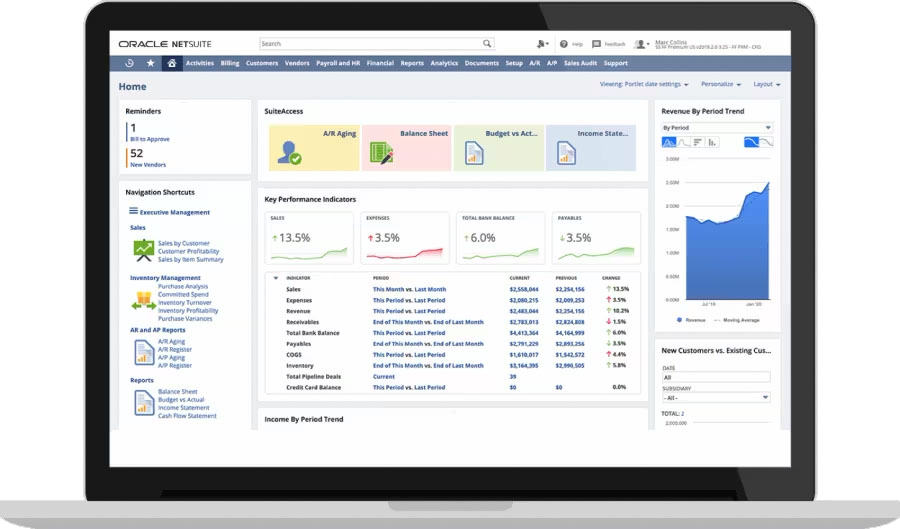
What sets NetSuite apart is its ability to support omnichannel retail operations, delivering real-time data across all sales channels and enabling consistent customer experiences. Its robust automation features reduce manual tasks, enhance accuracy, and speed up business decision-making.
Who is this suitable for?
Medium to large retail businesses seeking a scalable, all-in-one cloud ERP with advanced eCommerce integration.
Pros:
- Cloud-based and accessible from anywhere
- Strong omnichannel retail support
- Advanced reporting and analytics
- Scalable for enterprise operations
Cons:
- Higher cost compared to smaller solutions
- Steeper learning curve for beginners
2. Microsoft Dynamics 365 Commerce
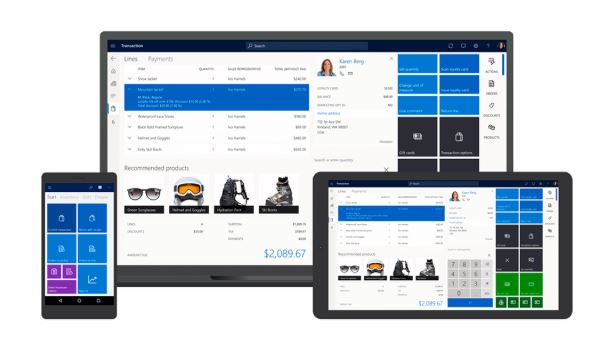
Microsoft Dynamics 365 Commerce offers a powerful, integrated ERP and retail management solution that connects back-office operations with customer-facing services. It combines financial management, inventory tracking, POS, and AI-driven insights into a single platform.
A key differentiator is its deep integration with Microsoft’s ecosystem, including Power BI and Azure, allowing businesses to leverage advanced analytics and cloud scalability.
Who is this suitable for?
Retailers already using Microsoft tools who want a deeply integrated, enterprise-level ERP.
Pros:
- Deep integration with Microsoft 365 and Azure
- AI-powered recommendations and analytics
- Strong eCommerce and POS features
- Highly secure cloud infrastructure
Cons:
- Requires significant setup and configuration
- Premium pricing
3. Odoo ERP
Odoo ERP is an open-source, modular ERP platform popular with small to mid-sized retailers. It offers modules for finance, sales, inventory, HR, CRM, and eCommerce allowing businesses to build their system step by step.
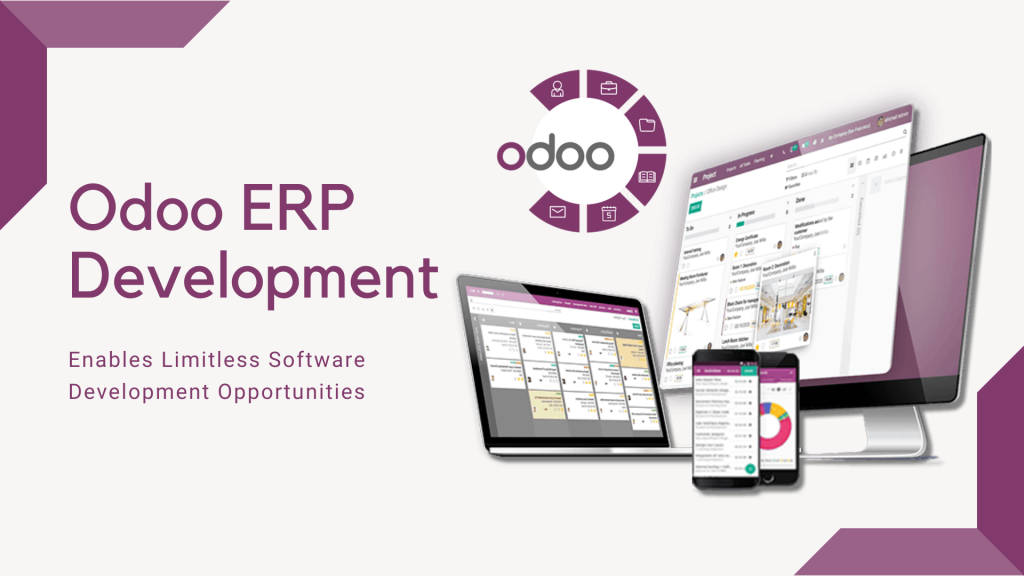
Its key advantage is flexibility: retailers can choose only the modules they need and scale up later. With a large developer community, Odoo has one of the most extensive app ecosystems in the ERP space.
Who is this suitable for?
Small and mid-sized retailers looking for a highly customisable, affordable ERP solution.
Pros:
- Open-source and highly customisable
- Affordable with flexible pricing
- Wide range of modules and integrations
- User-friendly interface
Cons:
- Limited enterprise-level capabilities
- Requires technical expertise for heavy customisation
4. SAP S/4HANA Retail
SAP S/4HANA Retail is an enterprise-grade ERP platform designed for large retailers with complex operations. It centralises financials, inventory, procurement, supply chain, and customer management in real time.
What makes it stand out is its in-memory database, which enables ultra-fast data processing and analytics crucial for high-volume retail operations.
Who is this suitable for?
Large-scale retail chains and multinational brands that require advanced data processing and global scalability.
Pros:
- Real-time analytics with in-memory technology
- Extremely scalable for large enterprises
- Advanced supply chain and procurement tools
- Strong global compliance support
Cons:
- Very high implementation cost
- Requires significant training and IT resources
5. Acumatica Cloud ERP
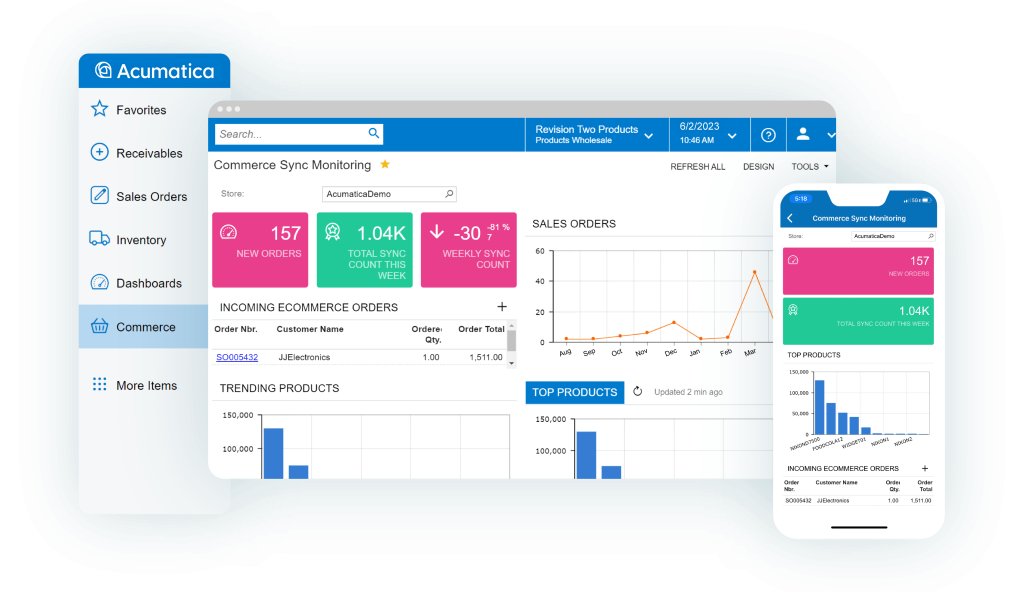
Acumatica Cloud ERP is a flexible and modern ERP platform well-suited for growing retail businesses. It offers features like inventory control, order management, CRM, and financials all accessible via a cloud-based interface.
One of its strongest points is the unlimited user pricing model, which allows businesses to expand without additional licensing costs.
Who is this suitable for?
Small to medium retailers seeking flexibility, scalability, and predictable pricing.
Pros:
- Cloud-based and mobile-friendly
- Unlimited user pricing
- Strong integration capabilities
- Intuitive and customisable interface
Cons:
- Fewer industry-specific modules compared to larger competitors
- Implementation can be complex
6. Infor CloudSuite Retail
Infor CloudSuite Retail is designed for modern retailers aiming to improve efficiency, visibility, and customer engagement. It provides solutions for inventory optimisation, merchandising, financials, and workforce management.
Its biggest strength lies in its industry-specific design built with input from major retailers, making it tailored to real-world retail challenges.
Who is this suitable for?
Mid-sized to large retailers needing an industry-focused ERP with built-in best practices.
Pros:
- Industry-specific retail modules
- Strong analytics and forecasting tools
- Cloud-native architecture
- Designed for omnichannel commerce
Cons:
- Higher cost for smaller businesses
- May require external support for setup
7. Epicor Retail ERP
Epicor Retail ERP offers a suite of retail-focused tools for POS, merchandising, supply chain, and customer relationship management. It’s built for both brick-and-mortar and eCommerce retailers.
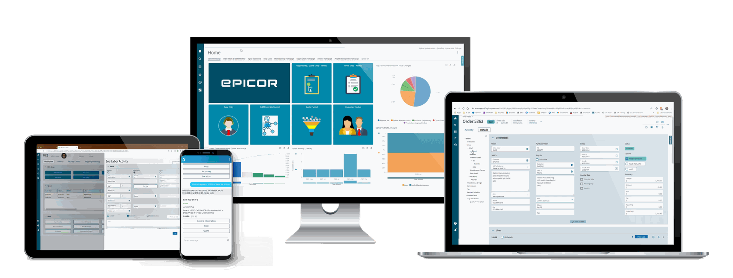
What makes Epicor stand out is its balance between simplicity and scalability, making it suitable for businesses that want to grow without overcomplicating their systems.
Who is this suitable for?
Retailers looking for a mid-market ERP with strong retail-specific features.
Pros:
- Strong supply chain management tools
- Integrated POS and merchandising
- Flexible deployment (cloud or on-premise)
- Good balance of features for mid-sized businesses
Cons:
- Less advanced analytics than some competitors
- User interface could feel dated
8. Brightpearl
Brightpearl is a retail operations platform designed specifically for omnichannel merchants. It automates order processing, inventory management, accounting, and reporting.
Its standout feature is retail automation allowing repetitive tasks to be handled automatically, freeing teams to focus on customer service and growth.
Who is this suitable for?
Omnichannel retailers looking to automate operations and scale efficiently.
Pros:
- Purpose-built for retail and eCommerce
- Strong automation capabilities
- Real-time inventory and order tracking
- Integrates with major eCommerce platforms
Cons:
- Limited manufacturing functionality
- Best suited for mid-sized operations
9. Oracle NetSuite SuiteCommerce
SuiteCommerce, built on Oracle NetSuite, is a powerful ERP + eCommerce platform for retailers. It combines backend ERP features with front-end web store management in a single solution.
Its biggest advantage is seamless integration between online and offline sales, helping retailers create consistent customer experiences.
Who is this suitable for?
Retailers who want a fully integrated ERP and eCommerce platform in one.
Pros:
- Combines ERP and eCommerce in one platform
- Real-time inventory and pricing updates
- Strong analytics and personalisation features
- Cloud-based for easy scalability
Cons:
- Premium pricing
- May be overpowered for very small retailers
10. LS Retail
LS Retail is an ERP and POS solution built on Microsoft Dynamics, tailored for retail and hospitality businesses. It offers complete control over sales, inventory, pricing, and customer engagement.
Its advantage lies in its seamless POS integration, which connects in-store transactions directly to ERP for real-time updates.
Who is this suitable for?
Retailers and hospitality businesses seeking unified POS and ERP under one platform.
Pros:
- Strong POS and ERP integration
- Real-time sales and inventory visibility
- Works seamlessly with Microsoft Dynamics
- Scalable for multi-location businesses
Cons:
- Requires Microsoft ecosystem familiarity
- Higher implementation cost than smaller solutions
Comparison Table: Top Retail ERP Solutions 2025
After exploring the individual strengths of each Retail ERP platform, it can be challenging to weigh them side-by-side. To make your decision process easier, the table below provides a concise comparison of the top ERP solutions in 2025, highlighting their ideal user base, key strengths, deployment options, and pricing models.
| ERP Solution | Best For | Key Strengths | Deployment | Pricing Model |
|---|---|---|---|---|
| NetSuite ERP | Large enterprises | Scalability, customization | Cloud | Custom |
| Microsoft Dynamics 365 | Mid-large businesses | AI forecasting, MS integration | Cloud | Per user/month |
| SAP S/4HANA Retail | Multinational chains | Global scalability, analytics | Hybrid | Custom |
| Odoo ERP | SMBs | Affordable, modular | Cloud / On-prem | Per user/month |
| Lightspeed Retail | SMB retailers | Easy setup, omnichannel | Cloud | Monthly fee |
| Epicor Retail ERP | Complex supply chains | Industry-specific features | Hybrid | Custom |
| Acumatica Cloud ERP | Growing retailers | Flexible pricing, mobile access | Cloud | Usage-based |
| Retail Pro | Multi-store retailers | Reliability, multi-store tools | On-prem | Custom |
| Infor CloudSuite Retail | Large enterprises | AI assortment, omnichannel | Cloud | Custom |
| Oracle Retail | Analytics-driven firms | Predictive analytics | Hybrid | Custom |
What’s Next for Retail ERP Software?
As retail continues to evolve in a fast-paced, tech-driven world, ERP software will not remain static. The next wave of retail ERP innovations will be defined by technologies and trends that push efficiency, personalization, and adaptability to new heights. Based on current market movements, here are the most significant shifts to expect:
1. AI and Machine Learning for Predictive Intelligence
ERP platforms will increasingly embed AI to deliver accurate demand forecasting, optimize inventory levels, and provide deeper customer insights. This means fewer stockouts, reduced overstocking, and more personalized marketing strategies.
2. Enhanced Omnichannel Integration
The retail landscape is no longer just about physical or online stores it’s about delivering a seamless experience across both. Future ERP systems will offer tighter integration between eCommerce, brick-and-mortar, marketplaces, and social selling platforms, ensuring customers receive a consistent brand experience everywhere.
3. Cloud-First Deployment Models
More ERP vendors will prioritize cloud-based architecture, enabling faster feature rollouts, improved scalability, and reduced IT overhead. For retailers, this translates to greater flexibility in responding to seasonal peaks or business expansions.
4. Mobile ERP Access and Remote Management
Decision-makers and managers will expect to access ERP dashboards from anywhere, at any time. Mobile-friendly ERP solutions will allow real-time approvals, performance tracking, and issue resolution empowering leadership to act quickly, no matter where they are.
By embracing these future-ready capabilities, retailers can position themselves ahead of the competition and be ready for the unexpected changes that the market may bring.
Conclusion
In the fast-changing retail landscape of 2025, ERP software has become the backbone of successful operations integrating workflows, delivering real-time insights, and driving sustainable growth. The right solution doesn’t just keep you competitive; it positions you to lead.
With ONEXT DIGITAL as your trusted technology partner, you gain more than an ERP system you gain a tailored, future-ready platform designed to evolve with your business and turn your vision into reality.
Ready to transform your retail operations? Let’s build the perfect ERP solution for your business – contact ONEXT DIGITAL today.
FAQs – Retail ERP Software 2025
1. How can Retail ERP help me avoid stock shortages or overstocking?
Retail ERP gives you real-time inventory visibility and automated stock alerts. This means you can reorder products before they run out and avoid tying up capital in slow-moving stock.
2. Will ERP help me manage both my physical store and online shop?
Yes. Modern ERP systems offer omnichannel integration, so sales, inventory, and customer data from your physical and online stores are synced automatically.
3. Is ERP too expensive for small retailers?
Not necessarily. Cloud-based ERP options like Odoo or Lightspeed Retail offer affordable, pay-as-you-go pricing. You only pay for the modules you need, making it budget-friendly.
4. How long before I see results after ERP implementation?
Many retailers notice improvements in accuracy and efficiency within 1-3 months, especially in inventory control, order processing, and reporting.