
 Services
 Solutions
 Main platform
 Technology
 White Label
  Offshore
 Hire developers



In today’s fast-moving digital landscape, businesses face constant pressure to develop scalable, efficient, and innovative software solutions. Among the numerous programming languages available, Python has risen as a global favorite due to its versatility, strong community support, and broad applications in web development, AI and machine learning, data analytics, and automation.
Yet not every company has the resources to sustain an in-house team of skilled Python developers. This is where Python development outsourcing becomes a strategic option. By collaborating with specialized outsourcing providers, organizations can gain access to top-tier talent, speed up project timelines, and reduce costs significantly without sacrificing quality.
This guide will take you through everything you need to know about Python development outsourcing, including what it is, why it is important, the key benefits and challenges, the step-by-step outsourcing process, and tips for selecting the right partner. Whether you are a startup founder, a business executive, or a non-technical entrepreneur exploring your options, this article is crafted to help you make informed and confident decisions.
What is Python Development Outsourcing?
Python development outsourcing refers to the practice of delegating your software development projects fully or partially to external teams or companies that specialize in Python programming. Instead of hiring and training an in-house development team, businesses collaborate with outsourcing partners who already possess the expertise, infrastructure, and resources necessary to deliver high-quality Python solutions.
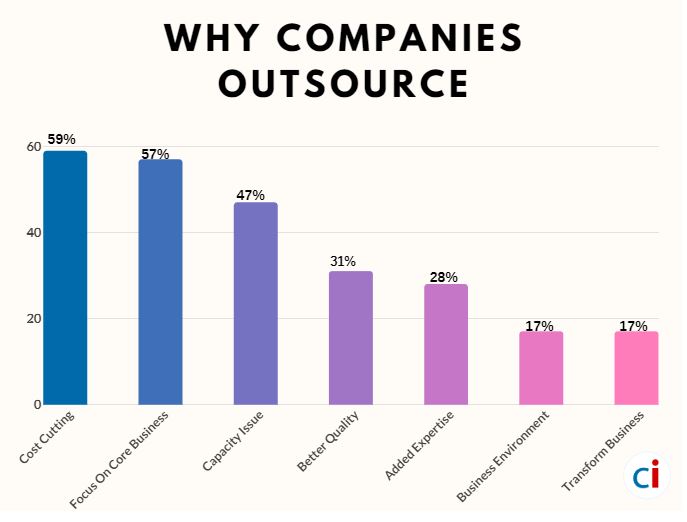
Python is widely known for its:
- Flexibility: Suitable for web development, artificial intelligence, machine learning, automation, and data science.
- Rapid development: Faster time-to-market compared to many other languages.
- Strong ecosystem: Libraries like Django, Flask, TensorFlow, and Pandas make it ideal for building complex applications efficiently.
When outsourcing Python development, companies typically:
- Define their project scope (e.g., a web application, AI tool, or data platform).
- Select a qualified outsourcing partner with proven experience in Python projects.
- Collaborate remotely with the team on design, coding, testing, and deployment.
This approach is especially attractive for startups and small to medium-sized businesses that need cost-effective development without sacrificing technical expertise. It allows organizations to focus on their core operations while leveraging global talent to achieve faster, smarter, and more innovative results.
Benefits of Outsourcing Python Development
Outsourcing Python development is no longer just a budget-friendly option but a strategic move that empowers startups, enterprises, and non-technical founders to compete in fast-changing markets. By leveraging external expertise, businesses unlock benefits that go far beyond cost efficiency and directly impact growth, scalability, and innovation.
1. Access to Global Expertise
Outsourcing removes the geographical barrier in hiring. Instead of relying solely on local talent, companies gain access to a worldwide pool of experienced Python developers. Whether a project requires specialists in Django for robust web applications, TensorFlow for machine learning models, or FastAPI for building scalable APIs, outsourcing allows businesses to bring in the exact skills they need.
This global reach not only ensures the right technical expertise but also accelerates problem-solving by applying knowledge from diverse industries.
2. Cost Efficiency with Consistent Quality
Building and maintaining an in-house development team demands substantial investment in salaries, training, benefits, and infrastructure. Outsourcing eliminates these fixed costs by offering flexible, pay-as-you-need models.
Many businesses report saving between 40-60 % compared to establishing an internal department, particularly when working with highly qualified developers in offshore destinations such as Eastern Europe, South Asia, or Vietnam. The financial advantage does not mean compromising on quality, as outsourcing partners are often held to strict performance standards.
3. Faster Delivery to Market
Speed is essential in today’s digital economy, and outsourcing significantly reduces time-to-market. External teams often have established workflows, agile methodologies, and pre-configured tools that allow them to start projects immediately. Development tasks such as frontend, backend, and quality assurance can proceed in parallel, which accelerates release cycles.
For businesses looking to launch products quickly, this advantage can make the difference between gaining an early competitive edge or falling behind.
4. Scalability and Flexibility
Another major benefit lies in the ability to scale resources according to business demands. Outsourcing makes it easy to expand a team rapidly when tackling a large project and then scale down once the workload decreases.
Companies can also bring in specialized professionals for short-term needs such as artificial intelligence integration, cloud migration, or DevOps automation, without the long-term commitment of permanent hires. This level of adaptability helps businesses stay lean while remaining capable of handling complex technical challenges.
5. Stronger Focus on Core Business
Delegating software development to external experts allows internal teams to concentrate on high-value activities like strategy, customer engagement, and business expansion.
This division of focus prevents leadership from being distracted by technical execution, ensuring that resources are aligned with long-term goals. As a result, businesses can achieve sharper decision-making and more consistent growth while leaving the development process in trusted hands.
6. Reduced Risk Through Expert Practices
Outsourcing companies often follow proven methodologies supported by structured project management and quality assurance frameworks.
By implementing practices such as continuous integration and automated testing, they help minimize technical debt and reduce the risk of missed deadlines or budget overruns. With experienced developers and managers monitoring every phase of development, businesses can maintain confidence in the final product’s quality.
7. Continuous Productivity Across Time Zones
A globally distributed outsourcing team allows development to continue even when the local office is closed. This round-the-clock workflow creates shorter turnaround times, quicker responses to feedback, and uninterrupted progress.
For companies with tight schedules, the ability to achieve 24/7 productivity provides a significant advantage in accelerating development cycles.
8. Innovation and Technological Edge
Finally, outsourcing partners bring fresh perspectives and exposure to the latest technological advancements. They often work across multiple industries and projects, which enables them to introduce innovative solutions that internal teams may not have considered. From adopting new Python frameworks to applying advanced machine learning techniques, outsourcing keeps businesses at the cutting edge without the need for constant investment in research and development.
Outsourcing Python development, therefore, is not merely about lowering expenses. It is a powerful strategy to access top talent, accelerate product delivery, remain flexible in changing markets, and foster innovation at scale. For companies determined to grow efficiently, outsourcing offers a pathway to sustainable success in the digital era.
Challenges in Python Development Outsourcing and How to Overcome Them

Outsourcing Python development brings many opportunities, yet it also comes with challenges that, if not addressed, may affect project success. To get the most out of outsourcing, businesses need to understand these potential roadblocks and have clear strategies to navigate them.
1. Communication and Project Alignment
Working with remote teams often introduces communication barriers. Differences in time zones, language, and workflows can lead to misaligned expectations and delays. The solution lies in establishing a transparent communication structure from the beginning.
Documenting detailed requirements, setting measurable milestones, and using project management tools such as Jira or ClickUp ensure clarity. Regular video calls help maintain personal connection and strengthen trust between teams.
2. Maintaining High Code Quality
One concern that many companies face is whether the outsourced team will deliver code that meets long-term technical standards. Without proper control, issues such as inconsistent code, lack of documentation, or insufficient testing may arise.
To overcome this, businesses should define coding standards in advance, require version control access, and request regular code reviews. Reliable outsourcing partners often adopt agile methodologies with sprint reviews, which turn quality assurance into an ongoing process rather than a final check.
3. Data Security and Intellectual Property Protection
When outsourcing projects that involve sensitive data or proprietary algorithms, security becomes a top priority. A single security breach can damage both finances and reputation.
Companies should protect themselves through legally binding NDAs and choose partners with internationally recognized certifications such as ISO 27001 or GDPR compliance. Technical measures like encrypted communication and role-based access control further reduce risks.
4. Cost Control and Scope Management
While outsourcing is usually more cost-effective than hiring in-house, hidden costs may occur if the scope of work is unclear.
To avoid this, businesses should insist on detailed contracts that outline deliverables, pricing models, and procedures for handling changes. Using agile sprints with defined outcomes keeps projects flexible while ensuring budget discipline.
5. Cultural and Workflow Differences
Collaboration may be affected by cultural differences, holidays, or distinct approaches to problem-solving. Treating the outsourcing partner as an integral part of the company rather than a separate vendor helps overcome these barriers. Encouraging knowledge sharing, celebrating milestones, and adopting agile ceremonies such as stand-ups foster smoother collaboration and stronger team spirit.
By anticipating these challenges and embedding solutions into the outsourcing strategy, businesses can transform potential risks into opportunities for growth, innovation, and long-term success.
How to Successfully Outsource Python Development
Recognizing the benefits of outsourcing is only the first step. To fully realize its potential, businesses need a structured approach that ensures smooth collaboration, transparency, and high-quality outcomes. Successful outsourcing is not about simply hiring developers; it requires careful planning, clear communication, and ongoing alignment between business goals and technical execution.
1. Define Project Scope and Goals Clearly
The foundation of any outsourcing initiative lies in a well-defined project scope. Businesses should outline objectives, deliverables, and timelines with as much detail as possible. Ambiguity at the start often leads to scope creep, cost overruns, and misaligned expectations. A clear roadmap that highlights key features, milestones, and success metrics allows both the client and outsourcing partner to stay aligned throughout the process.
2. Choose the Right Engagement Model
Outsourcing is not one-size-fits-all. Depending on the project, companies can choose from several models:
- A project-based model works well for clearly defined requirements with fixed deadlines.
- A dedicated team model suits long-term projects where continuous development is needed.
- Staff augmentation is ideal for plugging specific skill gaps in an existing team.
- The time and material model allows flexibility when requirements may evolve over time.
Selecting the right model ensures that the collaboration fits both the project’s complexity and the company’s budget strategy.
3. Evaluate Technical Expertise and Track Record
Not all outsourcing partners are equal. Businesses should carefully review portfolios, client testimonials, and case studies before making a decision. Technical expertise in frameworks like Django, Flask, or FastAPI, along with experience in data science and machine learning, can make a significant difference in the quality of the final product. Conducting technical interviews or pilot projects is a practical way to validate the capabilities of a prospective partner.
4. Establish Transparent Communication
One of the biggest risks in outsourcing is poor communication. To avoid misunderstandings, businesses should set up regular check-ins, sprint reviews, and status updates. Collaboration tools such as Slack, Trello, or Jira provide visibility into progress and help track deliverables in real time. Clear communication protocols, combined with defined escalation processes, ensure that issues are addressed promptly before they grow into larger problems.
5. Focus on Security and Legal Safeguards
Outsourcing often involves sharing sensitive business data, proprietary algorithms, or customer information. Protecting this data should be a top priority. Companies should sign NDAs and data protection agreements with their outsourcing partners and verify compliance with global standards such as GDPR or ISO 27001. Technical safeguards like role-based access, encryption, and secure development practices further strengthen data security.
6. Integrate Quality Assurance from the Start
High-quality code does not happen by accident; it is built into the process. Businesses should insist on outsourcing partners who adopt continuous testing, peer reviews, and automated quality assurance frameworks. Agile development practices that include iterative testing cycles ensure that quality is assessed continuously rather than left until the end. This proactive approach reduces technical debt and prevents costly rework.
7. Build a Partnership, Not Just a Transaction
The most successful outsourcing relationships are built on collaboration and trust rather than a purely transactional approach. Treating the outsourcing provider as an extension of the in-house team creates a sense of shared responsibility. Celebrating milestones, encouraging knowledge transfer, and fostering open dialogue contribute to a productive and long-term partnership.
8. Monitor Progress and Adapt
Finally, businesses should continuously monitor project performance against KPIs such as delivery timelines, budget adherence, and quality benchmarks. Outsourcing is not static; project requirements, market conditions, and technologies evolve. Being flexible and ready to adapt ensures that the outsourcing arrangement continues to deliver value throughout the project lifecycle.
Outsourcing Python development can deliver exceptional results when approached strategically. By defining clear goals, selecting the right engagement model, prioritizing communication and security, and cultivating a true partnership, businesses can unlock the full potential of outsourcing. Instead of viewing it merely as a cost-saving exercise, organizations that follow best practices turn outsourcing into a powerful driver of innovation, scalability, and long-term growth.
Emerging Trends in Python Development Outsourcing
Python development outsourcing is no longer viewed as a simple cost-cutting measure. It is rapidly evolving into a strategic approach that enables businesses to innovate, scale, and secure their digital products. Below are the most significant trends shaping the future of this field:
1. Explosive Growth of the IT Outsourcing Market
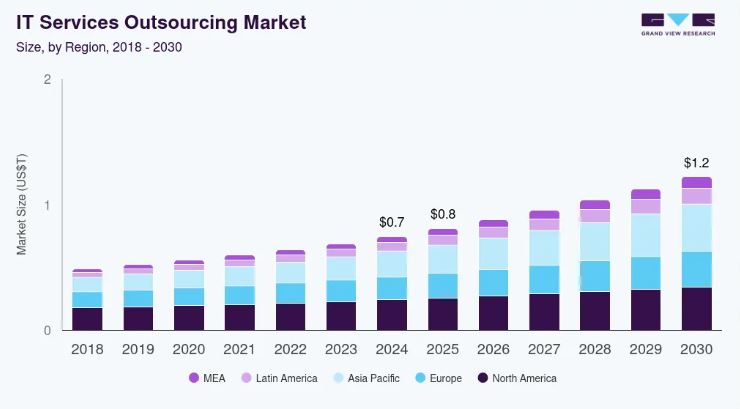
The global IT outsourcing market is estimated at USD 744.62 billion in 2024 and is projected to reach USD 1.22 trillion by 2030, growing at a compound annual growth rate (CAGR) of 8.6% from 2025 to 2030, according to a report by Grand View Research published in November 2024.
This surge demonstrates the rising reliance on outsourcing partners for advanced software solutions, with Python development being a major driver thanks to its versatility across industries.
2. Python Dominance in AI, ML, and Data Analytics
Python has solidified its reputation as the go-to language for data science, artificial intelligence, and machine learning. According to surveys, over 90% of data professionals use Python in their daily work. For companies aiming to build predictive models, automation systems, or advanced analytics platforms, outsourcing Python development provides immediate access to specialized expertise in libraries such as TensorFlow, Scikit-learn, and Pandas.
3. Cloud-Native and Modern Architectures as the Standard
Businesses increasingly expect outsourced projects to be designed for cloud environments from the ground up. Cloud-native solutions powered by containers (Docker), orchestration tools (Kubernetes), serverless computing, and microservices are now the norm. Outsourcing partners with proven experience in modern architectures are becoming highly sought after, as they help organizations build scalable and globally distributed applications.
4. Security, Compliance, and Reliability in the Spotlight
With sensitive customer data and proprietary algorithms at stake, companies are prioritizing security and compliance more than ever before. Certifications such as ISO 27001, GDPR, and HIPAA are now critical factors when choosing a Python outsourcing partner. Secure development practices, role-based access, and encrypted communication are no longer optional but expected as baseline requirements.
5. Agile Collaboration, DevOps, and Continuous Delivery
The outsourcing model is shifting toward close, collaborative relationships rather than transactional hand-offs. Startups and enterprises alike demand Agile methodologies, DevOps integration, and continuous integration/continuous delivery (CI/CD) pipelines to speed up iterations. This approach allows teams to test, release, and refine software in real time, ensuring that products evolve with market demands.
These trends make it clear that Python outsourcing is not just about saving time or money. It has become a strategic accelerator for digital transformation, enabling businesses to embrace innovation, achieve faster time-to-market, and maintain robust security while leveraging global expertise.
Conclusion
Outsourcing Python development offers businesses access to specialized expertise, cost efficiency, and faster project delivery. However, it’s essential to address challenges like communication barriers, quality assurance, and data security.
ONEXT DIGITAL provides comprehensive Python development services, including web applications, data analysis tools, automation scripts, and machine learning models. Their experienced team ensures clear communication, rigorous quality control, and robust security measures, aligning solutions with your business objectives.
By partnering with ONEXT DIGITAL, you can leverage their expertise to enhance your development capabilities and drive innovation.
FAQs about Python Development Outsourcing
1. How does Python development outsourcing work for small businesses?
Python development outsourcing allows small businesses to assign projects to external teams instead of hiring full-time developers. Companies define requirements, choose a partner, and collaborate remotely on coding, testing, and deployment. This provides access to skilled developers and frameworks, helping businesses deliver projects efficiently while focusing on core operations.
2. What types of projects are suitable for Python development outsourcing?
Python development outsourcing is suitable for web applications, APIs, automation, data analysis, and AI/ML projects. It works for both well-defined short-term projects and ongoing development. Outsourcing enables businesses to access specialized skills and modern tools without building a full in-house team.
3. How can Python development outsourcing improve team scalability?
Outsourcing Python development allows businesses to scale teams up or down based on project needs. Companies can add specialists for specific tasks like AI or cloud integration and reduce resources when work is done. This flexibility avoids permanent hires while maintaining efficient project delivery.
4. What are common risks in Python development outsourcing and how to manage them?
Common risks include communication gaps, inconsistent code quality, and data security concerns. They can be managed by setting clear requirements, coding standards, version control, secure access, and regular reviews. Structured processes help ensure Python development outsourcing is reliable and meets project goals.
5. Is Python development outsourcing suitable for non-technical founders?
Yes, non-technical founders can use Python development outsourcing to access skilled developers while focusing on business strategy. Clear project scope, frequent updates, and transparent communication help non-technical stakeholders track progress and ensure quality delivery without deep coding knowledge.
6. How does Python development outsourcing reduce development timelines?
Python development outsourcing speeds up timelines by using experienced teams who can work in parallel on multiple tasks. Agile practices, automated testing, and continuous integration allow faster iterations, helping businesses launch applications or updates more quickly than building an internal team from scratch.