
 Services
 Solutions
 Main platform
 Technology
 White Label
  Offshore
 Hire developers



Over 80% of online sales for many Australian mid-sized brands now pass through platforms they don’t own. Meanwhile, proprietary e-commerce sites built at five- or six-figure budgets are increasingly struggling to justify their upkeep.
The Australian e-commerce landscape underwent a sharp reality check entering 2026. The shutdown of Catch and MyDeal in late 2025 sent a clear signal: building a business entirely on third-party real estate is a high-risk gamble. Yet, with Amazon continuing to swallow market share and custom websites demanding heavier ad spend just to capture basic traffic, retailers face a genuine strategic dilemma.
Is it time to double down on marketplace volume, or should you take back control by investing in a channel you actually own?
Rather than offering another vague “it depends,” this analysis breaks down the reality of Australia’s 2026 e-commerce market, where marketplaces make economic sense, where they fail, and how to allocate your next growth dollar with precision.
The Australian Marketplace Landscape in 2026: What Retailers Need to Know

Australia’s marketplace economy continues to grow at a remarkable pace. According to Australia Post’s 2026 eCommerce Report, 73% of Australians who shopped online in 2025 made at least one purchase through a marketplace. Consumers spent almost AUD 18.9 billion on pure marketplace platforms such as Amazon and Temu alone, and that figure doesn’t include marketplaces operated by major retailers like Big W or Kmart.
Amazon remains the biggest force behind this growth. Recent data from Pattern Australia found that around 60% of Australians purchased from Amazon over the past 12 months, with that number expected to rise further next year. While competitive pricing still plays a role, Amazon’s biggest advantage today is the overall shopping experience. Fast delivery, a broad product range and the familiarity of Prime keep customers coming back.
Not every marketplace is benefiting from this trend, though. Kogan’s share of shoppers has fallen from 19% in 2024 to around 15% this year. Catch and MyDeal have already exited the market, highlighting how difficult it has become for mid sized marketplaces to compete. Retailers are increasingly choosing between well established local brands and global platforms like Amazon, Temu and Shein, leaving less room for everyone else.
Consumer behaviour has also changed. Most shoppers don’t pay much attention to whether they’re buying directly from a retailer or from a third party seller on a marketplace. If they’re shopping on a trusted site like Bunnings, Big W, Woolworths or Kmart, they generally feel comfortable completing the purchase without thinking much about who is fulfilling the order.
For Australian retailers, marketplaces have become one of the fastest ways to reach customers and generate sales. They’re an important part of the ecommerce mix, but they shouldn’t be the whole strategy. As marketplaces continue to grow, owning a website where you control your brand, customer relationships and data becomes even more valuable. That’s why the question isn’t whether you should sell on marketplaces or your own website, but how the two should work together.
Advantages of Selling on a Marketplace in Australia
The biggest draw is traffic that’s already there. List a product on Amazon or eBay and you reach millions of people actively looking to buy, instead of having to generate traffic yourself the way you would with a brand new website that might only get visits from friends for the first few months.
Setup time is short too. Opening a marketplace storefront can take a few hours to a few days, while building a full website (design, optimisation, payment integration) usually takes weeks to months. If you need to start selling fast, this advantage is hard to argue with.
You’re also borrowing an established brand’s trust. Shoppers on Big W Market or Amazon trust the checkout process, the returns policy, and the delivery speed of that platform, without needing to know who you are yet. For a new shop with no track record, this is often the fastest path to a first sale.
Upfront marketing costs are lighter as well. You don’t need a big budget for SEO or Google/Meta ads to land your first customer. Marketplaces come with their own internal search engines, and ranking there (optimising titles, images, product keywords) is far simpler than competing on Google.
Disadvantages of Marketplaces: Risks Retailers Need to Weigh
But everything has a cost, and with marketplaces, that cost is becoming more visible as the Australian market gets more competitive.
Commission fees are the first thing eating into profit. Every order gets a percentage cut, plus listing fees on some platforms. The bigger your sales, the more that adds up, while a website only costs a fixed monthly platform fee, not a cut of revenue.
More seriously: you don’t own your customers. Marketplaces rarely share buyer emails or behavioural data with you. Without that data, you can’t run remarketing or email campaigns, you can’t build a loyal customer list, and every order basically starts the relationship from zero.
Your brand also gets diluted into the bigger name. People remember “I bought this on Amazon,” not the name of your shop. You have no control over how your product is displayed or whether the buying experience matches your brand at all.
Then there’s the risk of playing by someone else’s rules. Catch and MyDeal are the clearest warning here. When a platform changes its policy, raises fees, tweaks its ranking algorithm, or worse, shuts down entirely, your revenue can vanish overnight if you’re relying on a single channel. Pattern Australia has even suggested Kogan could be the next name to exit if it doesn’t find a clearer position.
And finally, price competition on marketplaces is brutal, sometimes you’re even competing against the platform’s own private label products. It’s a game you almost never win on price alone.
Why Your Own Website Still Matters for Retailers in Australia?
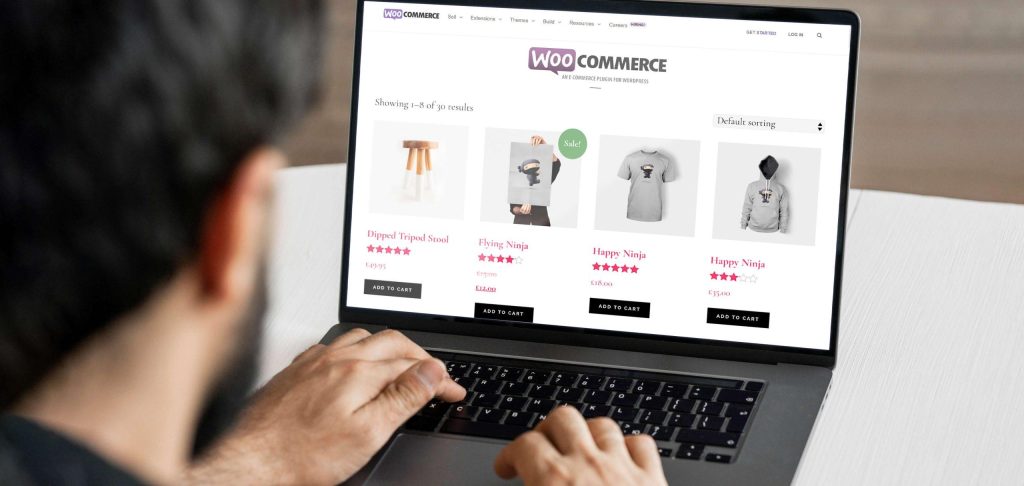
The clearest win is control. Colours, layout, brand story, buying experience: all of it is your call, instead of being one of thousands of anonymous sellers on someone else’s platform.
Customer data belongs to you too. Every email captured, every behaviour tracked, is an asset that fuels remarketing, email marketing, and loyalty programs. This is the foundation for growing customer lifetime value over time, something a marketplace never gives you.
SEO on your own site is also a compounding investment. Unlike paid ads, where you get results only as long as you keep spending, a well optimised piece of content can keep bringing in new customers for years without extra spend.
You also skip the per order commission. You pay a fixed platform fee (Shopify, WooCommerce, and so on) instead of losing a percentage of revenue on every transaction, so your margin holds up better as sales grow.
And in the long run, a website with steady traffic, a customer list, and a clear revenue history is a genuine, valuable asset. A marketplace storefront, no matter how well it sells, is still under someone else’s control, not yours.
Challenges of Building Your Own Website as a Retailer
The hardest part: you have to generate your own traffic. There’s no built in audience waiting for you. You need to invest seriously in SEO, ads, social media, and content marketing. For a new shop, this stage can take months before you see real results.
Upfront cost and setup time are also higher. Shopify and WooCommerce have made building a site much easier than before, but you still need to invest in a theme, add on apps, page speed optimisation, and payment/shipping integrations suited to the Australian market: GST, Afterpay, Australia Post.
Ongoing operation takes real effort too. A website isn’t a “set it and forget it” asset. Security, content, performance, and conversion optimisation all need consistent time or budget.
And initial trust is usually lower. A new website with no history and no public reviews the way marketplaces have will make some buyers hesitant to order for the first time. Building that trust takes time.
Marketplace vs Own Website: A Side by Side Comparison
| Criteria | Marketplace | Own Website |
| Setup speed | A few hours to a few days | A few weeks to a few months |
| Upfront cost | Low | Medium to high |
| Long term cost | Commission on every order | Fixed platform fee plus marketing spend |
| Traffic | Available immediately | Has to be built over time |
| Brand control | Very limited | Full control |
| Customer data | Almost no access | Fully owned |
| Channel dependency risk | High | Low |
| Long term brand building potential | Limited | High |
Should Retailers in Australia Choose a Marketplace or Their Own Website?

There’s no one size fits all formula, but there is one principle worth repeating: don’t put all your revenue in a single channel, whether that’s a marketplace or your own website. Catch and MyDeal shutting down is a fairly blunt reminder of that.
If you’re just starting out and aren’t sure about demand yet, launch on a suitable marketplace: Amazon for core products, eBay or Kogan for clearance or long tail items. It’s the fastest, lowest risk way to validate demand before you invest heavily in a channel of your own.
Once sales stabilise and you start thinking about building a brand, that’s the time to start your own website alongside the marketplace. You don’t have to leave the marketplace, use it to reach new customers, while pulling a portion of them back to your website through exclusive discounts, membership programs, or content only available there.
If your brand is already established with a loyal customer base, your own website should become the hub, holding your original product data, pricing, and inventory, while marketplaces serve as extended reach. Some retail experts in Australia call this the “Shopify first” model: your website is the root, and you connect out to multiple marketplaces in a controlled way, keeping inventory and pricing in sync.
Another practical rule: don’t treat every channel the same, assign each one a clear role. Amazon for your bestsellers, eBay or Kogan for clearance stock, and your own website for premium, brand driven products where the story and the buying experience actually make a difference.
5 Mistakes That Make Australian Retailers Too Dependent on Marketplaces
Most retailers don’t set out to become dependent on marketplaces, it happens gradually, through a few decisions that seem harmless at the time. Here are the five most common mistakes we keep seeing.
Mistake 1: Letting a Single Marketplace Account for Over 90% of Revenue
This is the root mistake, everything else is a consequence of it. When one channel holds almost all your revenue, you’re not really “selling on a marketplace” anymore, you’re renting your entire business from someone else, and they can change the rent whenever they want. Catch and MyDeal shutting down is the most expensive lesson for sellers who concentrated most of their revenue on exactly those two platforms. A reasonable benchmark: once a single channel passes 60 to 70% of revenue, it’s time to actively start a second channel, not wait until you’re forced to.
Mistake 2: Not Collecting Customer Emails
Plenty of sellers ship thousands of orders a year on Amazon or eBay without a single email address to show for it. Note that Amazon is fairly strict about not letting you insert contact details or brand promotions into packaging, but that doesn’t mean you’re out of options. For orders from your own website, collect emails right at checkout. For marketplace customers, warranty cards, product registration, discount codes for their next purchase on your own site, or membership programs can work, as long as they comply with each platform’s policy. Without an email, you have no way to reach a past customer again on your own terms.
Mistake 3: Competing Purely on Price
On a marketplace, price is the easiest thing to compare, so many sellers default to treating it as their only weapon. The problem is you almost never win that game long term, there’s always someone willing to go lower, including the platform itself. Competing on price also erodes margin faster than almost any other cost. A more durable approach is to compete on things that are harder to copy: better product photography, more detailed descriptions, after sales service, or bundled offers, things that get customers to choose you even when you’re not the cheapest.
Mistake 4: Skipping SEO
Many retailers treat SEO as “something big companies do” or “something to figure out later.” But SEO is one of the rare investments that gets harder to catch up on the longer you wait. While you hesitate, competitors are stacking up backlinks, content, and keyword rankings over months or years. You don’t need to go big from day one, but if your own website has never had a single properly optimised article, that’s a sign you’re leaving the asset you paid to build sitting idle.
Mistake 5: Treating Your Website as Just a Catalogue
This is the quietest mistake of all. Plenty of retailers have a website but only use it as a static product list: built once, then left alone, no new content, no conversion optimisation, no tracking of visitor behaviour. A website like that will never generate meaningful revenue, and the retailer ends up concluding “my own website just doesn’t work,” when the real issue was never having invested in running it like an actual sales channel.
Checklist: Is Your Business Ready to Build Its Own Website?
If you’re still on the fence after reading this far, try answering these five questions honestly, no complicated analysis needed, just an honest read of where you stand right now:
- More than 50% of revenue comes from marketplaces
- You want to increase repeat purchase rate
- You want to run email marketing
- You want to reduce commission costs
- You want to build a lasting brand, not just fulfil orders
Checked three or more? This is probably a good time to start investing in your own website. It doesn’t need to happen immediately or all at once, but it should at least make it onto next quarter’s plan instead of getting pushed off for another year.
Conclusion: Marketplace or Own Website, What Should Your Foundation Be?
If you only get one short answer: a marketplace helps you sell fast, your own website helps you build a business that lasts. In the Australian market of 2026, where marketplaces dominate traffic but also carry real volatility, the wiser answer probably isn’t picking a side. It’s letting your own website serve as the foundation you control (data, brand, pricing), while marketplaces act as a controlled way to extend your reach.
The real question isn’t “marketplace or own website.” It’s this: if the marketplace you depend on changed its policy tomorrow, raised its fees, or shut down like Catch and MyDeal, what would be left of your business? The answer probably tells you whether you should start acting today, or keep waiting.
Need a Specific Roadmap for Your Business?
Every industry and every stage of growth calls for a different roadmap, there’s no single formula that fits everyone. If you’d like a specific assessment for your situation, the Onext Digital team can help with:
- A free 30 minute consultation to assess your current channel dependency and suggest a roadmap suited to your industry and business size
- SEO friendly ecommerce website design and development on Shopify, Magento, or WooCommerce, tailored to the Australian market (GST, Afterpay, Australia Post shipping integration)
- Controlled multichannel connections, syncing inventory and pricing between your own website and marketplaces like Amazon, eBay, and Kogan, so you can run a hybrid model without messy data
Get in touch with Onext Digital if you’d like to talk through the details.
FAQs
Is a marketplace better than owning an ecommerce website in 2026?
Neither option is better for every retailer. Marketplaces such as Amazon, eBay, and Temu can help businesses reach existing shoppers quickly, while an owned website gives retailers more control over branding, customer data, and long term growth. The right approach depends on business goals, product category, and growth stage.
Why should Australian retailers still build their own website if marketplaces are growing?
A marketplace can generate traffic and sales, but retailers do not own the customer relationship. An ecommerce website allows businesses to build their brand, collect first party customer data, improve customer loyalty, and reduce reliance on third party platforms.
What are the biggest disadvantages of relying only on marketplaces?
Depending entirely on marketplaces can expose retailers to higher fees, changing platform policies, limited customer access, and intense price competition. Businesses may also struggle to build brand recognition when customers associate the purchase experience mainly with the marketplace.
How much does it cost to build an ecommerce website in Australia?
The cost depends on factors such as platform choice, design complexity, integrations, product volume, and required features. A simple Shopify store may require a smaller investment, while a custom ecommerce platform or Magento solution can involve more development and ongoing maintenance.
What ecommerce strategy should Australian retailers follow in 2026?
Australian retailers should avoid relying on a single sales channel. A balanced strategy combines marketplaces for customer acquisition with an owned ecommerce website for brand growth, customer retention, and long term business value.
Can Australian retailers sell on marketplaces and their own website at the same time?
Yes. Many successful retailers use a multi channel approach. Marketplaces help attract new customers, while an owned website supports repeat purchases, stronger brand relationships, and higher customer lifetime value.