
 Services
 Solutions
 Main platform
 Technology
 White Label
  Offshore
 Hire developers



In today’s healthcare environment, technology isn’t just a supporting tool it’s the backbone of patient care. From EHR/EMR systems and medical imaging to telehealth platforms and secure data sharing, every touchpoint relies on a reliable IT infrastructure. When systems fail, patient care suffers. Delays increase. Compliance risks rise. Operational costs spike.
That’s why healthcare IT support has become essential for hospitals, clinics, and specialty medical practices. A strategic IT partner ensures that every digital system works flawlessly securely, 24/7 so doctors and medical staff can focus on what matters most: delivering quality care to patients.
But not all IT support is built for healthcare. The industry demands expertise in cybersecurity, HIPAA compliance, medical device integration, and rapid response to mission-critical incidents. In this guide, you’ll discover everything you need to know about choosing the right healthcare IT support solution, the real benefits it can deliver, and how your organization can significantly reduce downtime, enhance data protection, and improve patient outcomes.
Let’s explore how to transform your healthcare operations with secure and high-performing IT support.
What Is Healthcare IT Support?
Healthcare IT support refers to the specialized management, maintenance, and protection of technology systems used by healthcare organizations. Its purpose goes far beyond traditional IT helpdesk tasks it ensures that critical medical systems operate securely, efficiently, and in full compliance with strict healthcare regulations.
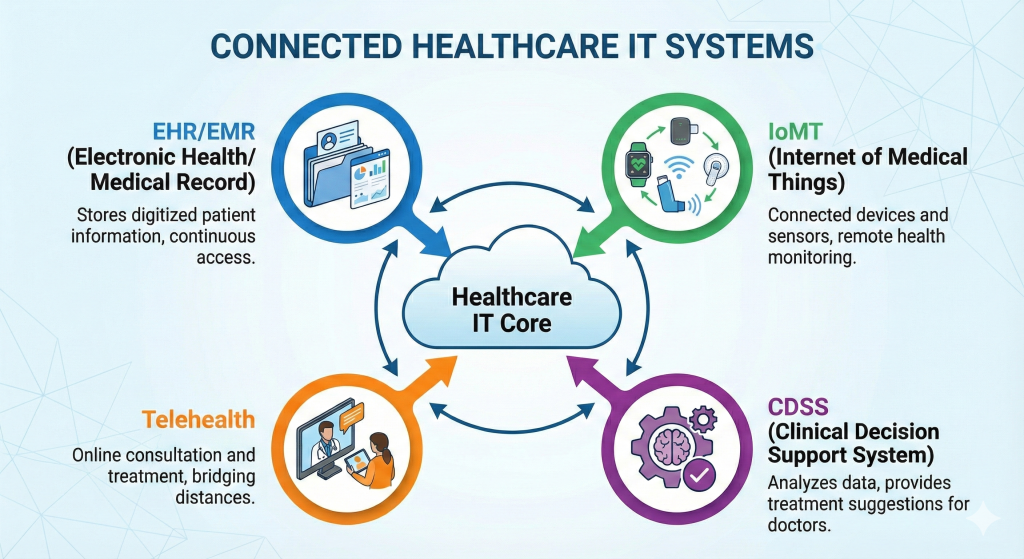
Healthcare providers rely on dozens of interconnected digital solutions every day:
- EHR/EMR systems for storing patient records
- Medical devices connected to networks (IoMT)
- Telemedicine platforms for remote care
- Practice management & billing software
- Clinical decision support systems (CDSS)
- Secure communication tools between teams
Without proper IT support built specifically for healthcare, these systems can easily face:
- Data breaches and compliance violations
- Downtime that delays diagnosis & treatment
- Cyberattacks like ransomware
- Staff frustration, productivity loss
- Risk to patient safety
So, healthcare IT support combines technical reliability + cybersecurity + compliance + medical workflow expertise. It’s a mission-critical service that keeps both technology and patient care running smoothly 24/7.
Why Healthcare IT Support Matters in 2026?

The healthcare industry is undergoing one of the fastest digital transformations in history. By 2026, hospitals and clinics are expected to rely even more heavily on cloud systems, AI diagnostics, IoT-connected medical devices, and virtual care models. This shift brings enormous potential but also introduces critical vulnerabilities.
Here’s why healthcare IT support has become more vital than ever:
1. Rapid Expansion of Digital Healthcare
Telehealth usage, electronic records, and remote patient monitoring continue to surge. With that comes the need for always-on systems and robust infrastructure.
2. Explosive Growth of Cybersecurity Threats
Healthcare remains one of the #1 targets for cybercriminals due to the value of patient data. Ransomware attacks can shut down entire hospitals within minutes without expert IT protection, the consequences are severe.
3. Complex Integration of Medical Devices (IoMT)
Ventilators, infusion pumps, imaging machines, heart monitors all now connect to digital networks. Any malfunction affects patient safety, making specialized IT oversight essential.
4. Strict Compliance & Data Privacy Regulations
Healthcare organizations must meet:
- HIPAA (U.S.)
- GDPR (Global)
- PCI (Payment data)
- HL7 / FHIR standards for interoperability
Professional IT support ensures every workflow remains compliant and audit-ready.
5. Staff Shortages & Operational Pressure
Clinics struggle to find experienced in-house IT talent. Outsourced healthcare IT support brings immediate access to specialized experts without high hiring costs.
Core Services Included in Healthcare IT Support
In today’s healthcare landscape, technology is more than just a support tool it is the backbone of operations, ensuring that clinical decisions and administrative workflows run smoothly. Healthcare IT Support goes beyond reactive troubleshooting; it builds a secure, efficient, and compliant technology environment that enables healthcare organizations to operate effectively and scale sustainably.
A comprehensive IT support service encompasses multiple dimensions, from protecting sensitive patient data and optimizing system performance to providing strategic technology guidance. Key services typically include:
1. 24/7 Monitoring and Support

Healthcare facilities operate around the clock, and their IT systems must keep pace. Continuous monitoring ensures that issues are detected and resolved immediately, whether through phone support, remote troubleshooting, or on-site intervention. This reduces downtime, allowing medical teams to focus entirely on patient care rather than technical disruptions.
2. Regulatory Compliance and Security Management
Protecting patient information is both a legal requirement and a critical component of patient trust. Healthcare IT Support ensures compliance with HIPAA and other industry standards through risk assessments, security audits, Business Associate Agreements, and robust cybersecurity measures to prevent data breaches. By maintaining high security standards, healthcare organizations minimize legal risks while reinforcing trust with patients and partners.
3. Proactive Maintenance and Performance Optimization
Rather than waiting for problems to occur, proactive IT maintenance keeps systems updated, patched, and optimized. This approach ensures operational stability, scalability for growing demands, and cost savings by reducing reactive fixes. A well-maintained IT infrastructure is the foundation for seamless clinical operations and efficient hospital management.
4. Data Management and Interoperability
Healthcare data only becomes valuable when it flows accurately and efficiently between systems. IT support enables EMR/EHR platforms, lab information systems, patient portals, and other systems to communicate seamlessly. This reduces manual errors, accelerates clinical decision-making, and supports coordinated care the heartbeat of modern healthcare delivery.
5. Telehealth and Remote Patient Monitoring Support
As telehealth and remote monitoring expand, IT support ensures a secure and reliable connection between patients and providers. From virtual consultations to wearable devices and sensors, IT solutions guarantee accurate data transmission, system reliability, and patient privacy. This enhances patient experience and extends the reach of healthcare services beyond hospital walls.
6. Hardware and Software Lifecycle Management
Healthcare IT support manages the full lifecycle of hardware, software, and specialized medical devices from procurement and deployment to maintenance and replacement. Effective lifecycle management reduces the operational burden on internal IT teams, ensures compatibility across systems, and keeps all tools ready to support patient care.
7. Disaster Recovery and Data Backup
Patient data is invaluable and must always be accessible. Robust backup and disaster recovery solutions ensure healthcare organizations can continue operating during system failures, natural disasters, or cyberattacks. Rapid recovery protects data, preserves operational continuity, and safeguards the hospital’s reputation.
8. IT Strategy and Consulting
A strategic IT partner does more than fix current issues it guides the future of healthcare technology. Expert consulting provides a roadmap for digital transformation, infrastructure optimization, and adoption of innovations such as AI and cloud computing. The result is enhanced efficiency, reduced costs, and improved patient outcomes, giving healthcare organizations a competitive advantage.
9. Training and User Support
Technology is only effective when used correctly. IT support offers training for medical and administrative staff, personalized user assistance, and ongoing guidance to improve proficiency. When staff can leverage technology effectively, IT transforms from a mere support function into a strategic partner that empowers care delivery and operational excellence.
Key Benefits of Healthcare IT Support
Investing in comprehensive healthcare IT support is no longer optional it has become a strategic differentiator for modern healthcare organizations. Beyond maintaining technology, effective IT support delivers measurable business outcomes, reduces risk, and enhances patient care. Here’s how healthcare IT support translates into real benefits for your organization:
1. Enhanced Operational Efficiency
By ensuring systems run smoothly and proactively addressing potential issues, IT support reduces downtime and administrative bottlenecks. Staff spend less time troubleshooting technical problems and more time on patient care, improving overall workflow efficiency. Hospitals can handle higher patient volumes without compromising quality, maximizing ROI on both technology and human resources.
2. Regulatory Compliance and Risk Mitigation
Healthcare IT support helps organizations stay ahead of evolving regulations, such as HIPAA, GDPR, and local health data protection laws. Proactive compliance measures, risk assessments, and secure data practices minimize the likelihood of costly violations or data breaches, safeguarding both patient information and the hospital’s reputation.
3. Cost Optimization
Strategically managed IT infrastructure reduces unnecessary expenditures by:
- Preventing costly system failures
- Optimizing hardware and software investments
- Streamlining operational processes
With expert IT guidance, healthcare organizations invest in the right technology at the right time, turning IT from a cost center into a driver of value.
4. Improved Patient Care and Satisfaction
Reliable, interoperable systems ensure clinicians have accurate, timely access to patient data. Telehealth, remote monitoring, and seamless EMR/EHR integration improve treatment decisions and expand care accessibility. Patients benefit from faster, safer, and more personalized care translating into higher satisfaction and loyalty.
5. Scalability and Future-Readiness
Healthcare organizations are under constant pressure to adapt to new treatments, regulatory changes, and digital innovations. Robust IT support enables scalable infrastructure and future-ready solutions, including cloud computing, AI-driven analytics, and IoT-enabled devices. This flexibility allows organizations to grow and innovate without being constrained by legacy systems.
6. Strategic Insights and Decision Support
Healthcare IT support goes beyond maintenance it provides actionable insights through data analytics, reporting, and technology consulting. Decision-makers can identify trends, optimize resource allocation, and plan for strategic investments in patient care and operational improvements. IT becomes a trusted partner in organizational strategy, not just a technical service.
7. Workforce Empowerment and Adoption
Even the best technology fails without proper user adoption. Continuous training, user support, and change management programs ensure staff leverage IT systems effectively, increasing productivity, reducing errors, and fostering a culture of innovation within the organization.
Why Outsourcing Healthcare IT Support Is a Strategic Advantage?
In today’s fast-evolving healthcare landscape, organizations face growing pressure to deliver high-quality patient care while managing costs, complying with regulations, and leveraging the latest technologies. Outsourcing healthcare IT support has emerged as a strategic approach that transforms IT from a reactive function into a growth enabler. Here’s why outsourcing can be a game-changer for healthcare providers:
1. Access to Specialized Expertise
Healthcare IT is complex, encompassing cybersecurity, regulatory compliance, system interoperability, and emerging technologies like AI and cloud computing. Outsourcing gives healthcare organizations direct access to a team of specialized experts without the overhead of hiring, training, and retaining in-house staff. This ensures that technology decisions are guided by best practices and industry experience, reducing costly trial-and-error.
2. Cost Efficiency and Predictable Budgeting
Maintaining an in-house IT department capable of 24/7 support, proactive maintenance, and strategic consulting can be expensive. Outsourcing allows organizations to convert unpredictable IT costs into predictable operational expenses, often at a fraction of the cost. Hospitals can scale IT support services according to demand, eliminating unnecessary expenditures while maintaining performance and reliability.
3. Enhanced Focus on Core Competencies
By outsourcing IT support, hospital leadership and staff can focus on patient care and operational excellence, rather than troubleshooting systems or managing complex infrastructure. This reallocation of focus drives better clinical outcomes, operational efficiency, and staff satisfaction, turning IT from a distraction into a facilitator of the core mission.
4. Rapid Access to Advanced Technology
Healthcare IT outsourcing partners often provide access to cutting-edge tools and technologies, from cloud-based EMR systems to AI-driven analytics and advanced cybersecurity frameworks. This allows healthcare organizations to adopt innovations quickly, without the costs and delays of implementing them internally. It also ensures that systems remain future-ready and scalable.
5. Risk Mitigation and Compliance Assurance
Outsourcing IT support reduces exposure to security breaches, data loss, and regulatory non-compliance. Experienced providers implement rigorous protocols for disaster recovery, backup solutions, and regulatory adherence. With a trusted partner managing these critical areas, healthcare organizations can significantly reduce operational risk and safeguard patient trust.
6. 24/7 Support and Proactive Maintenance
Outsourced IT teams provide continuous monitoring and proactive maintenance, ensuring that systems remain operational at all times. From preventing downtime to rapid incident response, these services help healthcare organizations maintain uninterrupted clinical and administrative workflows, a critical factor in patient safety and organizational efficiency.
Outsourcing vs. In-House IT Support

When evaluating healthcare IT support, organizations must carefully weigh the choice between in-house teams and outsourced services. Each model comes with its own set of advantages, challenges, and strategic implications. A deep understanding of these differences allows healthcare facilities to adopt the model or combination that best aligns with their operational goals, budget, and risk tolerance.
1. In-House Support
- Greater Control Over Systems and Data
In-house IT teams offer direct oversight of every system, from EMR/EHR platforms to telehealth infrastructure. Policies, security protocols, and workflows can be tightly aligned with organizational standards, reducing the risk of miscommunication or delays in implementing updates. For example, hospitals with sensitive research data may prefer in-house teams to ensure all access and security procedures strictly follow internal compliance rules.
- Immediate Response to On-Site Issues
Having IT personnel physically present ensures that hardware failures, network outages, or integration issues are addressed immediately. Critical situations such as a malfunctioning infusion pump or imaging system can be resolved without waiting for remote support, minimizing disruptions to patient care.
- Higher Long-Term Costs and Staffing Challenges
While in-house teams provide control and immediacy, maintaining them comes with significant costs. Recruiting highly skilled IT staff, retaining them amid competitive healthcare tech markets, and continuously training them on emerging technologies can strain budgets. Hospitals with limited financial resources may find sustaining a fully capable in-house team challenging, particularly for specialized areas like cybersecurity or IoMT device integration.
2. Outsourced Support
- Access to Specialized Expertise
Outsourcing provides immediate access to professionals with deep knowledge in healthcare IT, cybersecurity, regulatory compliance, and emerging technologies such as AI analytics and cloud-based EMR systems. Organizations can leverage the expertise of a full team without incurring the cost of hiring and training internally. For instance, a small clinic can implement robust cybersecurity protocols and cloud data solutions through an outsourced partner without maintaining a large internal IT department.
- Scalable Service Models
Outsourced IT support can be scaled to match fluctuating demands. Seasonal peaks, expansions, or adoption of new technologies can be managed efficiently without overburdening internal resources. This flexibility is particularly valuable for multi-site hospital systems or clinics expanding telehealth services rapidly.
- Potential Concerns About Data Control and Response Times
Some organizations may worry about limited on-site presence or the handling of sensitive patient data. However, these concerns can be mitigated by choosing partners with strict HIPAA compliance protocols, secure remote access solutions, and clear SLAs (Service Level Agreements) for response times. Advanced remote monitoring tools often allow outsourced teams to detect and resolve issues in real time, sometimes even faster than smaller in-house teams.
3. Hybrid Approach
Many healthcare organizations find that a hybrid model combining in-house and outsourced IT support delivers the optimal balance of control, cost efficiency, and expertise:
Critical systems such as core EMR platforms or life-support monitoring are often overseen internally to maintain direct control and immediate response.
Specialized tasks like cybersecurity audits, regulatory compliance assessments, disaster recovery planning, and strategic IT consulting are handled by external experts.
Operational flexibility is achieved by leveraging outsourced teams for peak workloads or emerging technology adoption, without permanently expanding internal headcount.
For example, a regional hospital may retain a small internal IT team to manage day-to-day operations, while outsourcing cybersecurity, cloud infrastructure, and telehealth platform support to a trusted healthcare IT partner. This hybrid approach ensures robust security, compliance, and continuity of care, while keeping costs predictable and access to expertise broad.
Choosing the Right Healthcare IT Support Partner

Selecting a healthcare IT support partner is one of the most strategic decisions a healthcare organization can make. The right partner does more than fix technical issues they enable innovation, safeguard patient data, and drive operational excellence. Here’s what to consider when choosing a partner:
1. Proven Industry Expertise
Healthcare IT is unique. A strong partner should demonstrate deep experience in healthcare environments, including compliance with HIPAA, GDPR, and other local regulations. Look for providers with a track record of managing EMR/EHR systems, telehealth platforms, and secure patient data networks. Their expertise ensures they understand your challenges and can deliver solutions tailored to your organization.
2. Comprehensive Service Portfolio
Healthcare IT support is multi-faceted. The ideal partner offers end-to-end services from 24/7 monitoring, cybersecurity, and disaster recovery to strategic consulting and staff training. This ensures all aspects of your IT environment are integrated, stable, and optimized, without relying on multiple vendors.
3. Scalability and Flexibility
Healthcare needs change rapidly. Choose a partner capable of scaling support services according to growth, seasonal demand, or new technology adoption. Flexibility in contract terms, service tiers, and response times ensures you pay only for what you need while maintaining high performance.
4. Proactive Approach to Security and Compliance
The right partner should anticipate risks, not just react to them. This includes regular security audits, risk assessments, backup solutions, and compliance checks. Proactive IT support reduces the likelihood of data breaches, regulatory penalties, and operational disruptions, safeguarding your organization and patients alike.
5. Transparent Communication and Reporting
A strong partner communicates clearly and regularly. Expect detailed reports, KPIs, and insights that help you understand system performance, security posture, and ROI. Transparent reporting enables data-driven decisions and builds trust between your organization and the IT provider.
6. Commitment to Innovation
Healthcare is evolving rapidly. Your IT partner should actively introduce innovations that improve efficiency, reduce costs, and enhance patient outcomes whether it’s AI-driven analytics, cloud solutions, or telehealth integration. A forward-thinking partner ensures your organization stays competitive and future-ready.
Conclusion
Investing in comprehensive healthcare IT support is no longer optional it is a strategic necessity for modern medical facilities. From ensuring system reliability and data security to maintaining regulatory compliance and enabling seamless patient care, effective IT support empowers healthcare organizations to operate efficiently, innovate confidently, and deliver superior outcomes. Whether through in-house teams or trusted outsourcing partners, prioritizing specialized IT solutions allows hospitals, clinics, and medical practices to focus on what truly matters: providing safe, timely, and high-quality care to patients.
Ready to transform your healthcare operations with reliable IT support? Partner with experts who understand the unique challenges of the healthcare industry and unlock the full potential of your digital infrastructure.
FAQs about healthcare IT support
Q1. What is healthcare IT support, and how does it impact patient care?
Healthcare IT support ensures that all digital systems such as EHR/EMR platforms, telehealth solutions, and connected medical devices operate securely and efficiently. By minimizing downtime and preventing technical disruptions, it allows clinicians to access accurate patient data promptly, improving diagnosis, treatment, and overall patient care.
Q2. How can healthcare IT support help my organization stay HIPAA and GDPR compliant?
Specialized IT support implements security protocols, regular audits, and risk management strategies to safeguard patient data. This ensures your organization meets HIPAA, GDPR, and other healthcare regulations, reducing the risk of fines, data breaches, and reputational damage.
Q3. What are the key benefits of outsourcing healthcare IT support vs. maintaining an in-house team?
Outsourcing provides access to specialized expertise, 24/7 monitoring, and scalable service models without the high costs of hiring and training internal staff. In-house teams offer greater control and immediate on-site response. Many organizations adopt a hybrid approach to balance control, cost, and expertise.
Q4. Which IT services are essential for modern hospitals and clinics?
Critical services include EMR/EHR management, telehealth support, IoMT device integration, cybersecurity, data interoperability, disaster recovery, and IT strategy consulting. These services ensure seamless clinical operations, data security, and improved patient outcomes.
Q5. How does proactive IT support prevent downtime and cybersecurity threats in healthcare?
Proactive IT support monitors systems 24/7, applies regular updates and patches, performs risk assessments, and implements advanced cybersecurity measures. This prevents unexpected system failures, reduces the risk of ransomware attacks, and ensures uninterrupted clinical and administrative workflows.
Q6. How can a managed IT services provider improve efficiency and reduce costs in healthcare operations?
Managed IT services optimize hardware and software usage, streamline workflows, and provide strategic IT guidance. By preventing costly downtime, enhancing system performance, and offering expert support, these providers help healthcare organizations save money while improving operational efficiency and patient care quality.