
 Services
 Solutions
 Main platform
 Technology
 White Label
  Offshore
 Hire developers



Is your IT team overwhelmed by the complexity of managing cloud infrastructure while trying to keep pace with digital transformation? You’re not alone. According to recent industry research, 84% of IT professionals struggle with cloud cost management, and 73% of organizations cite the lack of in-house expertise as a major barrier to cloud adoption.
In an era where digital transformation has become a business imperative rather than a competitive advantage, the pressure on IT teams has never been greater. Businesses are grappling with multi-cloud complexities, escalating cybersecurity threats, and the constant need to innovate all while trying to control costs and maintain operational efficiency. This perfect storm of challenges is precisely why cloud and managed services have emerged from a nice-to-have to a strategic necessity for organizations worldwide.
This comprehensive guide will help you understand what cloud and managed services really are, the tangible benefits they deliver, and how to implement them effectively to transform your business operations.
What Are Cloud and Managed Services?
Cloud and managed services is a service model in which an organization outsources part or all of the management and maintenance operations of cloud computing infrastructure to a third-party service provider (Managed Cloud Service Provider – MCSP).
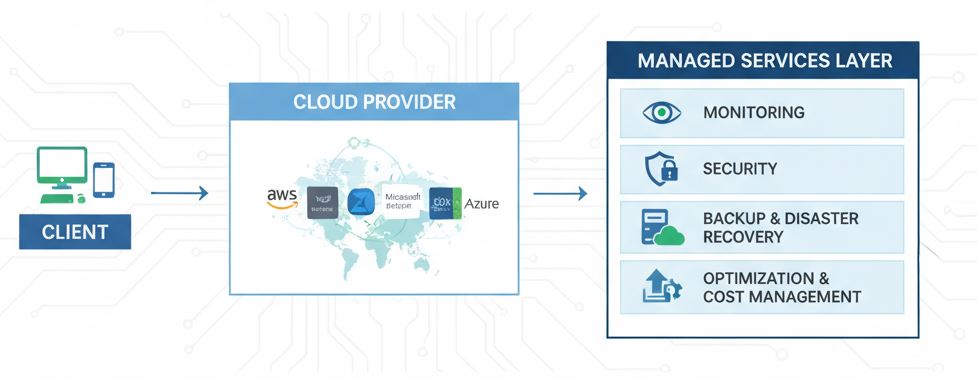
Essentially, instead of building and operating an in-house IT team to manage the cloud environment, businesses can hire a professional partner to handle tasks such as 24/7 monitoring, performance optimization, data security, backup, and disaster recovery. This allows organizations to focus on core business operations rather than worrying about complex technical issues.
The Cloud and Managed Services Market Is Growing Strongly
The cloud and managed services market is experiencing an impressive growth period with many notable figures.
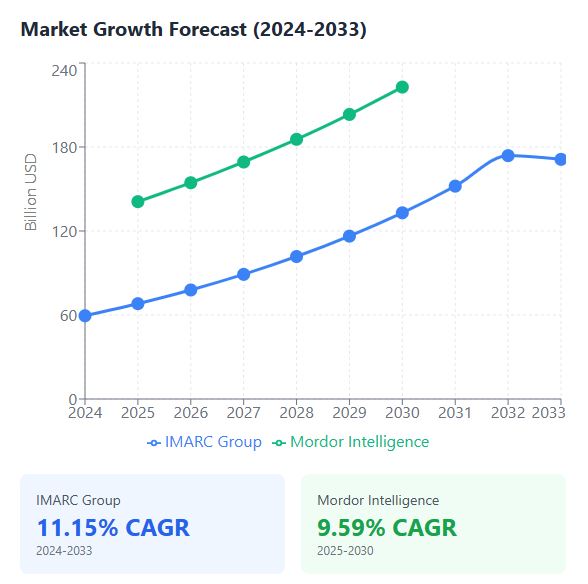
According to research by Mordor Intelligence, the cloud managed services market reached a value of $140.96 billion in 2025 and is projected to increase to $222.81 billion by 2030, with a compound annual growth rate (CAGR) of 9.59%. Meanwhile, IMARC Group estimates this market at $59.46 billion in 2024 and expects it to reach $171.17 billion by 2033 with a CAGR of 11.15%.
1. Growth Drivers
This strong growth is driven by multiple factors:
- Operating model transformation: Businesses are shifting from capital-intensive infrastructure ownership models to pay-as-you-go models, improving flexibility and shortening innovation cycles.
- Pressure from multi-cloud environments: The complexity of multi-cloud environments and increasing cybersecurity threats are overwhelming in-house IT teams, creating significant demand for professional external management services.
- AI and sustainability trends: AI-driven workloads and sustainability goals are increasing the need for external expert management.
2. Regional Markets
North America currently holds the largest market share at 33% in 2024, driven by widespread cloud technology adoption and the presence of many major providers. However, the Asia-Pacific region is recording the fastest growth rate with a CAGR of 9.3% through 2030, thanks to government pro-cloud policies and widespread bandwidth expansion.
Major Types of Cloud and Managed Services
Cloud and managed services encompass various service types, each addressing specific business needs.
1. Managed Infrastructure Services
Managed Infrastructure Services are the core foundation of cloud managed services, accounting for 37.5% of revenue market share in 2024.
These services include managing infrastructure components such as virtual servers, storage, networking, and databases. Providers handle monitoring, maintenance, updates, and optimization of these resources, ensuring stable performance and flexible scalability according to business needs.
2. Managed Network Services
Managed Network Services are dominating the market due to increasing demand for reliable and scalable network infrastructure to support digital transformation efforts.
These services provide 24/7 monitoring, proactive troubleshooting, and enhanced security, allowing companies to maintain seamless operations while protecting against network threats. As cloud computing, IoT devices, and remote work arrangements become more prevalent, the need for effective network management is becoming increasingly critical.
3. Managed Security Services
Managed Security Services are forecast to expand with a CAGR of 10.7% through 2030, reflecting the growing importance of cybersecurity.
These services include continuous security monitoring, threat detection and response, vulnerability management, and ensuring compliance with regulations. With the average cost of a security breach reaching $4.45 million according to Gartner, outsourcing security to experts has become a top priority.
As a real-world example, in December 2024, Canon IT Solutions launched a CNAPP (Cloud-Native Application Protection Platform) service for continuous multi-cloud security monitoring at a price of 350,000 Japanese yen (approximately $2,625) per month.
4. Managed Application Services
Managed Application Services focus on maintaining, updating, and optimizing business applications running on the cloud.
These services ensure applications always operate at optimal performance, are updated with the latest security patches, and are seamlessly integrated with other systems. Providers can also support the development and deployment of new applications based on cloud-native architecture.
5. Managed Data Services
Managed Data Services help businesses manage, store, back up, and analyze the massive volumes of data generated daily.
According to forecasts, within the next three years, the world will generate over 200,000 terabytes of data, and half of it will be stored in the cloud. This emphasizes the increasing need for efficient collection, processing, analysis, security, and utilization of data.
Top Benefits Businesses Gain from Cloud and Managed Services
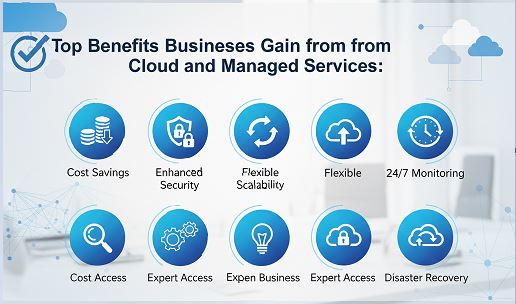
Businesses adopting cloud and managed services can gain significant benefits, from cost savings to improved operational performance.
1. Cost Savings and Budget Predictability
Cloud and managed services help businesses control costs more effectively while still having access to expert support and advanced technology.
According to Flexera’s State of the Cloud 2025 report, 84% of IT professionals struggle with managing cloud costs. Managed service providers help save costs by reducing the need to hire specialized staff, purchase monitoring tools, or maintain backup systems. They can also eliminate unnecessary cloud spending by adjusting resource usage. Organizations using automated FinOps solutions report cost savings of up to 30%.
Instead of large upfront investments in hardware and software, businesses only pay for what they use under a predictable subscription model, making financial planning easier.
2. Enhanced Security and Compliance
Security is a top concern for any business using cloud services.
With cloud managed services, businesses get integrated protection that’s always working behind the scenes. Advanced tools such as next-generation firewalls, intrusion detection systems (IDS), continuous security monitoring, and multi-factor authentication (MFA) are deployed to keep data safe. Expert teams stay updated on the latest threats, so businesses don’t have to worry about falling behind in security.
Providers also help ensure compliance with industry standards such as GDPR, HIPAA, PCI DSS, and local data protection regulations. For example, IFS launched a sustainability management module in IFS Cloud to meet EU CSRD data tracking requirements, illustrating how compliance requirements drive product expansion.
3. Flexible Scalability
As your business grows, technology needs will change. Cloud managed services make scaling easy without the hassle of overhauling systems.
Flexible solutions can adjust as your team, data, and operations expand. You can add users, increase storage capacity, or deploy new applications without investing in new hardware or hiring additional IT staff. This is especially useful during peak business seasons or when launching new products/services.
4. 24/7 Monitoring and Reduced Downtime
Downtime can slow your business and cause major disruptions.
With cloud managed IT solutions, you get consistent monitoring that helps prevent issues before they occur. The provider’s team monitors your systems 24/7 to ensure everything runs smoothly. If an incident occurs, they respond quickly – average response time is just 60 seconds according to EMPIST. This rapid support helps keep operations on track and reduces stress from unexpected downtime.
5. Focus on Core Business Operations
Using cloud managed services helps companies avoid building in-house IT capabilities, allowing them to focus on core business operations.
Instead of spending time and resources recruiting, training, and managing an IT team, businesses can delegate this work to experts and focus on product development, improving customer service, and market expansion. According to research, 59% of organizations had dedicated FinOps teams in 2025, up from 51% the previous year, showing a strong shift toward this model.
6. Access to Latest Technology and Expertise
With a cloud managed services provider, businesses gain on-demand access to experienced and qualified resources with deep knowledge in your area of expertise.
These resources not only help develop appropriate designs to meet larger business objectives but also provide timely strategic guidance and implement a proven set of processes so you can harness the full power of the IT ecosystem. Moreover, you benefit from new upgrades and technologies without having to upgrade your own infrastructure.
7. Automated Backup and Disaster Recovery
Cloud managed service providers regularly back up your data and systems, ensuring critical information is protected from loss due to hardware failure, human error, or cyberattacks.
In the event of a disaster, businesses can recover quickly with minimal downtime. Disaster recovery (DR) plans are designed and tested regularly, including automated runbooks, validation, and recovery drills to reduce downtime risk and ensure critical data and services can be restored quickly and predictably.
Important Trends in Cloud and Managed Services for 2025
The cloud and managed services landscape is rapidly evolving with many emerging trends shaping future strategies.
1. AI and Machine Learning Integration
Artificial intelligence is no longer optional – by 2025, AI has become the foundation of most major cloud services.
Businesses are shifting to AI Operations (AIOps) for proactive problem resolution and automated incident management. Systems can detect potential downtime before it occurs, AI chatbots handle customer support automatically, and analytics tools extract value from massive data in seconds.
2. Multi-Cloud and Hybrid Cloud Strategies
In 2025, 85% of businesses are expected to pursue multi-cloud strategies to avoid vendor lock-in and enhance resilience.
Flexera’s report shows 89% of businesses have adopted multi-cloud. Vendor-neutral management tools like HashiCorp and Kubernetes help orchestrate workloads without being tied to a single provider.
3. FinOps: Cloud Cost Optimization
FinOps is emerging as a key strategy to balance cost efficiency, helping IT teams build transparency into cloud usage.
Automated tools provide predictive analytics to identify waste and idle resources. Organizations using FinOps solutions report cost savings of up to 30%. In 2025, 59% of organizations have dedicated FinOps teams, up from 51% the previous year.
4. Industry Cloud Platforms (ICPs)
Industry Cloud Platforms (ICPs) are specialized digital toolkits built for the unique needs of specific industries.
According to Gartner, over 70% of global organizations will run ICPs by 2027. Examples include AWS Healthcare Accelerator, Google Cloud for Healthcare, and Salesforce Financial Services Cloud. The ICP market is projected to reach $266.4 billion in 2025.
5. Growing Role of MSPs
Over 60% of organizations are expected to rely on Managed Service Providers (MSPs) in 2025, emphasizing their pivotal role in modern IT strategies.
Nearly half (48%) of small and medium-sized businesses partner with MSPs to manage cloud environments – an increase of 12 percentage points from the previous year. This allows in-house teams to focus on core capabilities that drive profitability.
How to Choose the Right Cloud Managed Services Provider
Choosing the right cloud managed services provider is a critical decision that can make a significant difference for your business.

1. Evaluate Experience and Expertise
A good cloud managed service provider needs extensive industry experience and solid technical expertise.
Consider their work history with businesses in your industry. Do they understand the specific challenges you’re facing? Check their certifications from major cloud providers like AWS, Microsoft Azure, or Google Cloud Platform. These certifications demonstrate that their team is trained and capable of managing complex systems.
2. Consider Service Scope
Comprehensive managed services are services that can meet all your current and future needs.
The ideal provider should offer a complete suite of services including infrastructure management, security, backup, 24/7 monitoring, and technical support. They should also have the ability to scale services as your business grows. Ask about their capabilities in supporting multi-cloud or hybrid cloud environments if that’s your strategy.
3. Check SLAs and Uptime Commitments
Service Level Agreements (SLAs) define the level of service you can expect and what happens if the provider doesn’t meet their commitments.
Look for providers that guarantee at least 99.9% uptime or higher. Ensure the SLA includes specific details about response times, incident resolution, and compensation if service disruptions occur. Reputable providers will be transparent about their commitments and have a reliable track record of meeting or exceeding SLA standards.
4. Security and Compliance
Cybersecurity is a top concern when entrusting your sensitive data to a third party.
The provider should have robust security measures including data encryption (both at rest and in transit), multi-factor authentication, role-based access management, and regular security audits. They also need to comply with industry standards and regulations such as GDPR, HIPAA, ISO 27001, or SOC 2 depending on your business sector.
5. Cost and Pricing Model
Pricing transparency is a key factor to avoid unwanted surprises in monthly bills.
A good provider will offer a clear and understandable pricing structure, whether it’s pay-as-you-go, fixed subscription, or hybrid. Ask about potential hidden costs such as setup fees, overage charges, or additional support fees. Compare price with value received – the cheapest provider isn’t always the best choice if they lack critical features or reliable support.
6. Customer Support and Communication
Customer support quality can make the difference between quick problem resolution and prolonged downtime.
Look for providers offering 24/7 support through multiple channels like phone, email, and live chat. Check their average response time and read reviews from current customers about support experience. Good providers will also assign you a dedicated account manager or point of contact who understands your business and specific needs.
Read more: Managed Service Providers in Vietnam: 2025 Market Insights and How to Choose the Right Partner
Steps to Implement Cloud Managed Services
The process of implementing cloud managed services needs to be planned and executed step-by-step to ensure smooth and effective transition.
Step 1: Assess Needs and Define Objectives
Before starting, you need to clearly understand your current IT infrastructure status and what you want to achieve.
Conduct a comprehensive IT audit to identify current applications, workloads, and data. Identify weaknesses in the current system such as frequent downtime, high costs, or lack of expertise. Set specific, measurable objectives like reducing IT costs by 30%, improving uptime to 99.9%, or accelerating new application deployment speed.
Step 2: Select Provider and Service Model
Based on needs assessment, choose the provider and service package that best fits your organization.
Compare at least three providers based on the criteria discussed above. Request demos or proof of concept to test their capabilities. Negotiate SLA terms and ensure all your requirements are clearly stated in the contract. Decide the level of management you need – from basic (monitoring and support) to comprehensive (complete management of all cloud environment aspects).
Step 3: Plan Migration
A detailed migration plan helps minimize risk and ensures smooth transition.
Prioritize applications and data for migration – typically less critical workloads first, then mission-critical systems. Schedule migration during time windows with minimal impact on business operations. Prepare a rollback plan in case problems occur. Ensure full backup of all data before starting migration.
Step 4: Execute Migration and Testing
Execute migration according to plan with close monitoring and thorough testing after each phase.
Start with a small pilot project to identify and resolve potential issues. Migrate data and applications in phases, thoroughly testing after each iteration. Ensure all integrations work correctly and performance meets or exceeds expectations. Keep the old environment running in parallel until you’re completely confident in the new system.
Step 5: Training and Knowledge Transfer
Ensure your team understands how to work with the new environment and knows when to contact the provider.
The provider should provide training for in-house IT teams on using management tools, monitoring dashboards, and support request procedures. Document all processes, policies, and contact points. Establish clear communication channels between your team and the service provider.
Step 6: Continuous Monitoring and Optimization
After deployment, the work isn’t finished – you need continuous performance monitoring and optimization.
Establish key performance indicators (KPIs) to track deployment success against initial objectives. Organize regular meetings with the provider to review performance, discuss issues, and plan improvements. Leverage reports and analytics from the provider to identify opportunities for cost and performance optimization.
Common Challenges and How to Overcome Them
Despite many benefits, adopting cloud managed services comes with some challenges that businesses need to be aware of and prepared to address.
1. Loss of Direct Control
When outsourcing cloud management, you entrust part of control to a third party, which can cause concern for some organizations.
To mitigate this issue, ensure clear SLAs with specific commitments about access, reporting, and decision-making. Maintain access at appropriate levels to your systems and require regular activity reports. Establish clear governance policies about who has authority to do what and when.
2. Vendor Dependency
Over-reliance on a single provider can create risk if they encounter problems or you want to switch.
To avoid vendor lock-in, use open technologies and standards when possible. Ensure your data can be easily exported and migrated to other platforms. Consider multi-cloud strategy to distribute risk. Negotiate clear exit terms in the contract, including data access rights and transition support.
3. Security and Privacy Issues
Storing sensitive data in the cloud and allowing third-party access can create security risks.
Choose a provider with a strong track record in security and compliance. Use encryption for sensitive data and maintain control of encryption keys. Conduct regular independent security audits. Ensure the provider complies with data protection regulations applicable to your industry and geographic region.
4. Unexpected Costs
Although cloud managed services can save costs, if not carefully managed, costs can escalate quickly.
Clearly understand the provider’s pricing model and factors that can increase costs. Set up budget alerts and monitor spending regularly. Consider FinOps tools to optimize resource usage. Negotiate cost caps or predictable pricing models if possible.
Conclusion
Cloud and managed services are no longer an optional choice but have become an essential foundation helping businesses maintain competitive advantage in the digital age. Among these, Managed IT Services plays a pivotal role helping businesses reduce infrastructure management burden, ensuring systems always operate stably, securely, and flexibly in the face of all changes. With expert teams monitoring, optimizing, and providing 24/7 support, businesses can focus on strategy and long-term growth.
With experience implementing solutions for many businesses domestically and internationally, ONEXT DIGITAL provides comprehensive Managed IT Services from monitoring, security, performance optimization to in-depth technical support. We are committed to delivering efficient, secure, and sustainable operational solutions, helping your business grow stronger on the digital transformation journey.
FAQs About Cloud and Managed Services
1. What are cloud and managed services?
Cloud and managed services refer to outsourcing the management, monitoring, and maintenance of your cloud infrastructure to a third-party provider. This allows businesses to focus on their core operations while experts handle performance, security, and system optimization.
2. How do cloud managed services reduce business costs?
By eliminating the need to hire full-time IT staff and purchase expensive hardware or monitoring tools, cloud managed services help businesses reduce operational costs. You only pay for what you use, and providers optimize resources to prevent unnecessary spending.
3. Are cloud and managed services secure?
Yes. Reputable providers use advanced security measures such as encryption, continuous monitoring, intrusion detection, and multi-factor authentication. They also ensure compliance with international standards like ISO 27001, GDPR, and HIPAA.
4. What types of managed services are available?
Common types include Managed Infrastructure, Managed Network, Managed Security, Managed Applications, and Managed Data Services. Each focuses on maintaining specific aspects of your cloud environment to ensure optimal performance and reliability.
5. How do I choose the right managed service provider (MSP)?
Look for a provider with proven experience, certified cloud experts, transparent pricing, strong SLAs (Service Level Agreements), and 24/7 support. Also, check whether they offer services aligned with your industry’s security and compliance requirements.
6. How long does it take to implement cloud managed services?
The implementation timeline depends on your IT complexity and scope of services. For most small to medium-sized businesses, migration and setup can take anywhere from a few weeks to a few months, including assessment, migration, and optimization phases.