
 Services
 Solutions
 Main platform
 Technology
 White Label
  Offshore
 Hire developers



Special education is more than teaching; it is about empowering students to overcome challenges and discover their full potential. In today’s classrooms, technology plays a crucial role in creating inclusive learning environments, and software for special education has become a powerful ally. These tools support personalized lesson plans, enhance communication, and improve accessibility, ultimately transforming the way students with diverse needs learn and thrive.
As we step into 2025, the demand for innovative and reliable solutions continues to grow. With so many options available, the real challenge lies in finding the right tools that truly make a difference. This article explores the Top 5 Best Software for Special Education in 2025, presenting their key features, advantages, and limitations to help teachers and parents make informed decisions and provide students with the best possible support.
What Is Special Education Software?
Special education software refers to digital tools and applications designed to support students with unique learning needs. Unlike traditional educational programs, these solutions focus on accessibility, personalized learning, and effective communication, ensuring that every student has the opportunity to succeed regardless of their challenges.

This type of software can serve multiple purposes. Some platforms help teachers create customized lesson plans tailored to individual abilities, while others provide assistive technologies such as text-to-speech, visual learning aids, or communication tools for non-verbal students. Many programs also include progress tracking and reporting features, giving educators and parents valuable insights into each child’s development.
In essence, software for special education bridges the gap between conventional teaching methods and the diverse requirements of students. By offering flexible, inclusive, and engaging learning experiences, it empowers both teachers and learners to achieve better outcomes.
Benefits of Using Special Education Software
The value of software for special education extends far beyond the classroom. These tools are designed to meet the unique needs of students while also supporting educators in creating more inclusive and effective learning environments. The benefits can be seen from both perspectives students and teachers.
1. Benefits for Students
Personalized Learning
Adaptive software creates tailored learning paths that match each student’s pace, strengths, and challenges. This individualized approach ensures that every learner can make progress in a way that feels natural and supportive.
Increased Accessibility
Assistive technologies such as text-to-speech, speech-to-text, and symbol-based tools make academic content more accessible. Students with reading, writing, or communication difficulties can fully engage with the curriculum and express themselves more confidently.
Enhanced Independence
By giving students tools to manage assignments, access information, and complete tasks on their own, special education software encourages self-reliance. This independence reduces overdependence on teachers or peers and helps students build essential life skills.
Improved Communication
Visual aids, picture symbols, and digital communication platforms help students with speech or language impairments connect more effectively with teachers and classmates. This improvement in communication fosters stronger relationships and greater participation in learning activities.
Greater Engagement
Interactive games, multimedia content, and gamified exercises make learning enjoyable and motivating. Students are more likely to stay engaged and retain information when the learning process feels dynamic and fun.
2. Benefits for Educators
Streamlined Administration
Managing paperwork, lesson plans, and progress reports can be time-consuming. Special education software automates many of these administrative tasks, giving teachers more time to focus on teaching and supporting students.
Data-Driven Decision Making
Most platforms include tools for data collection, assessment, and reporting. This allows educators to track student progress in real time, identify areas for improvement, and make evidence-based instructional decisions.
Facilitated Collaboration
Technology bridges communication between teachers, students, and parents. Whether through shared portals or messaging systems, educators can collaborate seamlessly with families and specialists to ensure consistent support for each student.
Compliance and Accountability
Schools are often required to document and report on Individualized Education Programs (IEPs). Specialized software ensures accurate record-keeping and compliance with legal requirements, while promoting transparency and accountability.
Differentiated Instruction
With customizable lesson plans and adaptive tools, teachers can modify instruction to suit the varied learning styles and needs of their students. This flexibility helps ensure that each child receives an equitable and supportive learning experience.
In short, special education software benefits both students and educators by making learning more inclusive, efficient, and empowering. It creates classrooms where students gain confidence and independence while teachers are equipped with the tools to deliver more effective and personalized instruction.
Top 5 Best Software for Special Education in 2025
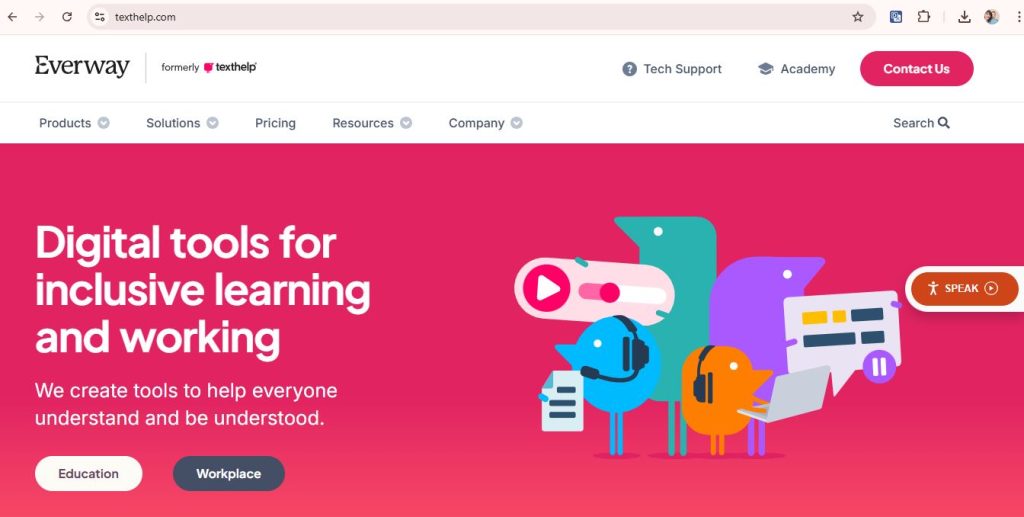
1. Read&Write by Texthelp
Overview:
Read&Write by Texthelp is one of the most widely used tools in special education. Designed to support reading, writing, and language comprehension, it’s particularly helpful for students with dyslexia, ADHD, or English as a second language (ESL). The software integrates seamlessly with Google Docs, Microsoft Word, PDFs, and web browsers, making it versatile in both classrooms and remote learning settings.
Key Features:
- Text-to-speech with natural voices
- Word prediction and advanced spell check
- Picture dictionary and visual aids for better understanding
- Study tools like highlighting, note-taking, and summarizing
- Built-in translation support
Pros:
- Works across multiple platforms (Windows, Mac, iPad, Chrome)
- User-friendly with minimal training required
- Boosts student confidence in reading and writing
Cons:
- Advanced features require a paid license
- May take time for new users to explore all tools
Pricing:
- Free 30-day trial
- Individual license: ~$145/year
Use Case:
A middle school student with dyslexia can listen to history texts read aloud, highlight key concepts, and create study notes allowing them to complete homework more independently and confidently.
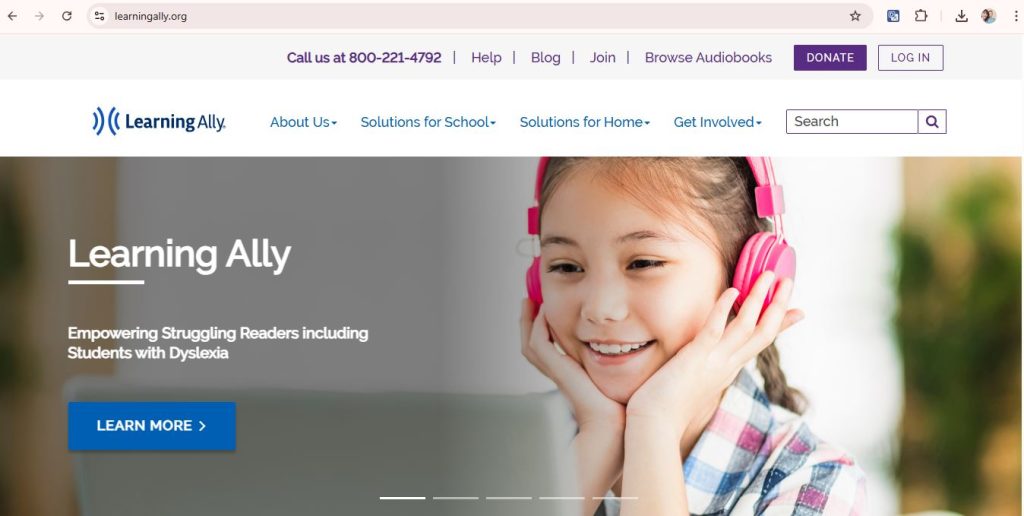
2. Learning Ally Audiobooks
Overview:
Learning Ally is the largest educational audiobook library in the U.S., created specifically for students with dyslexia or other reading disabilities. Unlike typical audiobooks, it offers synchronized text and human narration, which helps learners both listen and follow along visually.
Key Features:
- Over 80,000 educational audiobooks
- Human-narrated voices instead of AI
- Synchronized text and audio
- Available on iOS, Android, and desktop
Pros:
- Improves reading comprehension and motivation
- Expands access to textbooks and literature
- Increases student confidence in tackling complex materials
Cons:
- Only available in English
- Annual subscription required
Pricing:
- $135/year per student
Use Case:
A high school student with dyslexia can listen to biology textbooks while following highlighted text, making it easier to retain key terms and prepare for exams.
3. Boardmaker
Overview:
Boardmaker is a trusted tool for creating visual learning materials that make lessons more accessible for students with communication challenges. With a vast symbol library, it allows teachers to design custom boards, flashcards, and schedules that enhance understanding.
Key Features:
- Access to 45,000+ PCS symbols
- Design visual schedules, communication boards, and worksheets
- Integration with smart boards and printable resources
- Templates for personalized instruction
Pros:
- Ideal for non-verbal students or those with autism
- Highly customizable for different learning needs
- Widely adopted in special education classrooms
Cons:
- Interface may take time to learn
- Premium features locked behind higher-priced plans
Pricing:
- Starting at $99/year for basic access
Use Case:
A teacher creates a visual daily schedule for students with autism, reducing anxiety about transitions and improving classroom participation.
4. Kurzweil 3000
Overview:
Kurzweil 3000 is a comprehensive literacy support tool designed for students with dyslexia, ADHD, and other learning disabilities. It combines reading, writing, and study tools into one platform, making it a powerful all-in-one solution for schools.
Key Features:
- Text-to-speech in multiple languages
- Writing support with word prediction and grammar checks
- Study aids: highlighting, note-taking, and automatic summaries
- Works with PDFs, e-books, and web pages
Pros:
- Wide range of integrated features
- Supports diverse file types and languages
- Recognized by many schools as a formal learning aid
Cons:
- Interface can be complex for beginners
- Requires teacher training for optimal use
Pricing:
- $60–$100/year per user
Use Case:
A high school student uses Kurzweil 3000 to read online articles, highlight key points, and auto-generate a study summary saving time and improving exam prep efficiency.
5. TouchChat HD
Overview:
TouchChat HD is a leading Augmentative and Alternative Communication (AAC) app for students who struggle with verbal communication. By turning an iPad into a powerful communication device, it empowers students to express themselves in both academic and social settings.
Key Features:
- Thousands of preloaded vocabulary words and phrases
- Customizable communication boards
- Text-to-speech in multiple voice options
- Easy personalization to fit individual needs
Pros:
- Highly adaptable for students with autism or speech disorders
- Encourages active classroom participation
- Recommended by speech-language pathologists
Cons:
- Higher upfront cost compared to other apps
- Only available on iOS devices
Pricing:
- $149.99 one-time purchase
Use Case:
A non-verbal elementary student with autism uses TouchChat HD to select picture symbols that are spoken aloud by the app, helping them answer teacher questions and engage with peers more confidently.
Comparison Table of the Top 5 Special Education Software (Summary Table)
To help you quickly evaluate the options, we’ve created a summary table that highlights the core features, pricing, and best-fit users of each tool. This quick comparison makes it easier to decide which special education software aligns best with your specific needs.
| Software | Key Features | Pricing (Approx.) | Best For |
|---|---|---|---|
| Read&Write | Text-to-speech, word prediction, picture dictionary, translation, study tools | ~$145/year (after free 30-day trial) | Students with dyslexia, ADHD, or English language learners |
| Learning Ally Audiobooks | 80,000+ human-narrated audiobooks, synchronized text & audio | ~$135/year | Students with dyslexia or reading disabilities |
| Boardmaker | 45,000+ PCS symbols, visual schedules, communication boards, printable aids | From ~$99/year | Non-verbal students, learners with autism or communication challenges |
| Kurzweil 3000 | Multi-language text-to-speech, writing support, grammar checks, summaries | ~$60–100/year | Students with dyslexia, ADHD, or multiple learning disabilities |
| TouchChat HD | Augmentative & Alternative Communication (AAC), customizable boards, TTS | ~$149.99 one-time purchase | Non-verbal students, learners with autism or speech disorders |
How to Choose the Right Special Education Software
Selecting the right software for special education is not about finding the flashiest platform it’s about choosing a solution that truly meets the needs of your students, educators, and school environment. A thoughtful approach can make the difference between a tool that empowers learning and one that becomes unused. Here’s a step-by-step framework to guide your decision.
1. Identify Your Needs and Goals
Start with a student-centered perspective. Think about the unique needs in your classroom whether that’s supporting students with dyslexia, assisting nonverbal learners, or helping children with ADHD stay organized. From there, define your key goals. Are you prioritizing progress tracking, behavior management, curriculum planning, or stronger communication with families?
Compliance is another critical factor. The right software should help you meet legal and regulatory requirements, such as accurately documenting and managing Individualized Education Programs (IEPs), without adding extra administrative burden.
2. Evaluate Software Features
Not all platforms are built alike, so focus on features that will make a real difference. Look for customization and flexibility, ensuring the system can adapt to your school’s workflow rather than forcing you into a rigid setup. Strong data management and reporting tools are essential they simplify documentation, help track student progress, and allow teachers to make evidence-based decisions.
Effective software should also promote collaboration and communication by connecting teachers, parents, and specialists in one shared environment. Accessibility and user-friendliness are equally important: the interface should be intuitive for everyone, from teachers to students to families. Finally, check for compatibility with existing devices (Chromebooks, iPads, web-based platforms) to ensure smooth integration.
3. Consider the Provider and Their Support
A great product is only as strong as the team behind it. Choose providers known for transparency in how they develop and update their software. Whenever possible, arrange for pilot testing a trial run that lets you see how the tool works in your real-world setting before making a long-term commitment.
Don’t underestimate the value of training and ongoing support. Teachers and staff need confidence in using the software effectively, and responsive customer service can prevent disruptions down the line. Gathering feedback from other educators who already use the platform can also provide valuable insights into its strengths and weaknesses.
4. Involve Stakeholders in the Process
Perhaps the most overlooked step is involving the people who will use the software every day. Include special education teachers, parents, therapists, and even students in the evaluation process. Their perspectives will highlight usability issues or strengths you might otherwise miss. Incorporating this feedback ensures the chosen tool is not only functional but also practical and engaging for its intended audience.
Future Trends in Special Education Technology (2025 and Beyond)
As we move into 2025 and beyond, technological innovation is transforming special education with tools that are more adaptive, inclusive, and empowering than ever before.
1. AI-Powered Personalized Learning
Artificial intelligence is increasingly shaping how students learn crafting hyper-personalized learning experiences tailored to each individual’s pace, strengths, and learning needs. Platforms that adapt in real time to student responses are proven to enhance engagement and outcomes, particularly for learners with diverse needs.
Moreover, AI tools are beginning to offer real-time accessibility enhancements such as speech-to-text, text-to-speech, and automatic captioning making classroom content more inclusive and usable for students with disabilities.
2. Immersive and Multimodal Learning (AR/VR)
Augmented and Virtual Reality (AR/VR) are creating immersive environments that help students with special needs interact with topics in more concrete and engaging ways. From virtual field trips to hands-on simulations, these technologies offer multi-sensory engagement that boosts retention and understanding.
Innovations like zSpace’s AR/VR laptops allow students to explore abstract concepts with enhanced accessibility, such as haptic feedback and face-tracking without needing head-mounted displays.
3. AI-Assisted Content Creation & Automation
Generative AI is poised to simplify content creation for educators: lesson plans, visual aids, videos, and even interactive simulations can be generated quickly and customized for diverse learning needs. Research shows that visual-interactive content increases retention by up to 65%.
AI systems are also beginning to handle administrative tasks like grading, report writing, and progress tracking freeing educators to focus more on personalized instruction.
4. Hybrid Learning & Microlearning
Post-pandemic classrooms are evolving toward hybrid models that blend in-person and digital instruction. Bite-sized or microlearning delivering content through short, focused modules fits naturally into students’ lives and supports differentiated pacing and accessibility.
These flexible learning units can work alongside immersive tools and adaptive platforms to meet students exactly where they are.
5. Inclusive AI & Assistive Technologies
Innovative assistive tech is becoming more integrated and inclusive. AI tools that generate captions, provide real-time translation, or convert text into accessible formats like braille are helping level the playing field for diverse learners.
Projects like Audemy, an AI-powered audio learning platform for visually impaired students, illustrate how technology can deliver personalized, adaptive learning experiences while also highlighting ethical considerations like privacy and engagement.
6. Collaborative, AI-Augmented Learning Ecosystems
The future of special education technology lies in collaborative platforms that connect teachers, therapists, parents, and students. Integrated systems featuring AI agents, virtual assistants, and shared dashboards can tailor instruction and support in real time.
Recent initiatives like Kira Learning, founded by Andrew Ng, are developing AI agents that handle tasks like tutoring, grading, and personalized feedback, helping educators focus more on mentorship.
Conclusion
Special education software is no longer just a support tool it’s a bridge that connects students with the personalized resources they need to thrive. By choosing the right solution, schools and families can create inclusive, engaging, and effective learning environments.
At Onext Digital, we’re passionate about building digital solutions that empower educators and learners alike. If you’re exploring ways to bring technology closer to special education, our team is ready to help you design tools that truly make a difference.
FAQs About Special Education Software
1. What types of disabilities can special education software support?
Special education software can support students with dyslexia, ADHD, autism spectrum disorder, visual and hearing impairments, and motor skill difficulties by offering tailored tools like text-to-speech, symbol-based writing, or AAC devices.
2. Can special education software integrate with existing school systems?
Yes. Many modern solutions integrate with Learning Management Systems (LMS), Student Information Systems (SIS), and IEP management platforms, making it easier to centralize data and reduce administrative workload.
3. How does data tracking in special education software benefit teachers?
Data tracking provides real-time insights into student progress, allowing teachers to adjust instruction quickly, measure IEP goals more accurately, and share transparent updates with parents and administrators.
4. Are there security or privacy concerns with these tools?
Absolutely. Since the software often handles sensitive student information, it must comply with regulations such as FERPA (in the U.S.) or GDPR (in Europe). Schools should ensure vendors have strong data protection measures.
5. What role do parents play in using special education software?
Parents can use the software at home to reinforce classroom learning, access progress reports, and communicate directly with teachers, fostering a consistent learning experience across school and home.
6. Can schools build custom special education software insatead of using ready-made tools?
Yes. Custom development allows schools to design solutions tailored to their unique student populations, workflows, and compliance needs though it usually requires collaboration with an experienced software partner.