
 Services
 Solutions
 Main platform
 Technology
 White Label
  Offshore
 Hire developers



Choosing the best shipping app for Shopify Australia usually starts as a simple decision, then quietly turns into something that affects how the whole store runs.
In the early stage, most merchants only need something basic to print labels and ship orders. Shopify Shipping or a simple Australia Post setup is often enough. But once order volume grows, usually past a few hundred orders a month, the cracks start to show. More manual steps appear, carrier handling gets messy, and shipping costs begin to drift away from what was expected at checkout.
Australia makes this more obvious than in many other markets. Distances are large, carrier options are limited compared to the US, and customers are sensitive to shipping fees. A small mismatch in shipping logic can quickly affect conversion rates and margins.
At that point, shipping software is no longer just an operational tool. It becomes part of the core system that supports fulfilment and growth.
1. How Shopify Shipping works in Australia?
Shopify Shipping in Australia is built mainly around Australia Post. For most small stores, this is a practical starting point. You can generate labels, access standard domestic services, and connect tracking without building any additional system on top.
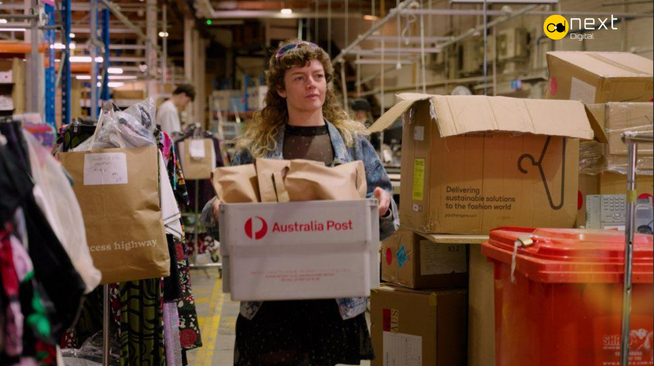
On the surface, it feels complete enough. In reality, it is a simplified layer on top of fulfilment, not a full shipping system.
1.1 The real limitation is control, not functionality
The main constraint is not that Shopify Shipping lacks features, but that it does not give merchants much control over how shipping decisions are made.
In Australian operations, shipping decisions are rarely uniform. A single store may need to handle:
- Metro deliveries between major cities like Sydney, Melbourne, Brisbane
- Regional deliveries across long distances such as Western Australia or Northern Queensland
- Mixed carrier usage depending on cost, speed, and parcel size
Shopify Shipping does not handle this logic in a structured way. There is no true routing layer that decides which carrier is optimal based on cost or delivery conditions. Most decisions remain static or manually handled outside the system.
1.2 Carrier ecosystem in Australia is fragmented in practice
Even though Australia is a smaller market compared to the US, the carrier landscape is not simple. Most Shopify stores eventually work with a mix of:
- Australia Post and MyPost Business for domestic baseline shipping
- StarTrack for higher volume or enterprise level deliveries
- CouriersPlease and Aramex for competitive domestic routes
- DHL Express for international shipping
- TNT or FedEx for selected cross border or high value shipments
The issue is not availability of carriers. The issue is coordination between them. Shopify Shipping assumes a single primary workflow. Australian fulfilment reality often requires multiple carriers operating in parallel, depending on cost and service constraints.
1.3 Where Shopify Shipping starts to break down
The limitations usually become visible in three operational areas.
First is rule based shipping. Most growing stores need logic such as:
- Different carriers for different regions
- Different services based on parcel weight or dimensions
- Excluding certain carriers for low margin products
Shopify Shipping does not provide a strong rule engine for this level of control.
Second is warehouse complexity. As soon as a store introduces:
- Multiple storage locations
- Split shipments
- Partial fulfilment workflows
The system starts requiring manual workarounds rather than structured automation.
Third is cost alignment. In Australia, final shipping cost is influenced by variables like zone, packaging, and service type. Shopify can display rates at checkout, but it does not always reflect the real fulfilment cost once the label is generated. Over time, this creates small but consistent margin distortion.
1.4 The practical outcome for most merchants
Because of these constraints, Shopify Shipping tends to work well only within a narrow operating range. It is effective when:
- Order volume is low
- Shipping logic is simple
- One main carrier is sufficient
But as soon as the business introduces growth pressure, multi carrier usage, or warehouse complexity, it starts to shift from being a system to being just a basic layer in the process.
This is typically the point where Australian merchants begin evaluating dedicated shipping platforms that sit on top of Shopify and handle the operational logic that Shopify Shipping does not cover.
2. Australia E-commerce Shipping Reality (2025–2026 Market Context)
Understanding shipping apps in Australia starts with understanding what is actually happening in fulfilment, not just what the software claims to do.
Most Shopify stores do not struggle because they lack tools. They struggle because shipping complexity grows faster than their systems.
2.1 E-commerce shipping pressure (Australia 2025–2026)
The Australian parcel market has continued to grow steadily rather than explosively. Industry estimates place parcel volume growth at roughly 2% – 3% per year, driven mainly by sustained e-commerce demand rather than spikes in new adoption. But the more important shift is not volume. It is cost behaviour.
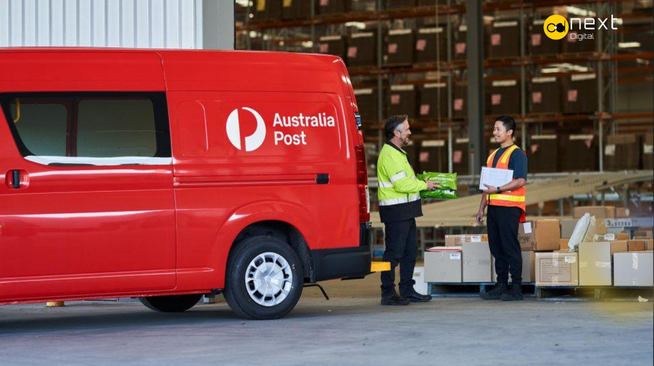
Across Shopify merchants in Australia, three patterns appear consistently:
- Cost per shipment continues to increase gradually due to carrier pricing adjustments and surcharges
- Shipping rates shown at checkout often diverge from actual label costs once orders are fulfilled
- Margin pressure becomes more visible in low and mid AOV products, where shipping represents a larger percentage of total order value
The result is not a dramatic failure point. It is slow margin erosion that becomes noticeable only at scale.
2.2 Operational reality (more important than features)
At the mid-market level, typically around 200 to 2,000 orders per month, shipping stops being a simple workflow and becomes a daily operational system.
In most Australian Shopify stores at this stage, the same operational patterns appear:
- Batch label printing becomes a standard part of daily fulfilment, not an efficiency upgrade
- Teams handle multiple orders simultaneously rather than processing them one by one
- Exceptions become routine, including oversized parcels, remote area deliveries, and split shipments
- Fulfilment decisions start requiring consistency rather than case-by-case judgement
A key point often missed in shipping software comparisons is this: most inefficiency does not come from carrier performance, but from manual coordination inside the store’s fulfilment process.
In practice, more than 70% of mid-market Shopify stores in Australia deal with recurring fulfilment friction that is directly linked to how shipping workflows are structured, not which carrier they use.
2.3 Key insight
The real shift in Australia’s Shopify ecosystem is structural. Shipping software is no longer evaluated as a productivity tool. It functions as the operational layer that holds fulfilment together.
In Australia, shipping software is not a tool. It is the operating system of fulfilment.
3. How to Choose the Best Shipping App for Shopify Australia
Most “best shipping app” articles end up as feature lists. That might help you compare tools, but it does not help you make a decision. In Australian ecommerce operations, the problem is rarely a lack of options. It is choosing based on the wrong criteria. A shipping app only works when it matches how your business actually runs, not how it looks on a feature page.
3.1 Five criteria that actually matter
Most merchants do not fail because they lack software. They fail because they evaluate software using the wrong priorities.
In Australia, there are five practical factors that determine whether a shipping app will work at scale:
- Carrier coverage in Australia: It is not just about supporting Australia Post. The real requirement is how well the system handles multiple carriers such as StarTrack, CouriersPlease, Aramex, and DHL, and whether it can manage differences between them without manual work.
- Automation capability: This is often the deciding factor once a store starts growing. It includes rule based shipping, automatic carrier selection, batch label printing, tagging logic, and exception handling without manual intervention.
- Cost structure: Subscription fees are only part of the equation. Real cost also includes per label pricing, volume based pricing tiers, and hidden labour costs from manual processing.
- Warehouse scalability: Once a store operates more than one location or splits inventory across warehouses, the shipping system must support multi location fulfilment and routing logic. Without this, operations quickly fall back to manual work.
- Integration with Shopify and other systems: At growth stage and beyond, shipping apps need to connect with inventory tools, ERP systems, and operational workflows. Without integration, data inconsistency becomes a daily issue.
3.2 Store maturity model (why size alone is misleading)
One of the most common mistakes is choosing a shipping app based only on order volume. In reality, complexity matters more than size.
| Stage | Orders per month | Real operational need |
| Early stage | 0–200 | Simple setup, fast onboarding, minimal configuration |
| Growth | 200–2,000 | Automation becomes necessary to reduce manual work |
| Scale | 2,000–10,000 | Structured warehouse operations and process control |
| Enterprise | 10,000+ | ERP integration, multi warehouse routing, cost and speed optimisation |
The key insight is that two stores with the same order volume can require completely different systems depending on how fulfilment is structured.
3.3 Decision shortcut (more realistic than marketing logic)
If you remove marketing complexity and focus only on operational reality, the decision becomes clearer:
- If you only use Australia Post and have a simple fulfilment flow → Shopify Shipping or a lightweight app is usually enough
- If you are using multiple carriers → you need an automation driven platform with routing rules
- If you operate a warehouse or fulfilment team → you need system level tools such as ShipStation or advanced Starshipit setups
- If your priority is cost optimisation per order → a hybrid setup is often more effective than relying on a single app
The important point in the Australian market is that there is no single best shipping app. There is only a better fit between your fulfilment complexity and the system you put around it.
4. Best Shipping Apps for Shopify Australia (2026 Use Case Breakdown)
This section is not a ranking. It is a mapping of tools to real operating conditions in Australian Shopify stores. The “best” app changes depending on how fulfilment is structured, not how many features the software lists.
4.1 Small stores (0–200 orders/month)
At this stage, the main goal is reducing friction. Most stores are still owner operated or run with a very small team, so simplicity matters more than optimisation.
Common apps:
- Shopify Shipping (Australia Post)
- ReadyToShip
How they actually perform in operations:
These tools work well when fulfilment is still linear. One order comes in, one label is created, and one parcel is shipped. There is minimal need for routing logic or advanced automation, and that is why they fit this stage.
The limitation only becomes visible when volume increases:
- No real automation layer for shipping rules
- Limited ability to manage multiple carriers efficiently
- Manual effort increases quickly once orders pass roughly 200 per month
At that point, shipping stops being a background task and starts becoming a daily workload.
4.2 Growth stage (200–2,000 orders/month)
This is the most important stage in the Australian Shopify ecosystem. Most operational inefficiencies start to appear here, not at earlier stages.
Common apps:
- Starshipit
- Shippit
At this level, shipping is no longer about printing labels. It becomes about controlling how orders move through the fulfilment system.
Real differences in operation:
Starshipit
- Stronger in structured workflows
- Easier to implement without heavy operational changes
- More stable for teams that want predictable fulfilment processes
Shippit
- Stronger focus on carrier optimisation
- More advanced logic for selecting delivery options
- Better suited for stores that actively compare carriers per order
At this stage, shipping software becomes part of the operational system, not just a tool. It directly influences how fast orders are processed and how consistent fulfilment becomes.
This is also the stage where many merchants become locked into a system. Once workflows are built around one platform, switching costs increase significantly.
4.3 High volume and warehouse operations (2,000–10,000+ orders/month)
At scale, the focus shifts away from shipping cost and toward throughput.
Common apps:
- ShipStation
- Starshipit (advanced setup)
At this level, fulfilment is no longer individual order processing. It becomes batch driven.
What actually matters here:
- Batch processing is not optional, it is required
- Warehouse workflow design becomes more important than user interface
- Integration with ERP, inventory systems, or warehouse tools becomes necessary
A key observation in this segment is that pricing differences between apps matter less than operational efficiency gains. Even if cost increases with volume, reducing manual handling time per order creates a larger overall efficiency gain.
4.4 Australia Post heavy businesses
Common apps:
- Starshipit
- Shopify Shipping
This is still one of the most common setups in Australia, especially for SMB and mid-market stores.
Australia Post and its eParcel network remain the backbone of domestic shipping, which means many stores optimise around it rather than replacing it.
In these cases, the value of a shipping app is not carrier expansion. It is operational control on top of an Australia Post centric workflow.
4.5 International-first brands
Common apps:
- Shippit
- Easyship
These setups behave differently from domestic focused stores. The priority is not local optimisation but cross-border clarity.
Key requirements include:
- Visibility of landed cost before checkout
- Handling customs documentation
- Selecting carriers across multiple countries
For these businesses, shipping software is less about domestic efficiency and more about managing international complexity in a predictable way.
5. True Cost of Shipping Apps in Australia (Beyond Subscription Fees)
Most “best shipping app” articles only talk about subscription pricing. In Australia, that approach misses the real picture completely. Shipping cost is not a single line item. It is a system cost made up of multiple layers that behave differently as you scale.

5.1 Three real cost layers in Australian Shopify shipping
1. Subscription fee (software cost)
This is the most visible cost, but usually the smallest part of the total picture.
Typical structure across apps like Starshipit, Shippit, and ShipStation:
- Monthly subscription based on order volume or features
- Tiered pricing that increases as shipment volume grows
- Additional costs for advanced modules or integrations
At small scale, this feels like the main cost. At scale, it becomes the least important one.
2. Label cost (carrier cost)
This is where most real variance happens.
In Australia, label cost depends on:
- carrier selection (Australia Post vs CouriersPlease vs DHL etc.)
- delivery zone (metro vs regional vs remote WA/NT)
- parcel weight and dimensional pricing
- service level (standard vs express)
Two stores using the same app can still have very different shipping costs simply because their product mix and delivery zones are different.
This is also where poor routing logic creates hidden cost leakage over time.
3. Operational cost (the most ignored layer)
This is the cost most merchants underestimate.
It includes:
- time spent picking and packing orders
- manual label creation
- handling exceptions (oversized, split shipments, failed deliveries)
- coordination between warehouse staff and order systems
In many Australian mid-market stores, this cost becomes larger than the software subscription itself.
The key issue is not visibility, but accumulation. A small inefficiency per order becomes significant at scale.
5.2 Example scenario (500 orders per month in Australia)
To understand how this plays out, let’s look at a realistic mid-market store processing around 500 orders per month.
At this level, all three major shipping platforms are already viable options, but they behave differently in terms of cost structure and operational impact.
1. Starshipit
Starshipit is typically positioned as a balanced solution for growing Shopify stores in Australia.
- Subscription pricing increases in structured tiers based on volume
- Strong integration with Australia Post helps reduce operational friction
- Batch processing and automation reduce manual handling per order
Cost behaviour:
- Subscription cost increases gradually and predictably with volume
- Operational costs tend to decrease as automation replaces manual tasks
- Overall value is driven by time savings and workflow consistency rather than aggressive cost optimisation
2. Shippit
Shippit focuses more heavily on carrier optimisation and dynamic shipping decisions.
- Advanced routing logic across multiple carriers
- Strong emphasis on selecting the most cost-efficient delivery option per order
- More complex configuration compared to simpler platforms
Cost behaviour:
- Subscription cost can be higher at similar order volumes
- Potential reduction in label costs through smarter carrier selection
- Overall efficiency depends heavily on correct setup and ongoing configuration quality
- Poor configuration can reduce expected savings
3. ShipStation
ShipStation is designed for high-volume and warehouse-driven fulfilment environments.
- Strong batch processing and multi-order workflow capabilities
- Suitable for structured warehouse operations and scaling teams
- Less Australia-specific optimisation compared to locally focused tools
Cost behaviour:
- Subscription pricing scales with shipment volume tiers
- Efficiency gains become more visible as order volume increases
- Stronger value proposition at higher complexity levels (multi-warehouse, ERP integration, large catalogues)
- Best suited for stores prioritising operational scale over local carrier optimisation
Key insight (what most comparisons miss)
When comparing shipping apps in Australia, focusing only on subscription pricing leads to the wrong conclusion.
The real cost equation is:
Total cost = software fee + carrier cost + labour time per order
In many cases, the cheapest software option ends up being the most expensive overall once operational time is included.
This is why more mature Shopify stores in Australia tend to optimise for workflow efficiency first, and pricing second.
6. How Australian Shopify Merchants Actually Use Shipping Apps
What matters most in shipping software decisions is not feature comparison, but how merchants actually behave once they start scaling operations in Australia. The gap between theory and practice is often where most insights come from.
Based on patterns discussed across Shopify communities, operator forums, and recurring merchant feedback, a few consistent behaviours stand out.
6.1 Undercharging shipping is more common than expected
One of the most frequent issues among early and mid-stage Shopify stores in Australia is undercharging for shipping.
This usually happens for three reasons:
- Flat rate shipping is set too low to improve conversion
- Carrier rate tables are not configured correctly
- Product weight and packaging variations are not fully accounted for
The result is predictable. Stores gain higher conversion rates in the short term but slowly lose margin per order without immediately noticing it.
At scale, this becomes a structural issue rather than a pricing mistake.
6.2 Checkout vs label cost mismatch is a persistent problem
Another recurring pattern is the gap between:
- what customers pay at checkout
- what merchants actually pay to carriers
In Australia, this gap is more visible because shipping cost varies significantly by:
- delivery zone (metro vs regional vs remote)
- parcel size and dimensional weight
- carrier service selection at fulfilment stage
When shipping logic is not tightly controlled, this mismatch becomes frequent. The impact is not always dramatic per order, but it compounds across hundreds or thousands of shipments.
6.3 ShipStation: powerful at scale, but cost perception changes
ShipStation is widely recognised in high-volume setups for its strong batching and warehouse oriented workflow.
However, merchant feedback often highlights a common pattern:
- It performs well operationally at scale
- But pricing becomes less attractive as shipment volume increases
- The value is clearer in throughput improvement than in direct cost savings
In other words, it is often seen as a system that improves efficiency rather than reduces cost.
6.4 Shippit: strong optimisation, higher operational complexity
Shippit is often positioned as a carrier optimisation platform, and that is where its strengths are most visible.
However, merchant behaviour patterns show a consistent trade-off:
- Strong routing and delivery logic
- But higher learning curve during setup
- Requires more disciplined configuration to fully benefit from optimisation features
For teams without structured operations, this can slow down adoption in the early stages.
6.5 Starshipit: the “balanced default” for Australia SMB to mid-market
Among Australian Shopify merchants, Starshipit is frequently positioned as a middle ground option.
The common perception is:
- Easier to implement compared to more complex optimisation platforms
- Strong enough automation for growing stores
- Fits well with Australia Post centric fulfilment setups
- Less operational overhead compared to enterprise focused tools
Because of this balance, it is often used as a transition system between early stage Shopify Shipping setups and more complex warehouse level platforms.
7. Common Mistakes When Choosing a Shopify Shipping App
Most shipping problems in Australian Shopify stores do not come from the tools themselves. They come from how the tools are selected and configured in relation to actual fulfilment behaviour.

These are the patterns that appear repeatedly once stores move from early stage to growth stage.
7.1 Choosing an app based on price instead of workflow
One of the most common mistakes is evaluating shipping apps purely by monthly subscription cost. In reality, the subscription fee is only a small part of total shipping cost in Australia.
What gets missed is:
- How much manual work the system requires per order
- How efficiently it handles batching and exceptions
- How well it supports multi carrier decisions
A cheaper app that increases fulfilment time often ends up costing more in labour and operational inefficiency.
7.2 Not accounting for batch processing time
Many merchants underestimate how quickly fulfilment behaviour changes once order volume increases. At scale, shipping is no longer about individual orders. It becomes batch driven.
Without proper batch processing:
- Staff spend more time switching between orders
- Label generation becomes repetitive manual work
- Fulfilment speed slows down during peak periods
This is one of the main reasons stores outgrow basic Shopify Shipping setups faster than expected.
7.3 No clear carrier strategy
Another recurring issue is treating all carriers as interchangeable. In Australia, carriers behave differently depending on:
- Delivery zone
- Parcel size and weight
- Service level requirements
Without a defined carrier strategy, merchants often default to inconsistent decisions, which leads to:
- higher shipping cost variability
- unpredictable delivery times
- difficulty scaling fulfilment operations
A shipping app cannot fix this on its own if the underlying strategy is not defined.
7.4 Relying on Shopify Shipping for too long after scaling
Shopify Shipping works well at early stage, but many stores continue using it beyond its practical limits. The problem is not functionality. It is structure.
Once a store reaches growth stage:
- Multi carrier usage becomes necessary
- Automation rules become essential
- Warehouse workflows become more complex
At this point, staying on a basic system creates operational friction that compounds over time.
7.5 Not separating product level shipping logic
One of the most overlooked issues is failing to structure shipping rules based on product characteristics. In practice, shipping should account for:
- Weight differences
- Parcel dimensions
- Shipping zones within Australia
- Product type (standard, fragile, oversized)
Without this structure, stores often apply one generic rule across all products, which leads to:
- Inaccurate shipping rates at checkout
- Margin leakage on heavy or oversized items
- Frequent manual corrections during fulfilment
8. Final Thought
In Shopify Australia, shipping apps are not just about printing labels anymore. They end up sitting right in the middle of how the whole fulfilment process runs. Early on, Shopify Shipping or a simple setup is usually fine. But once order volume starts to grow, the question shifts. It is less about which app looks better, and more about whether the system can actually handle multiple carriers, automation, and day to day fulfilment without creating extra work.
At that point, shipping starts to show its impact in a very practical way. Costs become harder to control, processing takes longer, and small inefficiencies start to stack up. When teams are doing more manual work than expected, or when shipping costs at checkout do not consistently match real carrier costs, it usually means the setup behind Shopify is starting to reach its limits.
Most stores do not really struggle because of the shipping app itself. It is usually how orders, inventory, and integrations are connected behind it.
ONEXT DIGITAL works with Shopify merchants at this stage, mainly helping them step back and look at the full setup rather than just one tool. The goal is usually quite simple: reduce unnecessary manual work, make the workflow clearer, and set up a system that can actually handle growth without becoming harder to run.
If this sounds familiar in your own store, feel free to reach out to ONEXT DIGITAL. We can take a look at your current setup with you and see where things can be made a bit more efficient.
FAQs
Do I need a shipping app for Shopify in Australia, or is Shopify Shipping enough?
Shopify Shipping is usually enough for early-stage stores with simple fulfilment and low order volume. However, once you start working with multiple carriers, higher order volumes, or more complex shipping rules, it becomes limited. Most growing stores eventually need a dedicated shipping app to handle automation, carrier routing, and warehouse workflows.
What is the best shipping app for Shopify in Australia?
There is no single “best” app. It depends on your stage and complexity. Shopify Shipping works for small stores, Starshipit and Shippit are common for growing businesses, and ShipStation is often used for high-volume warehouse operations. The right choice depends more on fulfilment structure than features alone.
How much do shipping apps cost in Australia?
Most shipping apps charge a monthly subscription based on order volume, but that is only part of the cost. The real cost also includes carrier fees (Australia Post, DHL, etc.) and operational costs like manual packing time, exception handling, and fulfilment labour. In many cases, operational costs are higher than the software subscription itself.
Why are my actual shipping costs higher than what I charge at checkout?
This usually happens because checkout rates are simplified estimates and do not fully account for variables like parcel weight, packaging size, delivery zones, and carrier surcharges. When fulfilment happens, real costs are recalculated by carriers, which often leads to a mismatch and gradual margin loss.
When should I move away from Shopify Shipping?
Most stores start feeling limitations once they reach around 200+ orders per month or start using multiple carriers. Signs include increasing manual work, inconsistent shipping decisions, and difficulty managing fulfilment across different locations or product types.
Can shipping apps actually reduce my costs, or do they just add another tool?
Shipping apps do not always reduce carrier fees directly. Their main value is reducing operational inefficiency and improving decision-making through automation. In some cases, better routing and workflow design can reduce shipping costs, but the biggest impact is usually saving time and improving consistency rather than lowering carrier prices.