
 Services
 Solutions
 Main platform
 Technology
 White Label
  Offshore
 Hire developers



Magento 2 is one of the most popular e-commerce platforms today, known for its flexibility and built-in SEO features. However, “default SEO” does not mean your store will automatically rank high in search results. To make your online store stand out, attract more potential customers, and increase sales, proper Magento 2 SEO optimization is essential.
In this comprehensive guide, we will walk you through step-by-step strategies to optimize Magento 2 SEO, including configuring metadata, URLs, canonical tags, and advanced techniques such as long-tail keywords, internal linking, and image optimization. Whether you are new to managing a Magento store or looking to improve your existing SEO performance, this guide will provide all the insights you need to succeed.
What is Magento SEO?

SEO, or Search Engine Optimization, is the process of improving your website so that it ranks higher on search engines like Google, Bing, or Yahoo. For e-commerce stores, SEO is essential because it helps increase both the quality and quantity of traffic, ultimately driving more sales.
Magento 2 is designed with SEO in mind, offering built-in features such as automatic XML sitemap generation, metadata customization, and a mobile-responsive structure. However, these default settings only provide a foundation. To achieve strong and consistent search rankings, store owners must fine-tune SEO configurations and continuously optimize their store to align with search engine best practices.
Key benefits of SEO for Magento 2 stores include:
Higher visibility: Your products and categories are more likely to appear in relevant search results.
Better user experience: Optimized pages load faster and are easier to navigate.
Increased conversions: SEO attracts targeted traffic, increasing the chance of turning visitors into customers.
Long-term growth: Unlike paid ads, SEO provides sustainable results over time.
In the following sections, we will explore how to optimize Magento 2 step by step, from default SEO settings to advanced strategies that can boost your store’s performance.
Magento 2 Default SEO Settings and How to Configure Them
Magento 2 comes with many built-in SEO features that help your store get noticed by search engines. While these default settings give you a head start, leaving them untouched won’t make your store rank high automatically. To truly optimize your online store, it’s important to understand these features and use them effectively. Let’s go through the key areas.
1. How to Optimize Metadata in Magento 2
In the product page, you can go to Catalog => Product => Choose a product => Search Engine Optimization to start configuring this function.
1.1 Meta title
This feature is displayed as the title of your product page in the search result. Try to include the high-value keywords to get better recognition from web crawlers. Choose wisely because you are limited to under 70 characters.
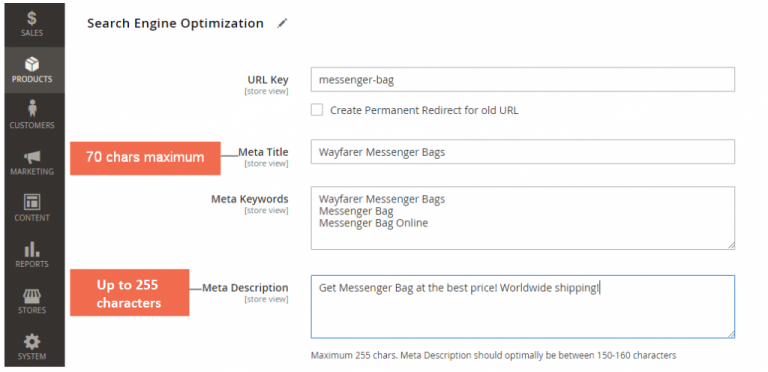
1.2 Meta Keywords
You don’t have any limitation for meta keywords here. But don’t fill in too much and pay attention to related ones.They are not shown in the SERPs. Filling in all keywords so customers can know what your product is about.
1.3 Meta Description
The maximum characters in Magento 2 is 255, with a wise meta description can help increase the clicks through search energies.
1.4 Meta Setting For Product MetaData
Maybe you are handling a website with a thousand products, this instruction can help you and set the metadata at the global level.
Go to Stores => Configuration => Catalog => Catalog => Product Fields Auto-Generation
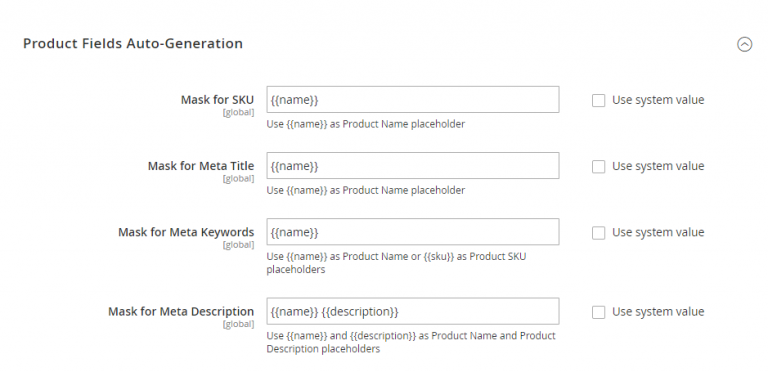
Magento 2 takes placeholders such as {{name}}, {{description}} or {{sku}} for the meta information. If you use this feature, please be careful with too-long product descriptions.
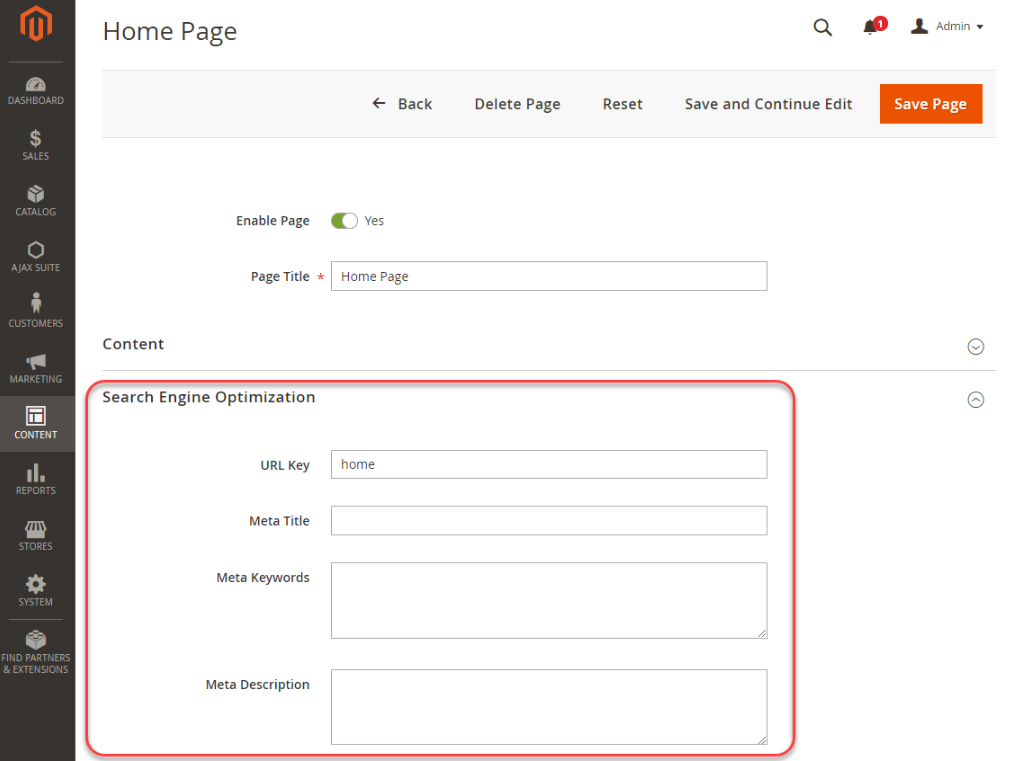
1.5 Metadata for Categories, CMS page and Homepage
- Categories
Go to Catalog => Categories => Search Engine Optimization and add meta title, meta description, and meta keywords.

- CMS Pages
Go to Content => Pages => Search Engine Optimization. And then fill in the blank fields.
- Home page
Go to Content => Page => Homepage => Page Information and fill in the empty fields.
2. Using Canonical Tags to Avoid Duplicate Content in Magento 2
Having unique content helps improve the ability to reach customers, like an effective Magento 2 SEO tip recommended in all page content. The access to your website will be decreased when there are multiple URLs pointing to the same or similar content.
2.1 Category Path for Product
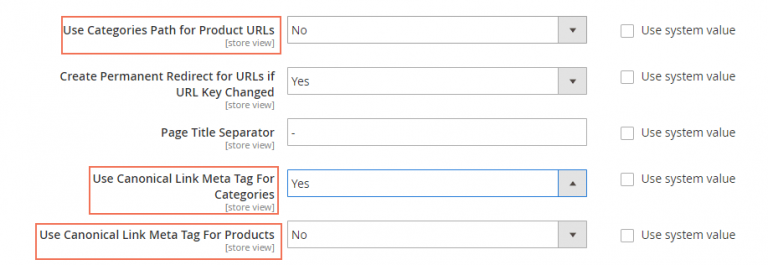
Category path for products URLs Optimization: With Use Categories Path for Product URLs your website will set options to decide whether category paths are included in product URLs.
2.2 Canonical Tag for Product and Category
In Magento 2, you can enable canonical tags for categories by going to Stores → Configuration → Catalog → Catalog → Search Engine Optimization and setting Use Canonical Link Meta Tag for Categories to Yes. This ensures that search engines recognize the main URL for each category page, even if there are multiple URL variations caused by sorting options (such as product_list_mode=list or product_list_order=name). Proper use of canonical tags helps prevent duplicate content issues and improves your store’s SEO.
3. URLs Optimization in Magento 2 SEO
3.1 URL Suffic
The URL suffix appears at the end of your URL, typically as .html or .htm. For SEO purposes, it is generally recommended to remove the suffix for two main reasons. First, it does not provide any meaningful information to users or search engines. Second, it unnecessarily lengthens the URL, making it less clean and harder to read.
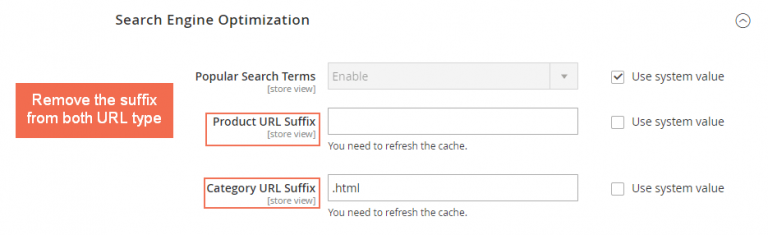
To update your URL suffixes in Magento 2, navigate to Stores → Configuration → Catalog → Categories → Search Engine Optimization. Here, you can customize the Product URL Suffix and Category URL Suffix by either specifying a suffix or leaving the field blank to remove it entirely for cleaner URLs.
3.2 URL Rewrite and Redirect
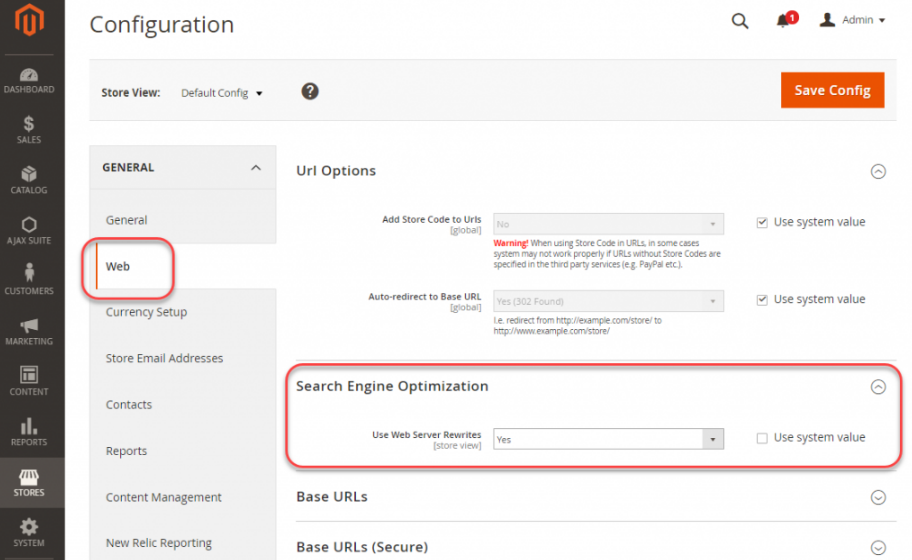
A search-engine-friendly URL is one of the most important factors that can help your Magento 2 store rank higher in search results. To enable SEO-friendly URLs, go to Stores → Configuration → General → Web → Search Engine Optimization, expand the Search Engine Optimization section, and set Use Web Server Rewrites to Yes. This will create cleaner, more readable URLs that are better for both users and search engines.
If you want Magento 2 to automatically redirect old URLs when a URL key changes, go to Stores → Configuration → Catalog → Search Engine Optimization. Then, find the option Create Permanent Redirect for URLs if URL Key Changed and set it to Yes. This ensures that visitors and search engines are automatically redirected to the updated URL, preventing broken links and preserving your SEO value.
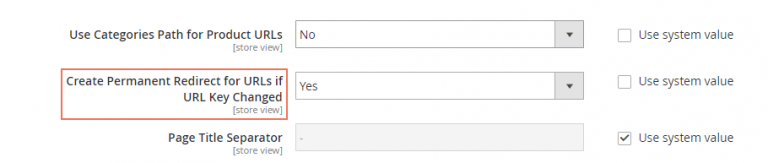
To set up a redirect for a specific product, go to Catalog → Products, select the product you want to update, then navigate to the Search Engine Optimization section and update the URL Key. This allows Magento 2 to generate a new, optimized URL for the product while maintaining proper redirects from the old URL.
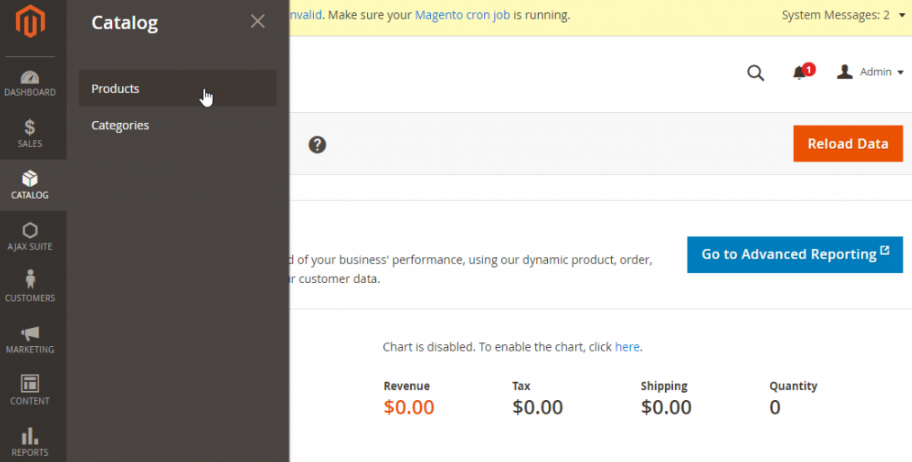
Make sure the Create Permanent Redirect for Old URL checkbox is selected, then click Save and clear your cache to apply the changes. This ensures that any traffic to the old URL is properly redirected to the new URL, preserving both user experience and SEO value.
3.3 Category URL Redirect
To set up a URL redirect for a category, go to Catalog → Categories instead of Products. Select the category you want to update from the category tree, navigate to the Search Engine Optimization section, and apply the same steps as you would for a product URL. This ensures that old category URLs automatically redirect to the updated URLs, maintaining both SEO value and user experience.
Create a URL Rewrite:
If you want more control over your URLs, Magento 2 allows you to create manual URL rewrites:
Go to Marketing → SEO & Search → URL Rewrites and click Add URL Rewrite.
In the Create URL Rewrite section, select Product (or Category) from the dropdown list.
Click Skip Category Selection if you don’t want to associate it with a specific category.
Fill in the Request Path (the old URL) and the Target Path (the new URL).
Choose the Redirect Type (Permanent 301, Temporary 302, or No redirect) and add a description for reference.
Click Save to apply the changes.
This process gives you precise control over your store’s URLs, helping you maintain clean, SEO-friendly links and avoid broken pages.
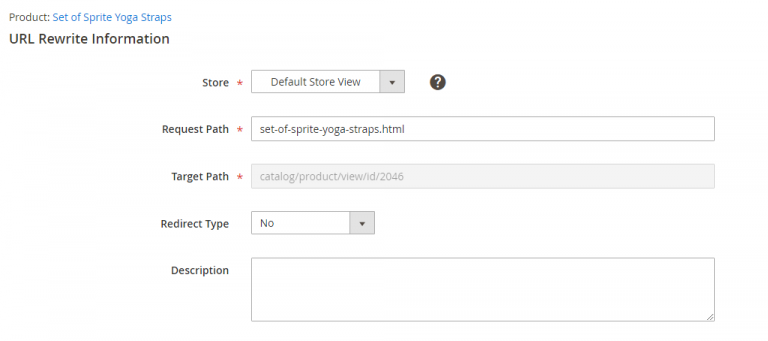
Store: Choose the store view where this URL rewrite should be applied. If your Magento installation has multiple store views, select the appropriate store.
Request Path: Enter the new path for the product URL. You may also add a suffix if needed.
Redirect Type: Select the type of redirect you want to apply: No redirect, Permanent (301), or Temporary (302).
Description: Add a short description for this URL rewrite to help you identify it later.
Save Changes: After filling in all fields, click Save. The URL rewrite will now be active, and traffic to the old URL will be redirected according to your settings.
Magento 2 SEO tips to get higher rankings
Once you’ve completed the basic SEO setup in Magento 2, it’s time to focus on optimization techniques that can significantly improve your search rankings. These practical tips will help search engines better understand your content while enhancing the user experience.
1. Use Long-Tail Keywords in Product URLs and Product Names
Including keywords in your product page URL and product name helps search engines clearly understand what the page is about, making it easier to index and rank.
However, competing for short, generic keywords is extremely difficult especially in eCommerce. That’s why most successful Magento stores focus on long-tail keywords, typically made up of 3–5 words. These keywords are more specific, less competitive, and attract users with higher purchase intent.
Example:
- Short keyword: shoes
- Long-tail keyword: men’s lightweight running shoes
SEO Tip: Keep your URLs clean and readable. Avoid unnecessary words or parameters, and place the main keyword as close to the beginning of the URL as possible.
2. Avoid Duplicate Products by Using Attributes
Duplicate product pages are a common SEO issue in Magento stores, especially when products have multiple variations such as color, size, or material. Creating separate product pages for each variation can lead to duplicate content and dilute your rankings.
Instead, use product attributes and configurable products to manage variations under a single product page. This approach consolidates SEO value, avoids duplication, and improves user experience.
SEO Tip: Combine this with canonical tags to ensure search engines always index the correct version of your product page
3. Strengthen Internal Linking with Related Products
Internal linking helps search engines crawl your site more efficiently and keeps users engaged longer. Magento makes this easy with Related Products, Up-Sells, and Cross-Sells.
By linking related products together, you guide users to explore more items instead of leaving after viewing a single product. This improves dwell time and can positively impact SEO.
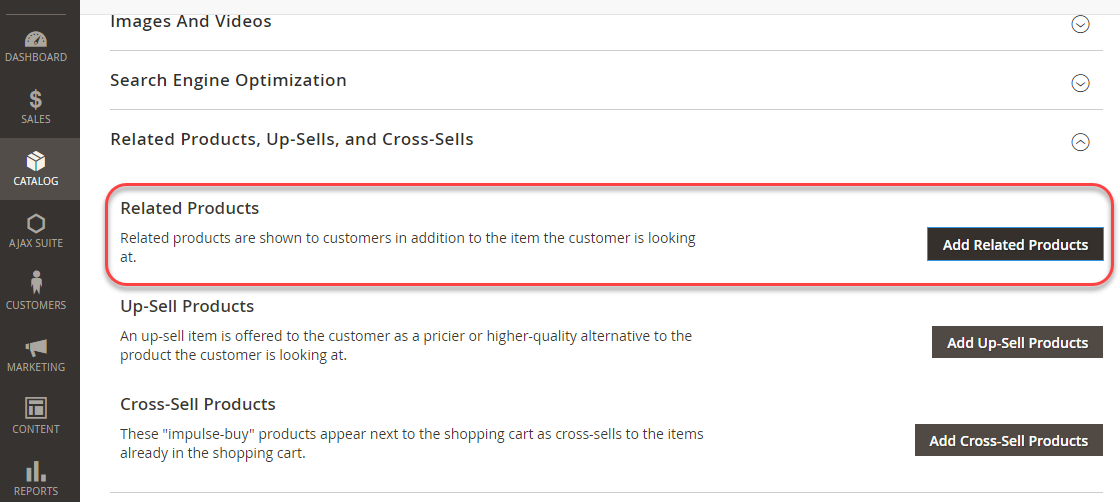
How to add related products:
Go to Catalog → Products → Related Products, Up-Sells, and Cross-Sells → Related Products → Add Related Products.
SEO Tip: Choose related products strategically link items that truly complement each other to increase conversion rates.
4. Add Descriptive Alt Text to All Images
Alt text helps search engines understand what your images represent and improves accessibility for users who rely on screen readers. It also plays an important role in image search rankings.
To add alt text in Magento 2, open the product configuration, scroll to Images and Videos, click on an image, and enter descriptive alt text in the field on the top right.
SEO Tip: Write natural, descriptive alt text that includes relevant keywords but avoid keyword stuffing.
5. Write Unique and In-Depth Product Descriptions (300+ Words)
Search engines favor pages with unique, valuable content, and product descriptions are no exception. Aim for at least 300 words per product, focusing on features, benefits, use cases, and common customer questions.
Well-written descriptions not only help SEO but also build trust and guide customers toward making a purchase.
SEO Tip:
- Avoid copying manufacturer descriptions.
- Use headings, bullet points, and short paragraphs for better readability.
- Include long-tail keywords naturally within the content.
To sum up
SEO is one of the most important factors in Magento, it requires a lot of time and knowledge about Magento 2 SEO. This SEO Magento 2 hope that can help all of you to improve your online store and get more revenue.
Or If you still have more confusions, please contact us and share it. Onext Digital have +10 years experience, more than 1500 projects delivered and 98% of customers satisfied. Our expertise is Mobile APP, Web development, UX/UI design services, full-option development software services.etc. Cooperating with your company is our honor.
Read more: 10+ Best Magento Development Solutions for Small Businesses in Singapore
Frequently Asked Questions about Magento 2 SEO
1. Is Magento 2 good for SEO?
Yes. Magento 2 is an SEO-friendly eCommerce platform with built-in features such as customizable metadata, XML sitemap generation, canonical tags, and mobile-responsive design. However, to achieve high rankings, these features must be properly configured and continuously optimized.
2. Do I need technical knowledge to optimize Magento 2 SEO?
Basic SEO tasks like editing metadata, URLs, and product descriptions can be handled without advanced technical skills. However, technical SEO improvements such as page speed optimization, Core Web Vitals, caching, and server configuration often require support from experienced Magento developers or SEO specialists.
3. What are the most important SEO settings in Magento 2?
Some of the most critical Magento 2 SEO settings include:
- Meta titles and meta descriptions for products, categories, and CMS pages
- Clean and SEO-friendly URLs
- Canonical tags to prevent duplicate content
- XML sitemap and robots.txt configuration
- Proper redirects (301) when URLs change
Optimizing these elements helps search engines crawl and index your store more effectively.
4. Should I remove the .html suffix from Magento 2 URLs?
Removing the .html suffix is generally recommended for cleaner and more user-friendly URLs. While it does not directly impact rankings, shorter and clearer URLs improve readability and consistency. If you decide to remove the suffix, make sure to set up proper 301 redirects to avoid losing SEO value.
5. How do canonical tags help Magento 2 SEO?
Canonical tags tell search engines which version of a page should be indexed when multiple URLs contain similar or identical content. In Magento 2, canonical tags are especially important for product and category pages with filters or sorting options, helping prevent duplicate content issues and protect your rankings.
6. How long does it take to see SEO results on a Magento 2 store?
SEO is a long-term strategy. For most Magento 2 stores, noticeable improvements typically appear within 3–6 months, depending on competition, content quality, technical setup, and ongoing optimization efforts. Consistent SEO work leads to more stable and sustainable growth over time.