
 Services
 Solutions
 Main platform
 Technology
 White Label
  Offshore
 Hire developers



In today’s fast-paced digital world, businesses face increasing pressure to deliver software faster, more reliably, and with higher quality. Organizations adopting DevOps practices have reported up to 46% faster release cycles and a 30% reduction in deployment errors, demonstrating the significant impact of efficient DevOps implementation. DevOps Implementation Services bridge the gap between development and operations by automating workflows, enhancing collaboration, and enabling continuous delivery, helping companies maintain a competitive edge.
In this article, we explore the Top DevOps Implementation Services for Businesses in 2025, highlighting those that empower businesses to build seamless, high-performing software delivery pipelines while optimizing security, scalability, and operational efficiency.
What is DevOps Implementation?
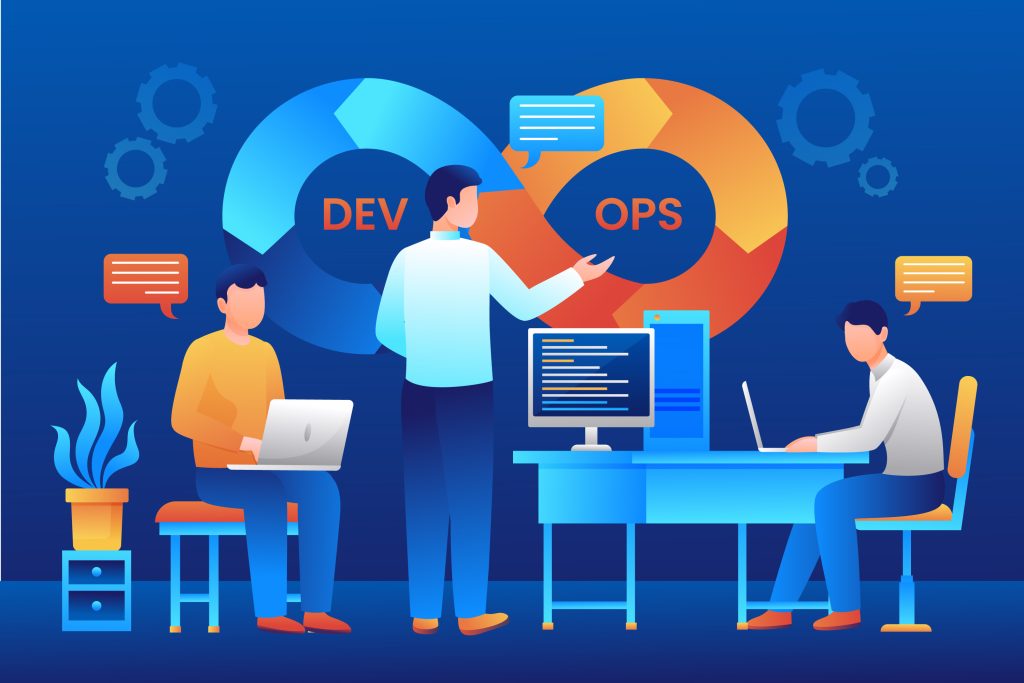
DevOps, short for Development (Dev) and IT Operations (Ops), is a methodology that unites software development and operations to enhance collaboration, streamline workflows, and accelerate delivery cycles. By integrating these functions, organizations can deliver applications faster, more reliably, and with higher quality.
A successful DevOps implementation relies on several core practices:
Continuous Integration (CI): Regularly merging code changes to detect issues early.
Continuous Delivery (CD): Automating deployment processes for faster and more reliable releases.
Infrastructure as Code (IaC): Managing and provisioning infrastructure through code for consistency and scalability.
Automation: Reducing manual tasks to minimize errors and increase efficiency.
Rapid Feedback & Monitoring: Continuously tracking performance to enable quick improvements.
Implementing DevOps brings significant benefits for organizations, including:
Accelerated Delivery: Shorter release cycles allow faster time-to-market.
Enhanced Quality: Automated testing and monitoring reduce errors and improve software performance.
Improved Collaboration: Breaking down silos fosters communication between development and operations teams.
Greater Reliability & Stability: Continuous monitoring and proactive issue detection ensure robust systems.
Increased Business Agility: Organizations can quickly adapt to changing market demands and customer needs.
How We Chose the Top DevOps Implementation Service Providers
Selecting the best DevOps Implementation Service Providers requires a thorough and structured evaluation process. We focused on multiple key criteria to ensure that the providers featured in this list deliver exceptional value and results.
1. Industry Experience
We prioritized providers with a proven track record of successfully implementing DevOps projects across various industries. Their experience in handling complex challenges, compliance requirements, and security protocols played a crucial role in our evaluation.
2. Technical Expertise
Top providers must have highly skilled, certified DevOps professionals. We evaluated their expertise in emerging technologies, including AI-driven DevOps, cloud-native platforms, containerization, and microservices architectures. Key technical competencies we looked for include CI/CD pipelines, container orchestration, Infrastructure as Code (IaC), and cloud platform integration.
3. Comprehensive Service Offerings
We favored providers offering end-to-end DevOps services, such as CI/CD automation, cloud integration, infrastructure management, DevSecOps, and advanced monitoring solutions. The breadth and depth of services ensure businesses receive scalable and flexible support.
4. Client Feedback and Reputation
We verified client reviews, ratings, and feedback from major platforms like Clutch and GoodFirms. Providers with strong communication, collaboration, and project management practices were rated higher. Clear channels for integration with client teams were also a decisive factor.
5. Cost Transparency and ROI
We considered providers with transparent pricing models that offer measurable return on investment (ROI). Long-term efficiency and cost-effectiveness were critical metrics in our selection process.
6. Scalability and Customization
The best DevOps providers are flexible, capable of supporting organizations of all sizes, industries, and project complexities. We ensured that the listed providers can scale their services according to unique business needs, from startups to enterprise-level operations.
By rigorously applying these criteria, we identified the top DevOps Implementation Service Providers in 2025 who combine technical excellence, strategic insight, and measurable business impact.
Top 10 DevOps Implementation Service Providers
1. Onext Digital
Onext Digital is a Vietnam-based software development and digital transformation company with over 12 years of experience. They provide end-to-end DevOps implementation services for businesses of all sizes, helping companies accelerate software delivery while maintaining high standards of security and reliability.
Key Services of Onext Digital:
- CI/CD Consulting and Pipeline Development: Design and implement automated pipelines using Jenkins, GitLab CI, Azure DevOps, or Spinnaker. Integrated automated testing with Selenium, JUnit, and Appium to reduce errors and improve release consistency.
- Infrastructure as Code (IaC): Manage and automate infrastructure using Terraform, Ansible, and CloudFormation to ensure consistency across environments.
- Containerization & Orchestration: Deploy Dockerized applications with Kubernetes, service meshes, and networking policies to ensure secure, reliable, and scalable container communication.
- Zero Downtime Deployment: Implement rolling updates and canary deployments to reduce risks during production releases.
- DevOps Security & Compliance: Integrate automated security scans, access control, and compliance enforcement in CI/CD workflows.
- Staff Augmentation: Provide skilled DevOps engineers to support internal teams and accelerate project delivery.
2. FPT Software
FPT Software is one of Vietnam’s largest IT services companies, serving clients globally. They specialize in DevOps consulting, cloud-native solutions, and end-to-end automation, helping businesses optimize their software development lifecycle.
Key Services of FPT Software:
- DevOps assessment, strategy, and roadmap creation.
- CI/CD automation and Infrastructure as Code (Terraform, Ansible).
- Cloud-native architecture and container orchestration (Docker, Kubernetes).
- DevSecOps integration, continuous monitoring, and observability.
3. TMA Solutions
TMA Solutions is a Vietnam-based software outsourcing company with 4,000+ employees and 30+ years of experience. They provide comprehensive DevOps services for large-scale enterprises, focusing on CI/CD, cloud infrastructure, and process automation.
Key Services of TMA Solutions:
- CI/CD pipeline setup and automated testing integration.
- IaC, cloud orchestration, and infrastructure optimization.
- DevOps training and transformation for client teams.
- Continuous monitoring, logging, and performance tuning.
4. Saigon Technology
Saigon Technology focuses on delivering DevOps solutions for SMEs and startups in Vietnam. They provide affordable, high-quality DevOps enablement services tailored to business-specific workflows.
Key Services of Saigon Technology:
- DevOps assessment and strategy creation.
- Automated CI/CD pipelines and container orchestration.
- IaC implementation and cloud infrastructure management.
- DevSecOps and reliability engineering.
5. Enreap (Singapore)
Enreap is a Singapore-based DevOps consulting and implementation company serving businesses across Southeast Asia. They specialize in accelerating software delivery and enabling digital transformation.
Key Services of Enreap:
- CI/CD pipeline development and deployment automation.
- Cloud-native architecture, IaC, and container orchestration.
- DevOps strategy consulting and team enablement.
- Continuous monitoring and performance optimization.
6. Seasia Infotech (Malaysia)
Seasia Infotech is a Malaysia-based IT services provider with expertise in DevOps implementation, helping organizations adopt agile, automated, and secure workflows.
Key Services of Seasia Infotech:
- DevOps assessment, strategy, and roadmap.
- Automated CI/CD pipelines, IaC, and cloud deployment.
- Containerization and orchestration (Docker, Kubernetes).
- DevSecOps integration and infrastructure monitoring.
7. Fourtitude.Asia (Malaysia)
Fourtitude.Asia delivers DevOps enablement services, focusing on process optimization and continuous delivery efficiency across Southeast Asian clients.
Key Services of Fourtitude.Asia:
- CI/CD pipeline design and release orchestration.
- Cloud-native deployments and IaC.
- Team enablement and cultural DevOps adoption.
- Continuous monitoring, logging, and compliance.
8. UST Global
UST Global is a global digital transformation provider specializing in DevOps, cloud-native development, and platform engineering.
Key Services of UST:
- DevOps strategy definition and pipeline implementation.
- CI/CD automation and cloud-native application development.
- DevSecOps integration across the software lifecycle.
- Monitoring, logging, and performance optimization.
9. Mentormate
Mentormate is a global digital consultancy providing DevOps as part of its Cloud and DevOps practice. They specialize in application migration, pipeline automation, and team enablement.
Key Services of Mentormate:
- CI/CD pipeline automation and release management.
- Cloud migration and infrastructure orchestration.
- Identity, access, and compliance management.
- DevOps consulting on automation, monitoring, and security.
10. IBM
IBM is a multinational technology leader offering advanced DevOps automation and enterprise solutions.
Key Services of IBM:
- Intelligent DevOps automation with IBM DevOps Velocity.
- CI/CD pipeline setup with integrated security and compliance.
- Value Stream Management to align business and IT objectives.
- Data-driven insights to optimize delivery and remove bottlenecks.
Main Services Offered by DevOps Implementation Service Providers
DevOps Implementation Service Providers play a pivotal role in bridging the gap between development and operations. By leveraging automation, cloud technologies, and best practices, they streamline software delivery while ensuring reliability, security, and scalability. Here are the core services typically offered by top providers:
1. Infrastructure as Code (IaC)
IaC enables the automated management of infrastructure through machine-readable configuration files. DevOps providers utilize tools like Terraform, Ansible, Puppet, or CloudFormation to define, provision, and manage infrastructure consistently across environments.
Key aspects include:
- Version-controlled infrastructure definitions to ensure reproducibility.
- Template-based automation for rapid deployment of servers, databases, and networking resources.
- Integration with CI/CD pipelines to automatically provision environments for development, staging, and production.
- Improved scalability and consistency, reducing manual configuration errors.
2. CI/CD Pipeline Setup
Continuous Integration (CI) and Continuous Deployment (CD) are the backbone of modern DevOps practices. Service providers design and implement pipelines that automate the full lifecycle of code—from integration to production.
Core features include:
- Automated code merging and integration to central repositories.
- Build automation and unit testing to validate code changes early.
- Deployment automation to ensure fast, repeatable, and error-free releases.
- Integration with monitoring and rollback mechanisms to maintain reliability during deployments.
3. DevSecOps Implementation
Security is increasingly integrated into DevOps practices through DevSecOps, where security measures are embedded into every stage of development.
Providers:
- Incorporate automated vulnerability scanning and static code analysis.
- Conduct compliance checks for industry standards such as ISO, SOC2, or GDPR.
- Configure policies for secure access control, secrets management, and audit trails.
- Enable proactive identification and mitigation of security risks before they reach production.
4. Monitoring and Operations
Continuous monitoring ensures applications and infrastructure operate smoothly under real-world conditions. Providers establish comprehensive monitoring, logging, and alerting systems to gain actionable insights:
- Real-time performance monitoring for applications, servers, and databases.
- Automated alerts and anomaly detection to resolve issues promptly.
- Visualization dashboards and metrics tracking to optimize resource utilization.
- End-to-end observability for debugging, performance tuning, and incident management.
5. Consulting and Strategy Development
Before implementing DevOps, providers assess existing development and operational workflows, tools, and organizational culture.
Consulting services typically include:
- Gap analysis to identify inefficiencies in processes or technology.
- Custom DevOps roadmap aligned with business objectives.
- Recommendations for tools selection, including version control, CI/CD automation, monitoring, and security solutions.
- Training and guidance to enable cultural adoption, ensuring seamless collaboration between development, operations, and security teams.
DevOps Implementation Service Providers not only automate and streamline software delivery but also enhance security, monitoring, and collaboration. By leveraging IaC, CI/CD, DevSecOps, and strategy consulting, organizations can achieve faster releases, higher system reliability, and a scalable software development ecosystem.
Benefits of Hiring DevOps Implementation Service Providers

Partnering with professional DevOps Implementation Service Providers brings significant advantages for organizations seeking faster software delivery, higher reliability, and optimized operations. Here are the main benefits in detail:
1. Faster Software Delivery
DevOps providers streamline development and deployment processes through automated CI/CD pipelines and containerized environments.
- Accelerated release cycles allow businesses to respond quickly to market demands and launch new features efficiently.
- Automated testing and integration reduce manual errors, ensuring smoother deployments.
2. Improved Collaboration Between Teams
DevOps practices break down silos between development, operations, and security teams. Service providers help organizations adopt collaborative workflows and effective communication practices.
- Integrated tools and dashboards facilitate real-time progress tracking, feedback sharing, and faster issue resolution.
- Enhanced teamwork leads to higher efficiency, fewer miscommunications, and smoother project execution.
3. Enhanced System Reliability and Stability
With automated testing, continuous monitoring, and Infrastructure as Code (IaC), providers ensure stable and consistent environments.
- Systems become less prone to failures during deployment and more resilient under varying workloads.
- This results in reduced downtime, higher availability, and improved end-user satisfaction.
4. Stronger Security and Compliance Posture
DevSecOps integration embeds security throughout the software development lifecycle. Providers implement automated vulnerability scans, policy enforcement, and compliance checks.
- Organizations benefit from proactive risk management and adherence to regulatory standards.
- Security becomes an ongoing, integral part of the development process rather than an afterthought.
5. Cost Efficiency and Resource Optimization
Automated infrastructure management, deployment, and monitoring reduce operational costs and minimize manual interventions.
- Optimized cloud resources, containerized environments, and IaC contribute to better utilization and scalability.
- Businesses can allocate resources more effectively, lowering unnecessary expenditure and increasing ROI.
6. Scalability and Flexibility
DevOps service providers design pipelines and infrastructure that can easily scale with business growth.
- Supports dynamic workloads and multi-environment deployments without extra manual effort.
- Organizations can adapt quickly to evolving requirements and expansion needs.
7. Access to Skilled Expertise
Professional DevOps providers offer access to certified experts and best practices in modern DevOps tools and methodologies.
- Expertise spans CI/CD pipelines, container orchestration, IaC, DevSecOps, cloud platforms, and monitoring solutions.
- Internal teams benefit from guidance and advanced technical knowledge, accelerating project timelines and reducing learning curves.
8. Faster Problem Detection and Resolution
Continuous monitoring, logging, and observability allow organizations to detect issues early and respond promptly.
- This proactive approach minimizes disruptions, reduces downtime, and ensures system stability.
- Real-time insights enable continuous improvement in performance, reliability, and user experience.
How to Choose the Right DevOps Implementation Service Provider for Your Business

Selecting the right DevOps Implementation Service Provider is crucial for achieving successful DevOps adoption, improving software delivery, and ensuring operational efficiency. The decision should align technical capabilities with business objectives to maximize long-term benefits. Here’s a comprehensive guide to help you choose the ideal provider:
1. Define Your Goals
Before evaluating providers, clearly outline the objectives for adopting DevOps practices:
- Determine whether your primary focus is faster software releases, cost reduction, improved collaboration, or overall digital transformation.
- Identify if you require a full-scale DevOps transformation or support for specific areas such as CI/CD pipeline setup, cloud migration, or automation.
- Establish measurable outcomes to guide provider selection and assess project success.
2. Relevant Industry Experience
Experience matters when selecting a provider:
- Look for a proven track record of delivering successful DevOps projects in your industry or with similar technical challenges.
- Providers with relevant experience understand common pitfalls, compliance requirements, and best practices specific to your sector.
- Ensure they can adapt DevOps solutions to your business model, technology stack, and operational needs.
3. Technical Expertise and Certifications
Top providers should demonstrate deep technical knowledge:
- Expertise in CI/CD, Infrastructure as Code (IaC), containerization, microservices architecture, cloud-native platforms, and automation is essential.
- Verify professional certifications such as AWS, Azure, Google Cloud, Kubernetes, Docker, or DevOps Professional certifications.
- Skilled providers ensure efficient implementation, fewer errors, and adoption of the latest industry practices, including AI-driven DevOps solutions where applicable.
4. Security and Compliance (DevSecOps)
Security should be integrated from the start:
- Ensure the provider follows DevSecOps principles, embedding security into every stage of the development lifecycle.
- Check if they comply with relevant industry standards and regulations (e.g., ISO, SOC2, HIPAA, GDPR) and safeguard sensitive data.
- A strong security and compliance framework reduces risk and protects your business against breaches or non-compliance penalties.
5. Client Feedback and Communication
Effective communication and collaboration are essential for project success:
- Review client testimonials, ratings, and case studies to evaluate performance, reliability, and post-implementation support.
- Assess their responsiveness, documentation quality, and communication channels.
- Clear communication ensures alignment with your internal teams and smooth knowledge transfer during DevOps adoption.
6. Support, Maintenance, and Continuous Optimization
DevOps is an ongoing process, not a one-time implementation:
- Check whether the provider offers post-implementation support, continuous monitoring, maintenance, and troubleshooting services.
- They should help optimize workflows, automate repetitive tasks, and continuously improve your DevOps pipelines.
- Long-term support ensures your DevOps environment remains efficient, secure, and scalable.
Choosing the right DevOps Implementation Service Provider requires balancing technical expertise, industry experience, security, communication, and long-term support with your business objectives. A carefully selected provider will accelerate software delivery, enhance operational efficiency, strengthen security, and enable continuous innovation for your organization.
Future Trends in DevOps Implementation

DevOps is continuously evolving, driven by advances in automation, cloud-native technologies, and AI. Organizations that stay ahead of emerging trends can streamline software delivery, enhance collaboration, and maintain a competitive advantage. Here are the key trends shaping the future of DevOps implementation:
1. AI-Driven DevOps (AIOps)
Artificial intelligence is transforming DevOps by automating repetitive tasks and providing predictive insights.
- AIOps platforms analyze historical data and real-time logs to anticipate system failures, bottlenecks, and security vulnerabilities.
- Automation reduces manual intervention, accelerates incident response, and improves overall system reliability.
- Organizations adopting AI-driven DevOps can optimize pipelines, detect issues proactively, and enhance operational efficiency.
2. Platform Engineering and Internal Developer Platforms (IDPs)
Platform engineering is an evolution of traditional DevOps that focuses on creating Internal Developer Platforms (IDPs).
- IDPs bundle essential tools, environments, and services, such as CI/CD pipelines, monitoring, security, and Infrastructure as Code (IaC).
- This approach improves the developer experience, accelerates development cycles, and standardizes workflows across teams.
- By centralizing resources, organizations can reduce complexity and increase productivity across development and operations.
3. Universal DevSecOps Adoption
Security continues to be a top priority in modern DevOps practices.
- DevSecOps integrates security as code, automating policy enforcement, vulnerability scanning, and compliance checks throughout the CI/CD pipeline.
- Configuration, policies, and checks are stored in version control and applied consistently, ensuring security is embedded from development to production.
- This proactive approach minimizes risks and strengthens regulatory compliance while maintaining continuous delivery speed.
4. Serverless and Edge Computing Integration
DevOps practices are expanding to support serverless architectures and edge computing environments.
- Teams must adapt deployment pipelines to manage distributed applications with minimal latency and optimized performance.
- Automation, monitoring, and orchestration tools evolve to support highly dynamic, decentralized workloads.
- This trend allows organizations to deploy applications closer to end-users, improving responsiveness and scalability.
5. Expanded Use of Infrastructure as Code (IaC)
Infrastructure as Code is becoming more advanced and integral to DevOps workflows.
- Modern IaC practices offer enhanced automation, version control, and repeatability across all infrastructure layers.
- DevOps teams can provision, configure, and manage infrastructure consistently, reducing manual errors and increasing deployment reliability.
- The expansion of IaC supports hybrid and multi-cloud environments, enabling organizations to scale infrastructure efficiently and maintain high operational standards.
6. Increased Focus on Observability and Continuous Feedback
Future DevOps practices emphasize real-time observability, analytics, and continuous feedback.
- Monitoring extends beyond basic logging to include metrics, traces, and user experience data.
- Feedback loops allow teams to make data-driven decisions, improve application performance, and proactively prevent incidents.
- Observability ensures transparency across development, operations, and security, fostering a culture of continuous improvement.
The future of DevOps implementation is shaped by AI-driven automation, platform engineering, universal DevSecOps, serverless and edge computing, advanced IaC, and enhanced observability. Organizations that embrace these trends can accelerate software delivery, improve system reliability, enhance security, and maintain a competitive edge in an increasingly fast-paced digital landscape.
Conclusion
Selecting the right DevOps Implementation Service Provider is key to accelerating software delivery, enhancing collaboration, and ensuring system reliability. With trends like AI-driven DevOps, platform engineering, and universal DevSecOps, partnering with an experienced provider ensures your organization stays competitive and efficient.
Onext Digital offers tailored DevOps services to streamline your pipelines, automate workflows, and secure your operations helping your business innovate faster and deliver value continuously.
FAQs about DevOps Implementation Services
1. What are DevOps Implementation Services?
DevOps Implementation Services help businesses integrate development and IT operations, automate workflows, implement CI/CD pipelines, and improve software delivery speed, quality, and reliability.
2. Why should businesses invest in DevOps Implementation Services?
Investing in DevOps services allows organizations to accelerate software releases, reduce deployment errors, enhance team collaboration, ensure system reliability, and optimize operational costs.
3. How do DevOps Implementation Services improve software delivery?
These services implement best practices like Continuous Integration (CI), Continuous Delivery (CD), Infrastructure as Code (IaC), and automated testing, which streamline workflows and reduce manual errors.
4. What types of companies benefit most from DevOps services?
Startups, SMEs, and large enterprises can all benefit from DevOps services, especially organizations looking to scale software delivery, improve reliability, and adopt cloud-native or automated development practices.
5. How to choose the right DevOps Implementation Service provider?
Consider factors such as industry experience, technical expertise, service offerings, client reviews, cost transparency, scalability, and support for DevSecOps and cloud-native environments.
6. What are the latest trends in DevOps Implementation Services for 2025?
Key trends include AI-driven DevOps (AIOps), platform engineering and Internal Developer Platforms (IDPs), universal DevSecOps adoption, serverless and edge computing integration, advanced Infrastructure as Code, and enhanced observability with continuous feedback.