
 Services
 Solutions
 Main platform
 Technology
 White Label
  Offshore
 Hire developers



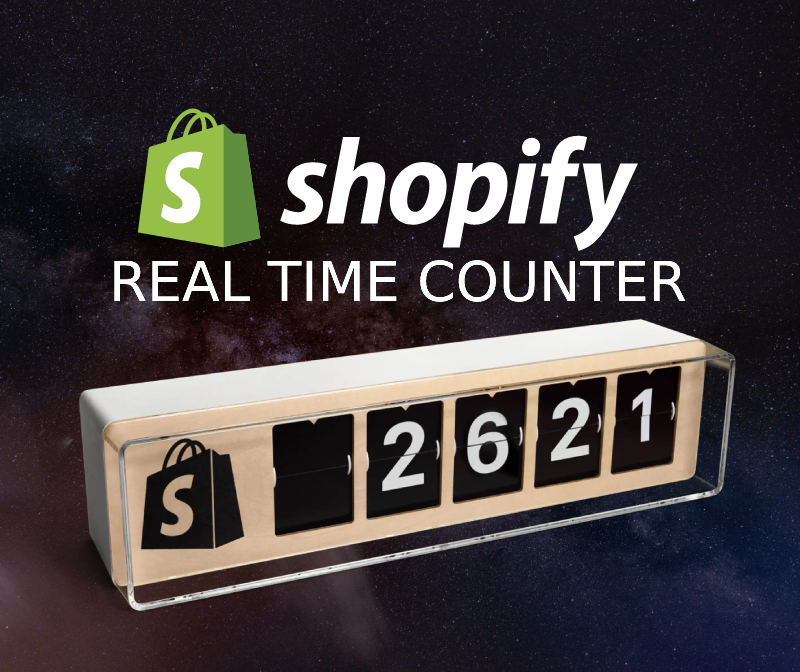
Shopify Counter is a real-time data visualization application designed to enhance e-commerce transparency and drive Conversion Rate Optimization (CRO). This tool displays real-time data like sales, stock levels, and reviews directly on your store. These live updates create a sense of urgency and trust, encouraging customers to make a purchase faster.
In this 2026 ultimate guide, we explore the core functionalities of Shopify Counter and how it serves as a catalyst for sustainable e-commerce growth.
What is Shopify Counter?
Shopify Counter is a high-performance, widget-based application designed for merchants to create and personalize dynamic data counters directly on their storefronts. By synchronizing seamlessly with your store’s backend, the app transforms raw data into real-time visual metrics including sales volume, customer reviews, social media growth, and live inventory levels.
The platform offers granular customization, empowering users to align themes, typography, and animations with their unique brand identity. Beyond aesthetics, merchants can implement automated display logic to control the frequency, duration, and strategic placement of each counter for maximum conversion impact.
Key Strategic Objectives
By integrating Shopify Counter into their tech stack, e-commerce businesses can achieve several high-level objectives:
- Maximize Conversion Rates (CRO): Leverage core psychological triggers, such as urgency, scarcity, and social proof to effectively reduce cart abandonment and accelerate the checkout process.
- Strengthen Customer Loyalty: Build long-term brand equity by showcasing milestones, customer appreciation, and loyalty rewards with total transparency.
- Elevate Brand Authority: Highlight significant achievements, such as total order counts or global testimonials, to reinforce market presence and brand awareness.
- Enhance On-site Engagement: Incorporate interactive, animated elements that add variety and a “gamified” feel to the user journey, increasing time-on-site.
- Performance Transparency: Display Key Performance Indicators (KPIs) and real-time trends to align customer expectations with the store’s growth and success.
How to Deploy Shopify Counter
Implementing Shopify Counter into your e-commerce ecosystem is a streamlined process designed for rapid deployment. Follow these strategic steps to configure and launch your real-time data visualizations:
- Application Installation: Locate and install the Shopify Counter app directly from the Shopify App Store to initiate the integration.
- Theme Selection: Access the centralized app dashboard to select a pre-built theme that best aligns with your storefront’s aesthetic.
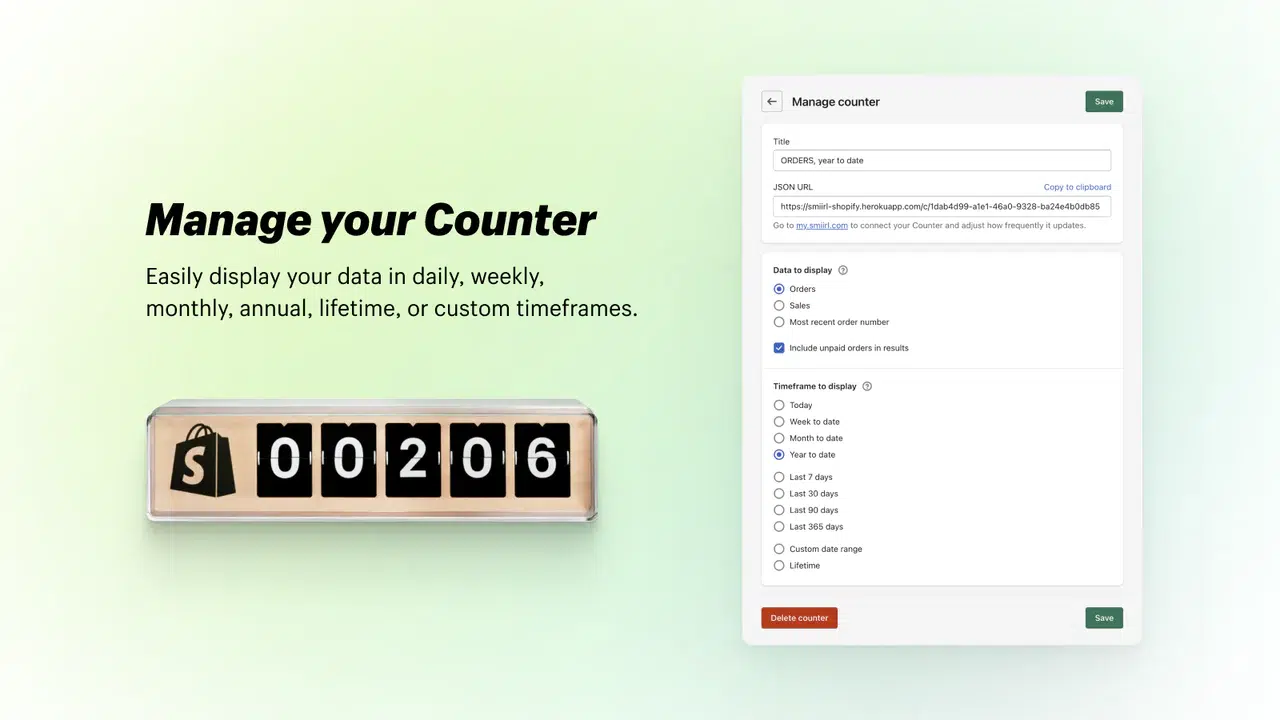
- Data & Visual Configuration: Customize your widget’s parameters. This includes selecting specific metrics (e.g., inventory, sales), adjusting formatting, and fine-tuning typography, color palettes, and animation styles to ensure brand consistency.
- Code Snippet Implementation: Embed the generated liquid code snippet into your Shopify theme’s architecture. This allows for precise control over the counter’s placement whether on product pages, headers, or checkout flows.
- Validation & Deployment: Save your configurations and utilize the preview mode to verify the counter’s responsiveness and visual accuracy before going live.
Advanced Management & Scalability
The Shopify Counter dashboard provides full flexibility for scaling your operations. Merchants can deploy multiple unique counters across different product collections or landing pages. Furthermore, the interface allows for real-time editing, duplication, or removal of widgets, ensuring your data presentation remains agile and aligned with current marketing campaigns.
How to Use Shopify Counter to Grow Your Business
To maximize the ROI of your real-time data visualizations, it is essential to move beyond basic installation and implement a strategic approach. Here are the professional best practices for leveraging Shopify Counter to drive sustainable growth:
1. Strategic Metric Alignment
Selection should be dictated by your specific Business KPIs (Key Performance Indicators). Align your data points with the desired user action:
Conversion Optimization: Deploy metrics such as live sales volume, verified reviews, or real-time stock levels to trigger urgency and social proof.
Retention & Loyalty: Showcase loyalty rewards, referral milestones, or exclusive discount tiers to build a sense of community.
Brand Authority: Highlight global subscriber counts, social media mentions, or total orders fulfilled to establish market leadership.
Engagement: Utilize page views, real-time comments, or share counts to foster an interactive and “live” shopping environment.
2. Design Iteration & Performance Testing
Visual aesthetics must balance brand consistency with high visibility. We recommend an Iterative Testing approach:
A/B Testing: Experiment with various themes, typography, and animation styles to identify which configurations resonate best with your target demographic.
Spatial Optimization: Test different widget placements (e.g., sticky headers vs. product page sidebars) to determine the highest-impact positions.
Data-Driven Insights: Integrate your findings with Google Analytics 4 (GA4) or Shopify Reports to measure the direct correlation between counter visibility and conversion uplift.
3. Maintaining Data Integrity & Relevance
The psychological impact of a counter relies entirely on its credibility. Inaccurate or stagnant data can diminish consumer trust:
Synchronization Frequency: Configure the app settings to ensure data updates are frequent and reflect real-time store activity.
Data Accuracy: Regularly audit your metrics via the app dashboard to ensure the information remains reliable and fresh.
Campaign Agility: Manually update or rotate counters during seasonal sales or product launches to keep the storefront relevant to current marketing objectives.
FAQs About Shopify Counter
1. Does Shopify Counter affect store loading speed?
Shopify Counter is designed with optimized, lightweight scripts that load asynchronously. This means the app fetches data without interrupting the rendering of your primary page content, ensuring minimal impact on Core Web Vitals and overall site performance.
2. Can I display different counters for specific product collections?
Yes. The application supports Rule-based Display. You can configure unique counters to appear only on specific URLs, product categories, or high-value collections, allowing for targeted messaging based on the customer’s browsing context.
3. Is coding knowledge required for installation?
Basic installation is managed through a user-friendly interface. However, for precise placement within a custom Shopify theme, users can manually embed a Liquid code snippet. This provides granular control over the widget’s position without requiring extensive programming skills.
4. How accurate is the real-time data synchronization?
The app synchronizes directly with the Shopify Admin API. Data points such as inventory levels and sales counts are updated based on your set frequency, ensuring that the information displayed to customers remains credible and reflective of actual store activity.
5. Is Shopify Counter fully mobile-responsive?
Yes. The widgets use fluid grid layouts and CSS media queries. This ensures that all dynamic counters automatically scale and reformat to provide a consistent visual experience across desktops, tablets, and smartphones.
Conclusion
Shopify Counter is a must-have app for your Shopify store. It can help you track and display your store numbers in a dynamic and creative way. It can also help you increase your sales, customer loyalty, brand awareness, and content quality. You can set up and use Shopify Counter in minutes, and customize it to fit your store needs and goals.
If you want to try Shopify Counter for yourself, you can download it from the Shopify app store and get a free trial. You can also contact us at Onext Digital, a leading web development service provider, for more information and assistance. We can help you install, configure, and optimize Shopify Counter for your store. We can also help you with other web development services, such as mobile app development, UX/UI design, and white label software service. Contact us today and let us help you grow your business.