
 Services
 Solutions
 Main platform
 Technology
 White Label
  Offshore
 Hire developers



Telemedicine app development is no longer just a trend—it’s now a game-changer in modern healthcare. The COVID-19 pandemic has accelerated the shift, with more people turning to virtual consultations, remote monitoring, and on-demand healthcare than ever before.
Looking ahead to 2025, telemedicine app development is set to experience even faster growth, thanks to breakthroughs in AI, 5G, wearable tech, and a growing demand for seamless, convenient healthcare experiences.
If you’re considering building a telemedicine app in 2025, this guide will provide you with everything you need to know: the must-have features, cost estimates, and a step-by-step roadmap to ensure your app stands out and succeeds in this rapidly evolving market.
1. What is a Telemedicine App?
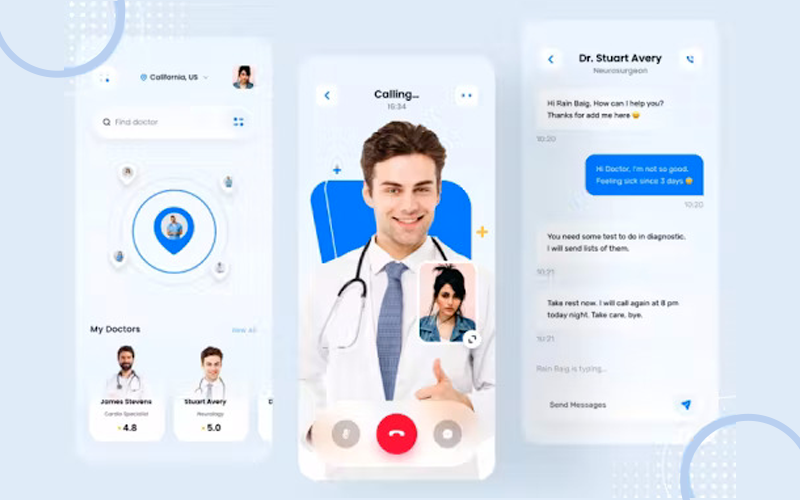
A telemedicine app is a mobile or web-based application that allows patients and healthcare providers to communicate and interact remotely. This means that you don’t need to visit a doctor’s office in person to receive medical care. Instead, you can connect with your healthcare provider from the comfort of your own home using your smartphone, tablet, or computer.
With a telemedicine app, patients gain access to a range of essential healthcare services that offer convenience, flexibility, and comfort, all without leaving their homes:
- Video Consultations:
Imagine having a real-time, face-to-face conversation with your doctor or specialist, just like you would in their office. Whether it’s a routine check-up or a follow-up consultation, the app lets you connect with healthcare professionals from wherever you are, ensuring that you still receive the care and attention you need.
- Remote Diagnosis:
Telemedicine apps allow healthcare providers to assess your symptoms and offer professional medical advice or a diagnosis without requiring you to visit the clinic in person. Whether it’s a minor health concern or a more complex issue, the app provides a way to consult with a doctor and get a clear understanding of your condition, all through digital means.
- Prescription Issuance:
One of the most convenient features of telemedicine is the ability to receive electronic prescriptions. After your consultation, your doctor can send a prescription directly to your pharmacy or email it to you, allowing you to easily pick up your medications without the need for a physical visit to the doctor’s office. This feature is especially useful for managing chronic conditions or refilling prescriptions.
- Appointment Scheduling:
Gone are the days of waiting on hold to schedule an appointment. With a telemedicine app, you can book, reschedule, or even cancel your appointments at your convenience. Whether it’s a last-minute change or simply adjusting to your busy schedule, the flexibility offered by telemedicine apps makes managing your healthcare appointments easy and stress-free.
- Patient Monitoring:
Many telemedicine apps also include features for continuous patient monitoring, especially for individuals with chronic conditions. With these apps, healthcare providers can track vital signs, such as blood pressure, glucose levels, and heart rate, in real-time. This allows for ongoing care, and any necessary adjustments to treatment can be made without requiring a visit to the clinic.
These features combine to create a comprehensive, accessible, and user-friendly experience that makes healthcare more convenient, less stressful, and more efficient. Whether you’re in a remote area or simply need a flexible option, telemedicine apps bring expert care to your fingertips.
2. Why Invest in Telemedicine App Development in 2025?
Developing a telemedicine app in 2025 presents an incredible opportunity for businesses and healthcare providers. Here’s why investing in telemedicine app development is a smart move:
- Rising Demand:
The global telemedicine market is expected to exceed $250 billion by 2028. With more people relying on virtual healthcare solutions, the demand for telemedicine services is growing rapidly, making now the perfect time to enter the market.
- Convenience:
Patients today are looking for healthcare that’s fast, flexible, and easy to access. A telemedicine app gives them the ability to consult with healthcare professionals anytime, anywhere—without the need to travel or wait in long lines.
- Cost-Efficiency:
Telemedicine apps help reduce operational costs for clinics and hospitals by cutting down on the need for physical space, in-person staff, and resources. This cost-saving potential makes telemedicine an attractive solution for healthcare providers looking to streamline their services.
- Technology Advancement:
With the continuous evolution of technology, telemedicine apps now have the potential to integrate cutting-edge tools like AI-powered diagnostics, Internet of Things (IoT) devices, and Electronic Health Records (EHR). These advancements allow for more accurate and personalized care.
- Government Support:
Many governments are recognizing the value of telehealth and are investing in telemedicine infrastructure. Additionally, more countries are providing insurance reimbursements for virtual visits, making telemedicine even more accessible and financially viable for both patients and providers.
3. Key Telemedicine App Features You Must Include
To stay ahead in the competitive world of telemedicine, it’s essential to design an app that offers an exceptional user experience for both patients and healthcare providers. Here’s a detailed look at the must-have features for a telemedicine app in 2025:
3.1 For Patients: Essential Features
- User Registration & Profiles:
Getting started should be quick and easy. Allow patients to sign up with their email, phone number, or social media accounts. This streamlined process will make onboarding smooth and hassle-free, so patients can dive straight into using the app without delays.
- Video/Audio Consultations:
Imagine having a real-time consultation with your doctor, just like you’re sitting in their office. The app should offer secure and high-quality video and audio calls, making it feel as personal and professional as an in-person visit.
- Appointment Scheduling:
Patients should be able to book, reschedule, or cancel appointments with just a few clicks. A flexible scheduling system should display available time slots, making it easy for patients to find a time that fits their schedule, without any stress.
- Secure Messaging:
Communication is key. Including a secure, encrypted messaging system allows patients to chat with their healthcare providers privately. Whether it’s for follow-up questions or clarifying advice, this feature helps ensure that patient information stays confidential.
- E-Prescriptions:
No more waiting for paper prescriptions. Doctors should be able to send prescriptions directly to patients digitally. This means patients can get their medication promptly without needing to visit the clinic for a physical prescription.
- Payment Gateway:
Patients should be able to pay for consultations securely through an integrated online payment system. Whether it’s through credit cards, mobile wallets, or insurance payments, it should be easy, safe, and straightforward.
- Medical History Tracking:
With just a few taps, patients should be able to access their entire medical history—past appointments, diagnoses, prescriptions, lab results—all stored in one secure place. This helps patients keep track of their health and have all necessary information ready for future consultations.
- Push Notifications:
Reminders are important to keep patients on top of their health. Use push notifications to remind them about upcoming appointments, medication refills, or even important health tips, keeping them engaged and informed.
3.2 For Doctors: Must-Have Features
- Doctor Profiles:
Doctors should have the ability to create detailed profiles that include their qualifications, specialties, experience, and even patient ratings. This helps patients choose the right healthcare provider based on their needs and preferences.
- Appointment Management:
Doctors need a simple interface to accept, reschedule, or decline patient appointments. It should be easy for them to manage their time and availability, ensuring they can handle their daily schedule efficiently.
- Electronic Health Records (EHR) Access:
Doctors should have quick and easy access to patient records. This includes medical history, previous consultations, prescriptions, and lab reports, allowing doctors to make informed decisions without delay during consultations.
- In-App Communication:
Offer doctors multiple ways to communicate with patients—secure chat, voice calls, or video calls—directly within the app. This helps streamline communication, ensuring doctors don’t need to juggle between multiple platforms to provide care.
- E-Prescription Capability:
Doctors can quickly create and send prescriptions digitally, eliminating the inefficiencies of paper-based prescriptions and improving overall workflow. This also helps patients receive their medications faster.
- Dashboard & Analytics:
A comprehensive dashboard should be provided, where doctors can track their consultations, monitor patient visits, review their earnings, and analyze key metrics. This makes practice management more organized and efficient, helping doctors stay on top of their work.
3.3 For Admin Panel: Essential Management Tools
- User Management:
Admins should have full control over both doctor and patient profiles. This allows them to manage user access, ensure that sensitive data is protected, and handle any issues that arise to maintain a secure and smooth-running app.
- Content Management:
Admins can create and update educational materials, FAQs, and other helpful content within the app. This helps users get the most out of the app by offering guidance, tips, and resources that enhance their experience.
- Payment Management:
Admins should be able to oversee payment transactions, ensuring that everything from consultations to insurance claims runs smoothly. This feature guarantees transparency and accountability in the financial operations of the app.
- Reporting and Analytics:
Admins need access to detailed reports that provide insights into how the app is performing. This includes user activity, appointment numbers, revenue, and other key metrics. By understanding how the app is used, admins can make improvements, optimize operations, and improve the user experience.
By incorporating these essential features, you’ll create a telemedicine app that stands out in an increasingly competitive market. Patients will appreciate the convenience and accessibility, while healthcare providers will benefit from the streamlined processes that make their work easier and more efficient. This comprehensive approach ensures that both sides are well-served, making healthcare more accessible, affordable, and patient-centered.
4. Telemedicine App Development Process
Creating a successful telemedicine app in 2025 requires a clear and strategic approach. Here’s a detailed, easy-to-follow breakdown of the key steps in the telemedicine app development process:
Step 1: Market Research and Idea Validation
Before jumping into development, it’s crucial to understand the market:
- Analyze your competitors to see what they’re doing right—and where they fall short.
- Identify gaps and opportunities where your telemedicine app can stand out.
- Define your Unique Value Proposition (UVP) clearly: What will make your app different and better?
- Validate your idea through user surveys, interviews, and by building simple prototypes to test early interest.
Step 2: Requirement Gathering and Planning
Next, lay the foundation for your app:
- Decide the type of telemedicine app you want to create: Business-to-Consumer (B2C), Business-to-Business (B2B), or a hybrid model.
- Choose the platforms: Will you build for iOS, Android, or opt for a cross-platform solution?
- Finalize the core features and necessary integrations, such as Electronic Health Records (EHR) systems, wearable health device connections, and AI diagnostic tools.
Step 3: Design (UI/UX)
Good design is essential for user trust and ease of use:
- Focus on creating simple, intuitive, and accessible interfaces.
- Build detailed wireframes and interactive prototypes to visualize the user experience early.
- Prioritize HIPAA compliance and ensure patient data privacy is at the heart of your design.
Step 4: Development
Now it’s time to bring your app to life:
- Choose a reliable technology stack like Flutter, React Native, Node.js, and AWS to support scalability and performance.
- Start with an MVP (Minimum Viable Product) to launch quickly and gather feedback.
- Ensure real-time video and audio streaming capabilities are high quality and secure.
- Integrate safe, seamless online payment systems to make transactions easy for users.
Step 5: Testing
Thorough testing is non-negotiable:
- Conduct extensive QA testing covering functionality, security, performance, and usability.
- Use a mix of manual and automated testing methods to ensure your telemedicine app runs smoothly under real-world conditions.
Step 6: Deployment
Time to launch:
- Release a beta version first to collect feedback and fine-tune the app.
- Publish the final version on the App Store, Google Play, or through web platforms to reach your target audience.
Step 7: Maintenance and Upgrades
After launch, the work doesn’t stop:
- Regularly update the app with new features based on user feedback.
- Keep a strong focus on system security with continuous monitoring and maintenance to protect user data and ensure top-notch performance.
By following these strategic steps, you’ll set a strong foundation for a telemedicine app that’s secure, user-friendly, and ready to thrive in the fast-growing digital healthcare market.
5. How Much Does It Cost to Develop a Telemedicine App in 2025 (Vietnam Rates)?
Planning to build a telemedicine app in 2025? Choosing a development team in Vietnam can help you balance both quality and budget. Here’s a general breakdown based on the current market:
| App Type | Estimated Cost (USD) | Description |
|---|---|---|
| Basic MVP | $15,000 – $30,000 | Core features like video consultations, appointment booking, basic profiles. Ideal for validating your idea quickly. |
| Mid-level App | $30,000 – $60,000 | Includes secure messaging, e-prescriptions, payment integration, and better UX/UI. Suitable for growing telehealth services. |
| Advanced App | $60,000 – $120,000+ | Full-featured app with AI integration, wearable device support, analytics dashboard, and multi-platform compatibility. Best for scaling and competing in the global market. |
Key Factors That Influence Telemedicine App Development Costs in Vietnam:
- Feature Set:
The more advanced the features (like AI integration, wearable device support, or real-time video calls), the higher the development cost.
- UI/UX Design:
A simple, intuitive design is more cost-effective, while a highly customized experience will require more investment.
- Technology Stack:
Choosing stable, scalable technologies like Flutter, React Native, or AWS can impact your overall budget.
- Team Experience:
Vietnam offers a large pool of talented developers at competitive rates, making it an attractive option for high-quality development.
- Compliance Requirements:
Ensuring HIPAA, GDPR, or local health data standards can add to both the cost and development timeline.
Tip: Partnering with a trusted outsourcing company can help you save up to 40–60% on development costs compared to building a team locally in the US or Europe.
If you’re looking for an experienced and reliable partner, ONEXT DIGITAL is here to support you. With years of experience delivering healthcare solutions, we understand what it takes to build a secure, user-friendly, and scalable telemedicine app.
6. Challenges in Telemedicine App Development
Developing a telemedicine app comes with its own set of unique challenges. It’s crucial to address these issues early in the process to ensure your app’s success:
Data Security & Compliance
In telemedicine, protecting patient data is non-negotiable. Your app must comply with strict healthcare regulations like HIPAA in the U.S. or GDPR in Europe. Ensuring robust encryption, secure data storage, and regular security audits is key to protecting sensitive information.
Video Streaming Quality
Telemedicine relies heavily on real-time video consultations. To provide a seamless experience, you’ll need to optimize your app for varied network speeds and ensure smooth, high-quality video even with lower bandwidth. Poor video quality can harm user experience and trust.
Doctor Authentication
Patients trust their healthcare providers with their well-being, so ensuring that doctors are properly verified is essential. Implementing a system to verify doctor credentials—including professional licenses and backgrounds—is vital for maintaining credibility and trust.
User Trust
Trust is the foundation of any healthcare service. To build credibility, your app needs to include strong security features, provide clear communication, and ensure reliable service. Transparent policies and high-quality support can help reassure users that their data and health are in good hands.
Third-Party Integration
A great telemedicine app doesn’t operate in isolation—it needs to seamlessly integrate with various third-party systems, like Electronic Health Records (EHR), payment gateways, and wearable devices. Ensuring smooth integration with these systems ensures a more holistic and efficient healthcare experience.
7. Future Trends Shaping Telemedicine in 2025
The future of telemedicine is bright, and several emerging trends are set to shape the industry in 2025. Here’s what you can expect to see in the next generation of telemedicine apps:
AI Diagnostics

Artificial Intelligence is revolutionizing healthcare by enabling automated initial assessments. AI algorithms can analyze patient data and provide preliminary diagnoses or recommend treatment options. This can significantly speed up the process, ensuring that patients get quicker and more accurate care.
Remote Patient Monitoring (RPM)
With the growing use of wearable devices, telemedicine apps can now track patient health in real-time. This includes monitoring vital signs like heart rate, blood pressure, and glucose levels. Real-time data allows doctors to keep an eye on their patients’ health remotely, providing more proactive and personalized care.
Blockchain for Health Records
As concerns about data security continue to rise, blockchain technology is emerging as a game-changer in healthcare. By storing medical records in a decentralized system, blockchain ensures that patient data is more secure, transparent, and tamper-proof. This could lead to better trust and data management in telemedicine apps.
AR/VR Consultations
Augmented Reality (AR) and Virtual Reality (VR) are transforming telemedicine by creating immersive experiences for patients. These technologies are especially useful in physical therapy or mental health support. For example, patients can engage in virtual exercises or therapeutic sessions from the comfort of their home, enhancing their recovery process.
Predictive Analytics
The power of big data will enable healthcare providers to detect diseases earlier than ever before. Predictive analytics will analyze patterns in patient data, providing insights that can help identify potential health issues before they become severe. This shift towards preventive healthcare will make telemedicine even more effective and valuable.
8. Conclusion
The telemedicine revolution is just beginning, and the future of healthcare is being shaped by technology. As healthcare systems worldwide increasingly turn to innovative, technology-driven solutions, investing in a feature-rich, well-designed telemedicine app in 2025 is not just a smart move—it’s essential to stay ahead of the curve.
However, success in telemedicine app development is no accident. It requires careful planning, expert execution, and a commitment to ongoing innovation to meet the growing expectations of patients and healthcare providers alike.
Whether you’re a startup, a healthcare provider, or an entrepreneur, choosing the right development partner can be the key to turning your telemedicine app idea into a successful reality.
If you’re ready to build a custom telemedicine app that stands out, ONEXT DIGITAL is here to help. Our team specializes in healthcare software development tailored to your specific needs, ensuring that your app is user-friendly, secure, and innovative.
Contact us today for a free consultation, and let’s take the first step toward creating the future of healthcare together!