
 Services
 Solutions
 Main platform
 Technology
 White Label
  Offshore
 Hire developers



There is no shortage of advice about offshore development. A quick search will give you hundreds of articles promising lower costs, faster delivery, and access to “world-class talent” at scale.
Yet most Australian startups don’t struggle with offshore development because of cost. They struggle because the model breaks in execution.
Deadlines slip, communication becomes unclear, and what looked like a simple scaling solution often turns into rework, frustration, or a complete reset.
For many founders and CTOs, the real challenge isn’t whether offshore teams can work. It’s whether they can work reliably within a fast-moving startup environment where product decisions change weekly and delivery speed is non-negotiable.
At the same time, the pressure driving offshore adoption is very real. Across Sydney, Melbourne, Brisbane, and Perth, hiring experienced engineers has become slower, more expensive, and increasingly competitive. For many teams, product roadmaps are no longer constrained by ideas but by engineering capacity.
Over the past several years, we have worked with startups across Australia who have faced exactly this tension: strong growth, limited local hiring options, and increasing pressure to ship faster without compromising quality.
The five case studies below reflect what actually happens when offshore development is implemented in practice not in theory.
Case 1: Fintech Startup in Sydney Builds a Hybrid Engineering Team
A Sydney based payments startup had reached a critical stage of growth. The company had secured Series A funding and was under pressure to accelerate product development, but hiring local engineers had become a major bottleneck.
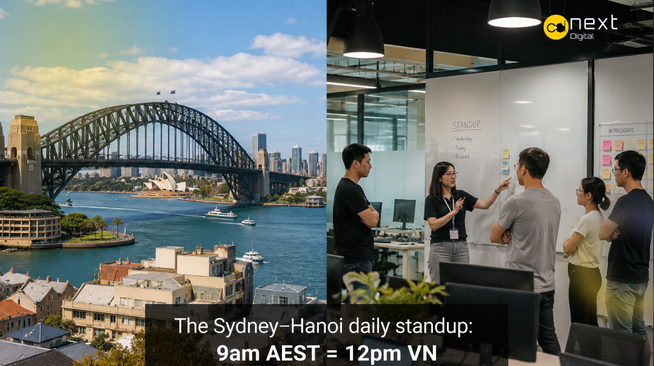
At the time, the engineering team consisted of two senior developers based in Australia. The leadership team had spent more than seven months trying to recruit additional engineers through internal hiring efforts and external recruiters. Despite multiple interviews and several offers, candidates either accepted competing opportunities or demanded salary packages beyond the company’s budget.
As hiring delays continued, product delivery began to slip behind schedule. Features that had been planned for release earlier in the year remained in the backlog, creating growing pressure across the business.
To address the issue, the company decided to expand its engineering capability through a dedicated offshore team in Vietnam. The structure included two senior full stack developers, a backend engineer with experience in financial systems, and a QA lead. The Australian engineers retained responsibility for architecture, technical direction, and product priorities, while the Vietnam team focused on feature development, testing, and day to day delivery.
The first few weeks required adjustment on both sides. Technical discussions were productive, but communication was not always as clear as expected. The Australian team was accustomed to informal conversations and verbal explanations, while the offshore team relied more heavily on written requirements and documented acceptance criteria.
Once a structured handover process was introduced, collaboration improved significantly. User stories became clearer, requirements were documented more consistently, and questions were resolved earlier in the sprint cycle.
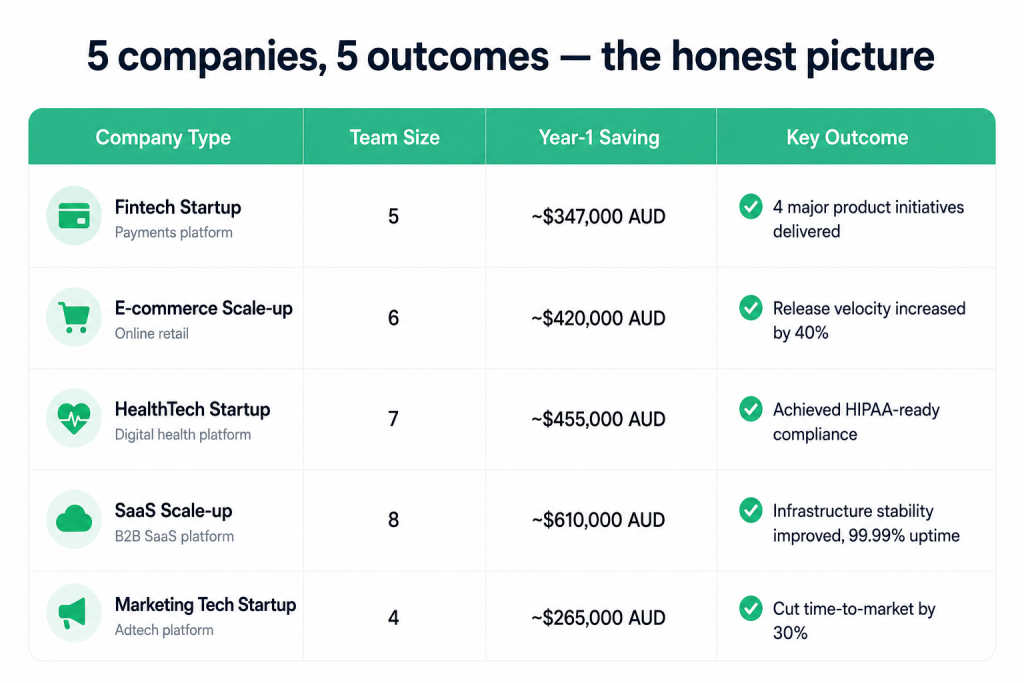
By the second month, the offshore team was contributing directly to production releases. By the end of the first year, the combined engineering team had delivered four major product initiatives that had previously been delayed.
The financial impact was significant. Compared with building an equivalent team entirely within Australia, the company reduced engineering costs by approximately AUD $347,000 during the first year. More importantly, it regained momentum on product delivery and entered Series B discussions with a stronger roadmap and a more mature product offering.
For the founders, the biggest lesson was not about cost reduction. It was the importance of creating clear communication processes from the beginning. Once expectations, responsibilities, and workflows were clearly defined, the offshore team became an integrated part of the company’s engineering organisation rather than an external resource.
Case 2: Melbourne E Commerce Brand Rebuilds Its Development Model for Scale
A direct to consumer brand based in Melbourne had been growing steadily in the outdoor equipment segment. As sales increased, the demand for ongoing development work on their Shopify store and internal systems also grew.
For a period of time, the company worked with a local development agency on a monthly retainer. The arrangement provided stability, but as the scope of work expanded, the cost structure began to limit flexibility. Smaller requests often took several days to complete, and the overall turnaround time started to slow down product and marketing initiatives.
This created a tension between speed and cost. The team needed faster execution to support growth campaigns, yet the existing setup was not designed for rapid iteration.
To address this, the company moved to a dedicated offshore team in Vietnam. The new team consisted of two Shopify developers and one backend engineer responsible for API integrations and inventory system connections. One Australian developer remained involved to oversee strategy and handle more complex technical decisions.
The transition required an adjustment period. During the first few weeks, the offshore team was still learning the existing codebase and business logic. Output was slower than expected, which created some concern internally about whether the change had been the right decision.
Rather than reversing the decision immediately, the company agreed to a defined onboarding period to allow the team to become fully familiar with the system. Over time, communication improved and delivery speed increased as the team gained context and confidence.
By the second month, turnaround time for standard development tasks had improved significantly. Many requests that previously took several days were completed within the same day, largely due to clearer requirements and improved coordination across time zones.
The financial impact was also clear. Monthly development costs were reduced from approximately AUD 18,000 to around AUD 7,200 while maintaining a similar level of output. The savings allowed the leadership team to reinvest in marketing, including hiring a head of marketing role that had previously been out of budget.
The key learning from this case was not only about cost efficiency. It was about the importance of allowing time for onboarding and knowledge transfer. Once the team moved past the initial learning phase, the offshore setup became more responsive than the previous agency model and better aligned with the company’s growth pace.
Case 3: HealthTech Startup Builds a Compliance Ready Offshore Engineering Team
A health technology startup in Brisbane was developing a telehealth platform designed to support patient consultations, clinical workflows, and practitioner management. The product involved sensitive health data and therefore required strict attention to security, compliance, and system architecture.
Despite strong growth potential, the founders had been hesitant to consider offshore development for a long time. The primary concern was not cost, but risk. They needed to ensure that patient data remained secure, regulatory requirements were met, and the development process aligned with healthcare compliance standards.
After a detailed evaluation process, the company decided to proceed with a dedicated engineering team in Vietnam. The selected team included developers with prior experience in healthcare applications, along with backend engineers familiar with clinical data structures and interoperability standards.
From the outset, the system was designed so that no patient data was accessed or stored by the offshore team directly. All development work was conducted within a secure environment hosted on Australia based infrastructure, with controlled access and strict permission boundaries.
The initial phase of the engagement focused heavily on compliance setup, security review, and legal documentation. This step took longer than expected due to internal legal review processes and the need to align all stakeholders on data handling procedures.
Once the environment was fully established, development progressed steadily. The offshore team contributed to both the patient facing mobile application and the practitioner dashboard, working closely with the Australian product and clinical leads.
Within approximately five months, the company successfully delivered its core platform features and moved into a more iterative development phase focused on optimisation and user experience improvements.
From a financial perspective, the company estimated annual savings of around AUD 290,000 compared to hiring an equivalent local team. However, the founders were clear that the more important outcome was not cost reduction but the ability to scale engineering capacity without compromising compliance requirements.
The key takeaway from this case was that offshore development can be implemented in regulated industries when architecture and governance are designed correctly. The deciding factor was not geography, but the strength of the technical and operational controls put in place at the beginning.
Case 4: Perth SaaS Company Accelerates Post Series A Execution
A B2B SaaS company based in Perth had recently closed a Series A funding round of 4.2 million dollars. The investment created strong expectations around product expansion, new integrations, and faster delivery of enterprise features for logistics customers.
However, the local hiring market in Perth presented a challenge. The availability of experienced SaaS engineers was limited compared to larger Australian cities, and recruitment timelines were not aligned with the pace required by the product roadmap.
To address this gap, the company expanded its engineering capacity through a hybrid model combining Australian leadership with a dedicated offshore team in Vietnam. The offshore team was structured into two focused squads. One squad worked on core product development, while the second handled integrations and API driven requirements for enterprise clients.
The Australian engineers remained responsible for architecture decisions, customer engagement, and technical direction. The Vietnam team focused on execution, delivery, and maintaining sprint velocity across both product streams.
The collaboration was structured around clear workflows, including weekly planning sessions, daily standups with time zone overlap, and consistent use of project management tools to maintain visibility across teams.
After an initial adjustment period, delivery speed increased significantly. Features that had previously been scheduled over an extended timeline were completed in a shorter window, allowing the company to bring forward parts of its product roadmap.
This acceleration had a direct impact on fundraising outcomes. The company was able to enter Series B discussions earlier than planned, supported by a more complete product offering and stronger engineering momentum.
During the engagement, the team also experienced a temporary disruption when two offshore engineers left within a short period. While this created a brief slowdown in delivery, it was resolved through a structured replacement process that restored capacity within a few weeks.
The key lesson from this case was the importance of treating offshore engineering as a scalable system rather than a fixed resource. Companies that prepared for team continuity, documentation, and replacement processes were able to maintain stability even when individual team changes occurred.
Case 5: Gold Coast EdTech Startup Learns from a Failed Offshore Attempt and Rebuilds Successfully
An education technology company based on the Gold Coast had been building a learning management system for vocational training providers. The platform required continuous development across web features, content delivery, and administrative tools.
The company’s first attempt at offshore development did not go as planned. They partnered with a large development vendor based outside Australia, expecting a fully managed delivery model. However, after several months, progress was slower than expected, communication was inconsistent, and a significant portion of delivered work required rework by the Australian technical lead.
The main issue was not only technical quality but also operating model mismatch. Work was delivered in a shared resource structure, which limited consistency and made it difficult for the offshore team to build deep product context.
After discontinuing the engagement, the company reassessed its approach and decided to try again with a dedicated team model in Vietnam. This time, the structure was different. A smaller team was assigned exclusively to the project, and onboarding was treated as a structured phase rather than an informal transition.
The first two weeks were focused on knowledge transfer, product walkthroughs, and setting clear expectations around communication, documentation, and escalation paths. Daily standups were introduced to ensure alignment, along with a more detailed definition of user stories and acceptance criteria.
Instead of evaluating productivity immediately, the company committed to a defined trial period to allow the team to reach full context. This decision proved important, as early output was slower during onboarding but improved steadily as the team gained familiarity with the product.
By the third month, the offshore team was operating as an integrated extension of the core engineering group. Development cycles became more predictable, releases were delivered on schedule, and the Australian lead engineer reported that the collaboration quality exceeded expectations compared to previous contractor arrangements.
The key outcome was not only the successful delivery of the LMS platform but also a shift in internal perception. Offshore development, which had previously been viewed as high risk, became a viable part of the company’s long term engineering strategy.
The primary lesson from this case was that offshore success depends less on geography and more on operating model, vendor selection, and the discipline of onboarding and communication design.
Common Patterns Across All Five Cases
Across the five companies, the results were shaped less by industry or company size and more by how each team set up and managed the working model.
The companies that succeeded treated offshore development as part of their internal engineering team rather than a separate outsourcing arrangement. This mindset affected how they communicated, how they planned work, and how quickly they were able to deliver.
A few clear patterns appeared across all cases.
What worked well:
- Clear written requirements with defined scope and acceptance criteria
- Dedicated offshore teams focused on one product, not multiple clients
- A realistic onboarding period before judging performance
- Regular overlap in working hours for planning and daily communication
- Strong technical leadership remaining with the Australian engineering team
What often caused problems:
- Expecting full productivity from day one without onboarding time
- Choosing vendors mainly based on price instead of how they work
- Treating offshore developers as task workers instead of part of the product team
- Moving too fast and skipping trial periods before committing
One important pattern was that productivity always followed a learning curve. In most cases, output was slower at the beginning because the team was still learning the product and the way of working. Once that foundation was in place, delivery speed improved significantly.
Another key factor was technical ownership. When the Australian team kept clear control of architecture and product direction, offshore teams were able to execute more effectively. When this responsibility was unclear or handed over too early, it often led to rework and misalignment.
Overall, these cases show that offshore development is not just about location or cost. The results depend mainly on structure, communication, and how well the teams are integrated from the start.
Is Your Situation Similar to Any of These
Most Australian startup CTOs we speak with recognise parts of their own situation in at least one of these five stories. Some are dealing with hiring delays that slow down product delivery. Others are trying to scale after a funding round. A few are revisiting offshore development after a previous attempt did not work as expected.
The real question is not whether offshore development works in general, but whether it fits your current stage, constraints, and way of working.
In most cases, the fastest way to get clarity is not through reading more material or comparing vendors. It comes from a direct conversation about your current engineering setup, your delivery bottlenecks, and what you are trying to achieve in the next three to six months.
That conversation should be practical rather than promotional. It should focus on your product roadmap, your hiring situation, and the trade offs involved in different scaling options.
For some teams, it becomes clear that offshore development is not the right fit at that stage. For others, it reveals a clear path to increasing engineering capacity without slowing down delivery.
The goal is not to make a decision quickly, but to make a decision with enough clarity that it holds up in practice once implementation begins.
Final Thought
There is no single way to build a strong engineering team that fits every startup. What works at one stage can quickly become a bottleneck as the company grows.
For many Australian startups, the challenge is very practical. Hiring takes time, experienced engineers are hard to find, and product delivery cannot slow down. In this situation, offshore development is less about cutting costs and more about increasing delivery capacity in a more structured way.
From our experience working with Australian founders and CTOs at ONEXT DIGITAL, the pattern is quite consistent. Offshore teams perform well when they are properly integrated into the product and engineering process, with clear ownership, clear communication, and enough time for onboarding. When these elements are missing, performance issues usually come from the setup, not the location.
The key question is not whether offshore development works. It is whether your current engineering setup is ready for a distributed model that still maintains speed, quality, and accountability.
If you are currently facing hiring delays or slow delivery cycles, it is often worth having a direct conversation to assess your situation before making any long term decisions.
FAQs
Can offshore developers in Vietnam really build production-ready software?
Yes. But it depends on how the team is set up. If you have experienced developers, clear technical leadership, and proper code review processes, offshore teams can deliver production-level work just like in-house teams.
Why does offshore development feel slower at the beginning?
Because the team is still learning your product. They need time to understand the codebase, business logic, and how your team works. Once they get this context, speed usually improves a lot.
How do you avoid rework and misunderstanding of requirements?
Most rework happens when requirements are unclear. The solution is simple:
- write clear user stories
- define acceptance criteria properly
- agree on what “done” means before starting
If this is missing, confusion is almost guaranteed.
Does offshore development slow down delivery compared to local teams?
Not necessarily. After onboarding, dedicated offshore teams can be just as fast or sometimes faster because they focus only on execution and don’t get pulled into too many tasks at once. The setup matters more than the location.
What is the biggest risk when working with offshore teams?
The biggest risk is not technical skill. It’s poor setup:
- unclear ownership
- weak onboarding
- too much reliance on calls instead of clear documentation
These are the real reasons projects fail.
When should you NOT use offshore development?
Offshore is not a good fit if:
- your product is changing every day
- you don’t have a technical lead in-house
- you’re not ready to invest time in process and documentation
Offshore only works when your product direction is already clear.