
 Services
 Solutions
 Main platform
 Technology
 White Label
  Offshore
 Hire developers



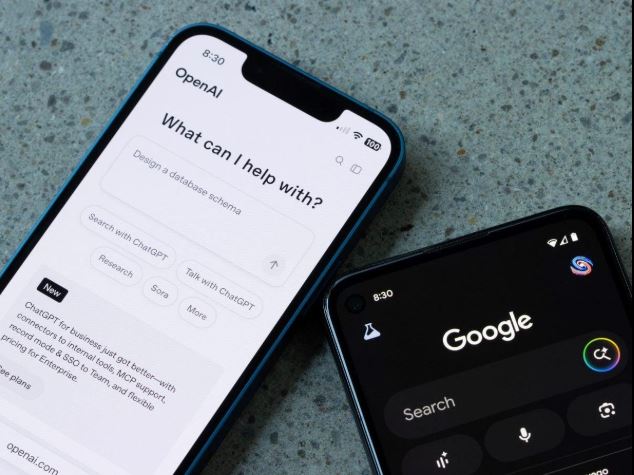
A shopper in Australia no longer starts their buying journey with a Google search. Increasingly, they begin with AI Search for ecommerce Australia, using tools like ChatGPT and asking very specific questions such as:
“best coffee machine under 800 AUD for home barista with strong milk frothing”
Within seconds, they get a short list of products, comparisons, and suggestions. What used to take multiple tabs and website visits now happens in one AI conversation.
Google is still used, but later in the process. People go there to double-check details or finish a purchase, not to start researching from scratch.
This changes how ecommerce SEO works. Ranking on Google alone is no longer enough. The key question is whether your brand shows up when AI tools generate recommendations.
In Australia in 2026, this is already happening. AI Search for ecommerce Australia is becoming part of how people actually shop, especially in competitive product categories.
SEO is still important. But visibility is no longer just about search rankings. It is also about whether your brand is included in the answers people see before they ever reach your website.
1. The real picture in Australia’s ecommerce market
Before talking about strategies, it is worth looking at what is actually happening on the ground in Australia right now. Not global trends, not theory, but real behaviour and real data from the market.
Australia’s ecommerce market reached around AUD 69 billion in 2024, making it one of the most developed digital retail markets in the region, but also one of the most competitive.
What has changed recently is not the size of the market, but how people discover and decide what to buy.
AI is already part of product discovery
Recent consumer research suggests a clear shift in how people shop:
A significant share of Australians have already used AI tools to help search for or compare products, according to the PayPal Global Shopping Index. Other digital consumer studies also show that trust in AI-generated recommendations is growing, especially during the product comparison stage.
This matters because AI is no longer just an experimental tool. It is increasingly part of how people evaluate options before making a purchase decision.
What Australian business data is showing
A study across 115 Australian businesses (2024–2025, Optimising) gives a clearer view of how AI traffic behaves in ecommerce:
- ChatGPT accounts for roughly 90% of AI driven traffic to ecommerce websites
- Visitors coming from AI tools behave differently than Google users
- They view more pages per session (around 12 vs 9 from Google organic)
- They stay longer on site, often close to twice the engagement time
But there is another side to this:
- In some ecommerce categories, AI traffic converts lower than traditional organic search
- In service-based industries, the effect is stronger, especially in branded search and direct visits after AI exposure
The important shift most brands miss
The key point is not where traffic comes from.
It is where decisions are made.
Today, a customer in Australia can complete most of their research inside ChatGPT, narrow down their options, and only then visit a website to buy. In many cases, they already have a preferred brand in mind before they even open Google.
On GA4, that journey often shows up as direct traffic.
But in reality, the decision was already influenced earlier by AI.
This creates a gap that many ecommerce brands are not tracking yet. You are no longer competing only for clicks. You are competing for inclusion in the shortlist that AI systems generate before the click even happens.
2. AI Search, AEO, GEO: three concepts you need to understand
Before talking about strategy, it is important to reset how search actually works today. SEO is not gone, but it no longer explains the full picture of visibility and discovery.
Instead of one system, search now operates in three layers at the same time.
The three layers of modern search:
| Concept | Goal | Where it appears | Main ranking signals |
| Traditional SEO | Rank on Google search results | Organic search listings | Backlinks, keywords, on page optimization |
| AEO (Answer Engine Optimization) | Appear inside AI generated answers | Google AI Overviews, featured snippets, voice search | Structured Q&A, schema markup, content credibility |
| GEO (Generative Engine Optimization) | Be selected or recommended by AI systems | ChatGPT, Perplexity, Gemini, Claude | Clear entity signals, structured data, reviews, cross web consistency |
What matters in 2026
This is not a choice between three approaches. A working strategy combines all of them. SEO is still the foundation. Your site needs to be fast, crawlable, and supported by authority signals like backlinks.
On top of that foundation, AEO and GEO determine whether you appear inside AI-generated answers and recommendations.
This is where ecommerce teams are starting to shift from traditional SEO work to more structured implementation around product data, content structure, and feed quality. In some cases, they work with specialized Shopify and AI-focused implementation partners across the APAC region to make sure their stores are properly structured for both search engines and AI systems.
The core shift
Traditional SEO is built around keywords. GEO is not. It is built around entities and real world decision contexts.
Users are no longer searching with simple terms like “coffee machine”. They are describing full requirements, constraints, and preferences. AI then interprets these inputs, compares options, and produces a short list of recommendations.
In this environment, websites with clear structured data, consistent entity signals, and strong external validation across the web are the ones most likely to be selected or cited by AI systems
3. How Google AI Overviews are changing your traffic
Australia is one of the earliest and most exposed markets for Google AI Overviews. Google started rolling out the feature in October 2024, and by mid 2025, AI Overviews were already appearing in around 39% of searches in Australia, significantly higher than the global average of roughly 16%.
This is not just a UI change. It is a direct shift in how clicks are distributed.
The impact on CTR is already measurable
Multiple large scale studies show a clear pattern.
Ahrefs analysis of 300,000 keywords found that when an AI Overview appears, the CTR of the number one organic result drops by 34.5%.
A separate study by Seer Interactive across 3,100 queries and 42 organizations shows an even sharper impact. In those cases, CTR dropped by up to 61%, with average click through rates falling from 1.76% to 0.61%.
In simple terms, even if you rank first, you receive significantly less traffic when an AI Overview is present.
The rise of zero click search
The broader trend is even more important than individual CTR changes.
- Around 60% of Google searches now end without any click
- That number increases to 80–83% when AI Overviews are present
- In experimental AI Mode, zero click rates can reach up to 93%
- Gartner projects a 25% decline in traditional search volume by 2026 as AI chatbots take over more discovery use cases
The direction is clear. More answers are being consumed directly inside Google, without users visiting websites.
Which queries are most affected
Not all search types are impacted equally. The data shows a clear pattern:
- Informational queries (most affected)
Examples: “how does a coffee machine work”, “how to choose merino wool”
These often see 30–40% drops in organic traffic, as AI Overviews fully answer the question.
- Commercial and comparison queries (high opportunity, high disruption)
Examples: “Kogan vs JB Hi-Fi comparison”, “best air purifier under 500 AUD”
AI Overviews are increasingly present here, but this is also where citation opportunities are strongest.
- Transactional queries (still relatively stable)
Examples: “buy [product] Sydney delivery”
Google still prioritises Shopping results, product listings, and local packs. However, this category is gradually evolving as AI becomes more integrated into shopping flows.
- The key nuance most people miss
There is still a clear upside inside AI Overviews. Studies from Seer Interactive show that when a website is cited inside an AI Overview, traffic from that placement can outperform traditional organic clicks in similar query sets.
The real issue is not whether AI Overviews reduce traffic.
It is whether your brand is included in the answer or completely excluded from it.
4. ChatGPT and Perplexity: a new shopping channel in Australia
Google AI Overviews are only one part of the shift. The deeper change is happening in how people actually research and decide what to buy.
In Australia, more consumers are now using ChatGPT, Perplexity, and Gemini as their starting point for product research. This happens outside of Google’s ecosystem and often before any website visit takes place.
AI driven traffic is growing fast in ecommerce
Data from a study of 61 Australian ecommerce businesses shows a clear pattern:
- ChatGPT accounts for around 90% of AI referred traffic
- Perplexity represents a smaller share but shows significantly higher conversion rates
This dataset predates the rollout of Google AI Mode in Australia, meaning the current impact is likely even stronger today.
Across AI platforms, performance signals are already standing out:
- 14.2% conversion rate from AI search traffic compared to 2.8% from Google organic
- 16.8% conversion rate from Claude referrals, the highest among major LLM platforms
- Overall, Some early ecommerce datasets show significantly higher conversion rates from AI referred traffic, though results vary heavily by category and attribution model.
Why AI traffic converts better
The reason is straightforward. When a user clicks through from ChatGPT or similar tools, they are not at the beginning of their research journey. They have already:
- compared options
- asked follow up questions
- received recommendations
- narrowed down choices
By the time they reach your website, they are not exploring anymore. They are validating a decision they have already made inside the AI conversation.
This compresses the traditional buyer journey and shifts more intent to the top of the funnel inside the AI tool itself.
ChatGPT Instant Checkout and the next phase
Another major shift is already emerging.
Since September 2025, ChatGPT Instant Checkout has been live for its large user base. In parallel, Google announced a similar shopping protocol in January 2026 with partners like Shopify, Walmart, Target, and others.
McKinsey estimates this new AI commerce layer could generate 3 to 5 trillion USD globally by 2030.
This changes the role of ecommerce websites again. In some cases, AI will not just recommend products, but complete the transaction inside the conversation layer.
What is happening with Amazon
There is already a visible strategic split in the ecosystem.
Amazon has blocked ChatGPT related bots such as ChatGPT-User and OAI-SearchBot in its robots.txt file. As a result, Amazon product listings are not fully accessible in ChatGPT shopping results.
This creates an unexpected advantage:
Brands that sell through their own Shopify stores may have better visibility inside AI shopping environments compared to marketplace listings that are technically excluded.
The strategic implication for Australian ecommerce
This is not just a traffic shift. It is a distribution shift.
Brands that own their product data, maintain structured feeds, and operate independent ecommerce stores are now entering a new discovery channel where traditional marketplaces are partially absent.
For the first time, visibility is not only controlled by search engines or marketplaces.
It is increasingly controlled by AI systems deciding what gets recommended in the first place.
5. 6 actions Australian online stores should implement now

Most Shopify stores already have basic schema in place. It is enough for Google rich results, but not enough for AI systems to reliably understand context, trust signals, and product detail.
The gap is usually not technical complexity. It is missing data completeness.
What matters in practice:
- Organization schema
This is your brand identity layer. It should include your legal business name, Australian location, contact details, and consistent sameAs links across social profiles. AI systems use this to confirm that your brand is a real and stable entity.
- Product schema
This is where most stores are incomplete. You need GTIN or SKU, brand attribution, real review counts (not inflated or partial data), AUD pricing, and structured shipping information relevant to Australia.
- FAQPage schema
FAQ content is no longer just SEO content. It is one of the most direct ways to get extracted into AI generated answers, especially for category and informational queries.
- Site structure schema
Breadcrumbs and WebSite schema with search actions help AI systems understand how your catalog is organized and how users navigate it.
The underlying principle is simple. If your data is structured properly, AI does not need to guess. It can use your store as a reliable source.
Action 2: Rewrite product pages for structured understanding, not persuasion
Most ecommerce product pages are still written as marketing pages. They focus on storytelling, emotional framing, and conversion triggers.
AI systems do not evaluate content that way.
They evaluate whether a product can be clearly defined, compared, and matched to user intent.
A more effective structure looks like this:
- Opening description
One clear paragraph that defines the product, who it is for, and what differentiates it. No filler.
- Technical specifications
Materials, dimensions, weight, compatibility, and any measurable attributes. This is what enables comparison.
- Use cases
Clearly state where the product fits and where it does not. This helps AI map products to specific user scenarios.
- FAQ based on real questions
Not generic marketing FAQs. Actual customer questions answered directly and simply.
The shift here is important. You are not writing to convince anymore. You are writing to be understood correctly.
Action 3: Build content around decisions, not just information
AI systems prefer content that helps users make decisions, not just learn concepts.
In ecommerce, the highest value content tends to fall into a few predictable patterns:
- Product selection guides based on specific needs
- Direct comparisons between products or brands
- Best option lists tailored to Australian pricing and availability
- Real customer questions and structured answers
- Reviews and unboxings from actual users in Australia
- Seasonal buying guides aligned with local conditions
- Structured comparison tables that can be extracted easily
- Video transcripts and properly written alt text
The common thread is clarity. Content that reduces uncertainty performs better in AI driven environments.
Action 4: Build review depth and consistency, not just volume
Reviews are not just social proof anymore. They are part of the data layer AI systems use to decide which brands are safe to recommend.
What matters is not only how many reviews you have, but how consistent and usable they are.
Key sources in the Australian context:
- Google Business Profile
A primary input for Google’s AI Overviews. Consistency over time matters more than spikes in volume.
- com.au
One of the most referenced review platforms in Australia for ecommerce research and comparison.
- On site reviews with structure
Use proper schema and encourage reviews that describe real usage context. AI systems value specificity over generic ratings.
If reviews are vague, inconsistent, or isolated, AI systems have less confidence in recommending your products.
Action 5: Fix your product feed as a primary data source
For transactional queries, AI systems increasingly rely on product feeds rather than crawling websites.
This means your Merchant Center feed is now more important than many product pages from a visibility perspective.
Critical elements:
- Structured product titles
Use a consistent format that includes brand, product name, key attribute, and variant. Avoid marketing language that removes clarity.
- GTIN coverage
This is essential for cross store matching and price comparison across ecosystems.
- Accurate shipping and return information
Especially important for Australia. State level delivery expectations and compliance with consumer law must be clear.
- Real time stock and pricing
AI systems prioritize availability. Out of stock or inconsistent data reduces the chance of being recommended.
In simple terms, your feed is now part of your ranking system.
Action 6: Build entity authority across the web
Entity authority is how AI systems understand whether your brand is real, consistent, and credible across multiple sources.
This is not controlled by a single website. It is built across your entire digital footprint.
What contributes to it:
- Consistency of brand identity
Your name, structure, and business details must match across Google Business, ABN records, website, and social channels.
- Presence on trusted platforms
Including Crunchbase, LinkedIn company pages, and structured business directories.
- Editorial media coverage
Mentions in Australian publications such as Inside Retail or SmartCompany carry more weight than self published content.
- Real digital PR
Not press releases, but editorial content where third party publications reference your brand.
- Founder visibility
Podcasts, interviews, and video content help build author level trust signals, which indirectly support brand authority.
The key idea is simple. AI trusts patterns that are repeated across independent sources, not claims made in isolation.
Measuring in the AI search era: what to track and how to track it
This is one of the biggest challenges for ecommerce in 2026, especially in Australia. Traditional analytics tools were built for a world where Google search was the main entry point. They were not designed to measure visibility inside AI systems.
As a result, if you only rely on standard SEO and GA4 reports, you are no longer seeing the full picture of demand and discovery.
You need to expand your measurement model.
From traditional SEO metrics to AI visibility metrics
| Traditional metrics (still relevant) | New metrics (required in 2026) |
| Organic ranking positions | AI Overview presence rate (how often your brand is cited in AI answers) |
| Organic traffic | AI referred sessions (from chatgpt.com, perplexity.ai, gemini.google.com, claude.ai in GA4) |
| Google Search Console CTR | Brand mention rate inside AI responses (via tools like Semrush AI visibility or Ahrefs AI tracking) |
| Overall conversion rate | AI traffic conversion rate (often significantly higher, sometimes 3 to 5 times) |
| Impression share | Share of voice inside AI generated answers compared to competitors |
Set up GA4 to track AI traffic today:
Go to GA4 → Explore → Custom Segment → Filter: Source contains “chatgpt.com” OR “perplexity.ai” OR “gemini.google.com” OR “claude.ai”.
Compare conversion rate, AOV, and engagement metrics against organic traffic. You should see a clear pattern within 30 days if you already have AI-driven traffic.
Conclusion
AI search is not replacing ecommerce SEO, but it is changing how buying decisions are made. Visibility is no longer just about ranking on Google. It now depends on whether your brand is included in AI-generated recommendations.
For Australian ecommerce brands, this shift is already happening inside tools like ChatGPT and Google AI Overviews. Customers are arriving later in the journey, with clearer intent and fewer options, because AI has already filtered their choices.
Competition is no longer only about clicks. It is about being included in the shortlist before a click happens.
Brands that improve structured data, clarify product information, strengthen entity signals, and treat product feeds as a core channel will be better positioned in this new environment.
This is also where many ecommerce teams work with technical SEO specialists and implementation partners to adapt their stores for AI-driven discovery, including Shopify-focused teams and AI search consultants in the APAC region such as ONEXT DIGITAL.
The next phase of ecommerce SEO is no longer about being found. It is about being chosen.
FAQs
How are shoppers in Australia actually using AI for shopping?
Shoppers in Australia are increasingly using AI tools like ChatGPT to compare products, check features, and narrow down options before visiting any ecommerce website. Instead of browsing multiple pages, they ask one detailed question and get a shortlist of recommendations.
How is AI changing ecommerce SEO in Australia?
AI is shifting discovery from keyword-based search to conversational queries. Instead of ranking only on Google, brands now need to appear in AI-generated product recommendations and summaries.
Do people still use Google for shopping research?
Yes, but mostly later in the journey. Many users now use AI tools first to shortlist options, then use Google to confirm details or complete purchases.
Why is AI search important for online stores?
Because AI often decides which brands are shown first in recommendations. If your product is not understood or included by AI systems, you may never enter the consideration set.
What makes a product more likely to appear in AI recommendations?
Clear product data, structured information (schema), consistent brand signals, strong reviews, and well-organized product feeds help AI systems understand and recommend your products.
How should ecommerce brands prepare for AI search?
Brands should focus on structured data, product clarity, entity consistency across platforms, and optimizing product feeds so AI systems can easily read and compare their products.