
 Services
 Solutions
 Main platform
 Technology
 White Label
  Offshore
 Hire developers



The mobile app world is evolving faster than ever, and choosing the right programming language can make or break your project. From startups launching their first MVP to enterprises maintaining legacy apps, the language you pick impacts performance, scalability, and long-term maintenance.
In 2026, developers have a rich ecosystem of options from Swift and Kotlin for native performance, to Dart and JavaScript for cross-platform efficiency. Each language comes with unique strengths, trade-offs, and community support. In this guide, we’ll explore the top mobile app development languages, highlighting what makes them stand out and providing practical advice to help you select the best fit for your project.
Whether you’re aiming for lightning-fast iOS apps, seamless Android experiences, or a single codebase for multiple platforms, this article will give you the insights needed to make an informed choice and avoid costly mistakes down the line.
What Are Mobile App Development Languages?
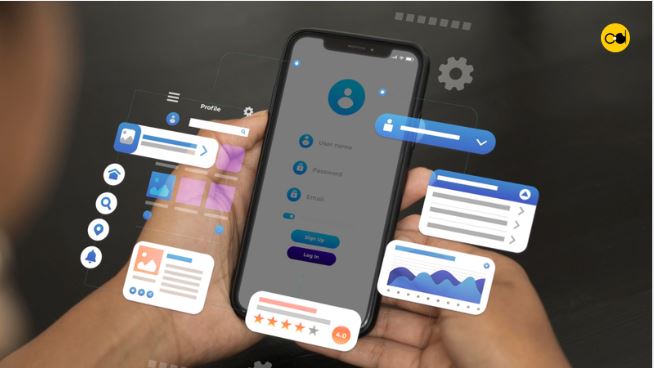
At the core of every mobile app lies its programming language. This choice doesn’t just determine how your app runs, it affects performance, responsiveness, scalability, and even long-term maintenance. Selecting the right language from the start can save months of development time, reduce costs, and make future updates much easier.
By 2026, mobile app development generally falls into three main approaches:
1. Native Development:
Languages tailored for a specific platform, like Swift for iOS or Kotlin for Android, deliver the highest performance and smoothest user experience. Apps built natively can leverage all system features and provide a more responsive interface.
2. Cross-Platform Development:
Frameworks like Flutter or React Native allow developers to write a single codebase that runs on both iOS and Android. This approach is ideal for rapid deployment and cost-efficient development, without sacrificing too much performance.
3. High-Performance & Specialized Development:
For apps requiring intensive computation, advanced graphics, or real-time processing, languages like C++ or C# (Unity) are often used. These provide fine-grained control over hardware and maximize performance for demanding applications like games or AR/VR experiences.
When choosing a language, it’s not just about popularity it’s about how well it fits your project goals, team skills, and long-term roadmap. The right choice can make development smoother, future updates easier, and your app ready to scale as your business grows.
Factors to Consider When Choosing a Mobile App Development Language
Choosing the right programming language for your mobile app is more than a technical decision, it’s a strategic business choice. Here are the key factors to consider:
1. Project Requirements
- Assess the complexity of your app, its feature set, and the platforms it will run on.
- Native apps may be ideal for performance-heavy apps, while cross-platform solutions suit MVPs or apps targeting multiple platforms quickly.
2. Development Speed and Cost
- Time-to-market is crucial, especially for startups or competitive industries.
- Languages like Dart (Flutter) or React Native allow faster development with a single codebase, reducing cost and resources.
3. Team Expertise
- Consider your team’s skills. Are they experienced in Swift, Kotlin, JavaScript, C#, or Java? Leveraging existing expertise can accelerate development and reduce errors.
4. Ecosystem and Community Support
- A strong ecosystem ensures access to libraries, frameworks, tools, and support, which is vital for long-term maintenance.
- Languages backed by large communities, like Swift, Kotlin, and JavaScript, provide proven solutions and frequent updates.
5. Future Scalability
- Choose a language that supports future growth. Your app should handle increased user demand, new features, and platform updates without requiring a full rewrite.
- Cross-platform frameworks and mature native languages often strike the best balance between flexibility and stability.
By carefully evaluating these factors, you can make a strategic choice that aligns with your app’s goals, optimizes resources, and sets the stage for long-term success.
Top Mobile App Development Languages in 2026
1. Swift (for iOS)
Swift is Apple’s modern programming language, crafted specifically for iOS development. Its clear syntax and powerful features allow developers to build fast, reliable, and fully integrated apps within the Apple ecosystem.
Key Features:
- Declarative syntax with SwiftUI support for efficient interface building.
- Strong safety mechanisms and automatic memory management to reduce runtime errors.
- Rapid development cycles with seamless integration into Apple frameworks.
Advantages:
- Optimized for iOS performance and user experience.
- Continuously updated and supported by Apple Inc.
- Easier to read and maintain than Objective-C.
Limitations:
- Limited to the Apple ecosystem, so you cannot reuse Swift code for Android or Windows without rewriting it.
- The developer community is smaller compared to more universal languages like JavaScript or Java, which can limit available libraries and plugins.
- Swift prioritizes safety and performance, which can make integrating with legacy Objective-C projects more complex, increasing maintenance costs.
2. Kotlin (for Android)
Kotlin, developed by JetBrains and officially supported by Google, has become the preferred language for Android app development. Its concise syntax reduces repetitive code while remaining fully compatible with Java.
Key Features:
- Expressive syntax to boost developer productivity.
- Built-in null safety and robust error handling.
- Smooth integration with Android Studio and existing Java codebases.
Advantages:
- Cleaner, more maintainable code.
- Official support and resources from Google.
- Compatibility with the vast Java ecosystem.
Limitations:
- Teams transitioning from Java may face a learning curve due to Kotlin’s null-safety and modern syntax.
- Frequent Kotlin updates may require periodic refactoring, especially in large Android projects.
- While modern and expressive, Kotlin may not achieve the raw performance of C++ or native Swift on iOS for highly resource-intensive apps.
3. Objective-C (for iOS Legacy Development)
While newer projects prefer Swift, Objective-C remains essential for maintaining legacy iOS applications. Its mature design ensures stability and reliability.
Key Features:
- Decades of usage within the Apple ecosystem.
- Dynamic runtime and a robust messaging system.
- Extensive libraries and frameworks developed over years.
Advantages:
- Proven reliability in large-scale, long-term applications.
- Rich documentation and community support.
- Deep integration with legacy Apple APIs.
Limitations:
- Complex syntax can make code harder to read and maintain, particularly for new developers.
- Lacks modern features like optionals and SwiftUI, which makes rapid UI development more cumbersome.
- Integrating with new tools or libraries can be challenging, potentially increasing long-term maintenance costs.
4. Java (for AndroidLegacy and Enterprise Applications)
Java has been a cornerstone of Android development, especially in enterprise environments and large-scale legacy applications.
Key Features:
- Strong object-oriented programming principles.
- Wide ecosystem of libraries and frameworks.
- High performance and proven scalability.
Advantages:
- Mature language with a long-standing role in mobile development.
- Broad device support and extensive community resources.
- Reliable backward compatibility and stability.
Limitations:
- Verbose syntax leads to more boilerplate code, which can make large projects harder to manage.
- Lacks modern features like null safety or coroutines, increasing the risk of runtime errors.
- Performance may not be optimal for complex UI apps or cross-platform projects compared to Kotlin or Flutter.
5. Dart (for Flutter)
Dart is the programming language behind Google’s Flutter framework, enabling cross-platform development with a single codebase.
Key Features:
- JIT and AOT compilation for high performance.
- Rich UI components through Flutter.
- Fast development with hot reload functionality.
Advantages:
- Enables high-performance, visually appealing apps.
- Simplifies cross-platform development.
- Supported by Google with a growing developer community.
Limitations:
- Flutter apps often have larger installation sizes compared to native apps, which can impact users with limited storage.
- Dart is primarily tied to the Flutter ecosystem, limiting its use outside cross-platform projects.
- Although growing, library and resource availability is less mature than Java, Swift, or Kotlin, which may restrict advanced features or enterprise integration.
6. JavaScript / TypeScript (for React Native)
JavaScript and its strongly typed superset TypeScript are used in React Native, developed by Meta Platforms, Inc… This allows web developers to build cross-platform mobile apps efficiently.
Key Features:
- Declarative UI with reusable components.
- Hot reload for rapid development.
- TypeScript support for enhanced code quality.
Advantages:
- Easy transition for web developers to mobile development.
- Access to extensive third-party libraries.
- Strong community support and continuous improvement from Meta.
Limitations:
- Performance overhead due to the JavaScript bridge connecting to native modules, which can cause lag in complex applications.
- Debugging asynchronous code in large apps can be challenging and time-consuming.
- Using TypeScript improves maintainability but requires additional setup and configuration to reach optimal performance compared to native languages.
7. C# (for .NET MAUI and Unity)
C#, developed by Microsoft Corporation, is versatile for enterprise applications and game development. It supports cross-platform native-like apps through .NET MAUI and high-performance interactive apps through Unity.
Key Features:
- Modern object-oriented programming features.
- Deep integration with Microsoft ecosystem and tools.
- High performance for business and gaming applications.
Advantages:
- Flexible for a wide range of applications.
- Comprehensive tooling support via Visual Studio.
- Mature and proven performance in critical applications.
Limitations:
- Less common for pure mobile apps outside enterprise or game development, making it harder to find specialized mobile developers.
- Some frameworks like .NET MAUI are not fully optimized for native mobile features compared to Swift or Kotlin.
- App size and memory footprint may be larger, particularly in game or AR/VR applications.
8. C++ (for High-Performance Apps)
C++ remains the go-to language for performance-intensive apps, including games, AR/VR, and real-time computation. It allows direct hardware control and maximum optimization.
Key Features:
- Low-level memory management for top performance.
- Widely used in game engines like Unreal Engine.
- Cross-platform compatibility with minimal overhead.
Advantages:
- Delivers highest performance for resource-heavy apps.
- Fine-grained control over system and hardware resources.
- Ideal for apps where every millisecond counts.
Limitations:
- Complex syntax and manual memory management require highly skilled developers and increase the risk of errors.
- Development takes longer and costs more, especially for standard mobile apps.
- While delivering top performance, C++ is less suitable for enterprise apps or UI-rich applications, where speed of development and maintainability are critical.
How to Choose the Right Language for Your Mobile App?
Selecting the most suitable programming language for your mobile app depends on multiple factors. Making the right choice early on can save time, reduce costs, and ensure long-term maintainability. Here are the key considerations:
1. Project Complexity
Consider the scope and functionality of your app. Simple apps may be built efficiently using high-level, cross-platform languages like Dart or JavaScript, while complex or performance-critical applications often benefit from native languages or C++, which provide fine-tuned control over system resources.
2. Team Expertise
Leverage the existing skills of your development team. If your developers are experienced in Swift, Kotlin, JavaScript, or C#, it’s generally faster and safer to use a language they know well. This reduces the learning curve and minimizes potential errors during development.
3. Target Platform
Decide whether your app will focus exclusively on iOS or Android, or whether you need a cross-platform solution. Native languages deliver the best performance for single platforms, while cross-platform frameworks allow you to reach multiple audiences with a single codebase.
4. Long-Term Maintenance
Think about future updates and scalability. Languages with large communities, strong documentation, and mature ecosystems make it easier to maintain, update, and extend your app as user needs evolve.
5. Performance Requirements
Evaluate the performance demands of your app. For applications that require real-time processing, advanced graphics, or intensive computation, native languages or C++ may be the best choice. If speed of development and cost efficiency are higher priorities, consider Dart or JavaScript.
Emerging Trends in Mobile App Development Languages in 2026
The mobile app landscape in 2026 is not just about choosing between Swift, Kotlin, or JavaScript, it’s also about leveraging new trends that shape how apps are built and maintained. Two major trends are particularly noteworthy this year:
1. AI-Assisted Coding
Artificial intelligence is increasingly integrated into programming workflows. AI-assisted coding tools can now help developers write, refactor, and debug code faster, regardless of the language. These tools:
- Suggest code snippets and patterns based on best practices.
- Detect potential bugs or performance issues before runtime.
- Automate repetitive tasks, allowing developers to focus on complex logic and UX.
This trend is making mobile development more efficient and accessible, especially for cross-platform projects using languages like Dart, JavaScript, or C#.
2. WebAssembly (Wasm) Support in Swift and Kotlin
WebAssembly is gaining traction as a way to run high-performance code on web browsers. In 2026, both Swift and Kotlin are expanding support for Wasm, allowing developers to:
- Compile native mobile logic to web applications.
- Share business logic across mobile and web platforms with minimal rewriting.
- Improve performance and load times for browser-based apps.
By combining mobile development languages with WebAssembly, businesses can reach multiple platforms more efficiently while maintaining high-performance standards.
3. Continued Focus on Cross-Platform Optimization
Cross-platform frameworks like Flutter and React Native continue to evolve. They now offer better native integration, improved memory management, and smoother UI rendering, making it easier to deliver a consistent experience across devices.
4. Enhanced Security and Compliance Features
With mobile apps handling sensitive user data, languages and frameworks are incorporating enhanced security tools. Developers can now leverage built-in encryption, secure authentication methods, and automated compliance checks directly through language-supported libraries.
In Summary
There is no universal programming language that fits every mobile app project in 2026. The best language depends on your project goals, technical requirements, team capabilities, and long-term strategy. Careful evaluation ensures your app is scalable, high-performing, and maintainable, positioning your business for success in a competitive mobile landscape.
At ONEXT DIGITAL, we specialize in custom mobile app development that aligns with the latest technologies and trends. Our team of experts builds secure, scalable, and high-performance applications tailored to your business objectives.
Get in touch today to start building your next innovative mobile app, your breakthrough could be just one decision away.
Frequently Asked Questions (FAQ)
Q1. What is the best mobile app language for startups in 2026?
Dart (Flutter) and JavaScript (React Native) are the top choices for startups. They allow for a single codebase across iOS and Android, significantly reducing development costs and accelerating time-to-market.
Q2. Is Java still used for Android development in 2026?
Yes, Java remains a cornerstone for maintaining large-scale enterprise and legacy applications. However, for new projects, Kotlin is the preferred and modern standard recommended by Google.
Q3. Why is WebAssembly (Wasm) support a game-changer for Swift and Kotlin?
In 2026, WebAssembly allows developers to compile native mobile logic (Swift/Kotlin) for web browsers. This enables businesses to share high-performance business logic across mobile and web platforms with minimal rewriting.
Q4. How does AI-assisted coding affect the choice of programming language?
AI tools have made complex languages more accessible. While native languages like Swift and Kotlin offer peak performance, AI-assisted refactoring and debugging make cross-platform frameworks much more manageable for smaller teams.