
 Services
 Solutions
 Main platform
 Technology
 White Label
  Offshore
 Hire developers



Are you finding it challenging to keep your software development processes stable and efficient? Constant delays, infrastructure issues, and security concerns can slow growth and frustrate teams. You’re not alone in today’s fast-paced digital landscape, businesses of all sizes cannot afford inefficiencies in their workflows. This is where DevOps as a Managed Service comes into play.
Imagine a world where your software development, testing, and deployment are fully automated, your infrastructure scales effortlessly with demand, and security is integrated at every step. This isn’t a distant goal it’s exactly what DevOps as a Managed Service can deliver.
As your organization expands, so do the complexities of maintaining a robust development and operations environment. DevOps as a Managed Service not only addresses these challenges but also ensures that your infrastructure and workflows grow alongside your business. But what exactly does DevOps as a Managed Service entail, and why should your organization consider it?
What Is DevOps as a Managed Service and Why It Matters for Your Business?
Simply put, DevOps as a managed service means outsourcing the management of your DevOps processes to a specialized third-party provider. These experts handle everything from continuous integration and delivery (CI/CD) pipelines to infrastructure management and security monitoring so your development and operations teams can focus on what truly matters: building innovative products.
But why is this so important? DevOps as a managed service streamlines workflows, removes manual bottlenecks, and ensures faster, more secure software releases. In today’s competitive market, speed, scalability, and security are critical, and relying on a managed DevOps provider can give your organization a clear advantage.
Building and maintaining an in-house DevOps team can be complex and resource-intensive, particularly for growing businesses. By leveraging DevOps as a managed service, companies can scale efficiently without being weighed down by infrastructure and operational challenges. Your systems remain secure, scalable, and up-to-date, freeing your teams to focus on driving growth, innovation, and delivering real business value.
Key Benefits of Adopting DevOps as a Managed Service
Adopting DevOps as a Managed Service brings a wide range of advantages that can transform your software development lifecycle and overall business operations. Here are the key benefits:
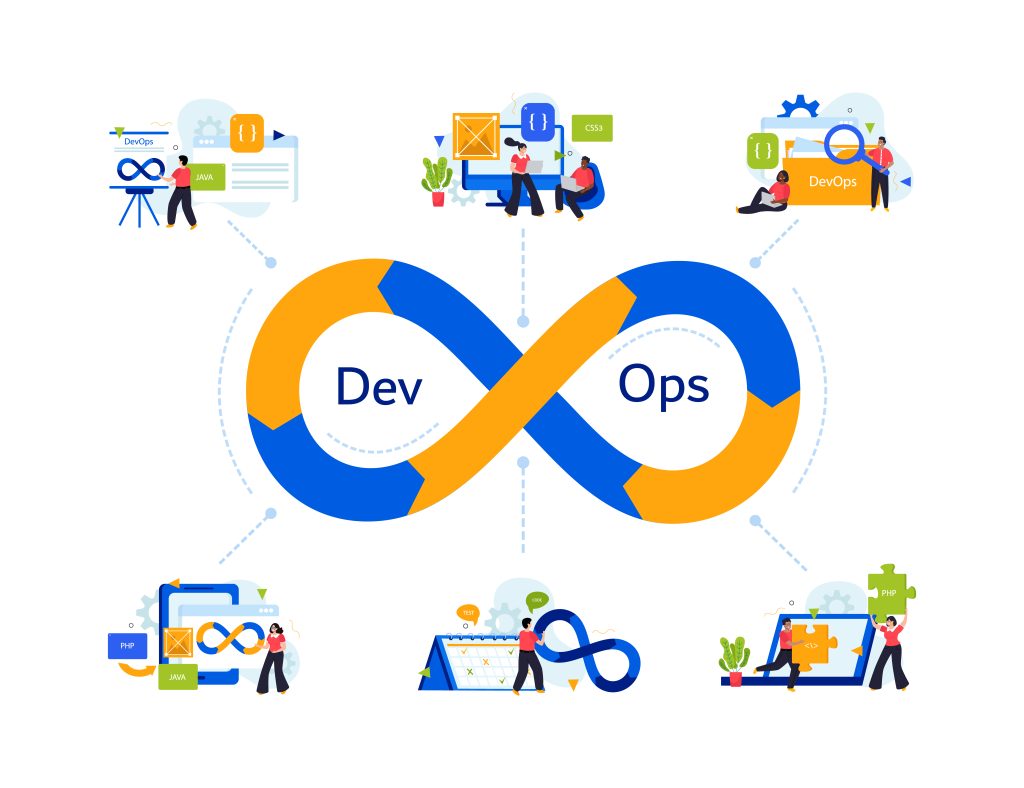
1. Faster Time-to-Market
In today’s fast-paced market, speed is a competitive advantage. By automating the entire development pipeline with CI/CD, DevOps as a Managed Service allows your teams to release updates and new features more quickly. Automated testing and deployment reduce manual errors, accelerate delivery cycles, and enable your business to respond promptly to changing market demands.
2. Effortless Scalability
As your business grows, your infrastructure needs to keep up. With DevOps as a Managed Service, scaling becomes seamless. Whether you require additional server capacity, storage, or computing power, the platform adjusts automatically to meet your needs. This ensures consistent performance and reliability even as workloads increase.
3. Enhanced Security
Security is critical in today’s digital landscape. DevOps as a Managed Service integrates security throughout the software lifecycle, incorporating DevSecOps principles into every stage. Automated security checks, continuous updates, and real-time monitoring help safeguard your applications, ensuring compliance with industry standards and reducing the risk of vulnerabilities.
4. 24/7 Monitoring and Reliability
Downtime can be costly and damaging to your reputation. Managed DevOps providers offer round-the-clock monitoring of your infrastructure and applications, identifying and resolving issues proactively. This ensures high system availability, minimizes disruptions, and keeps your operations running smoothly at all times.
What Services Are Included in DevOps as a Managed Service?
Choosing DevOps as a Managed Service means more than just automation it gives you access to a comprehensive set of tools and services designed to optimize your development and operations. Here’s what you can expect:
1. CI/CD Pipeline Setup
A well-designed CI/CD pipeline accelerates development cycles by automating code integration, testing, and deployment. With DevOps as a Managed Service, your teams can focus on innovation instead of manual tasks, reducing errors and ensuring consistent, high-quality releases.
- Automated code integration
- Continuous delivery
- Faster release cycles
- Reliable and consistent deployments
2. Infrastructure as Code (IaC) Management
Manual infrastructure management is inefficient and error-prone. With IaC, infrastructure is defined and managed through code, ensuring consistency across all environments. Whether scaling on-premises systems or migrating to the cloud, IaC simplifies transitions and enables seamless scalability.
- Automated provisioning
- Scalable infrastructure
- Version-controlled environments
- Faster disaster recovery
3. Security and Compliance
Security is integrated into every phase with DevSecOps. Providers of DevOps as a Managed Service perform continuous monitoring and compliance checks, ensuring your business meets standards such as GDPR or HIPAA. This proactive approach minimizes risks and keeps your software secure and compliant.
- Automated vulnerability scanning
- Continuous compliance checks
- Risk management
- Integrated security monitoring
4. Real-Time Monitoring
Keeping track of applications and infrastructure in real time is essential for performance and uptime. With DevOps as a Managed Service, potential issues are detected early, allowing instant resolution and preventing costly downtime.
- Continuous system monitoring
- Real-time alerts
- Automated incident response
- Improved uptime and reliability
Why Choose Onext for DevOps as a Managed Service?
Selecting a DevOps service provider is more than just finding technical expertise it’s about partnering with a team that understands your unique challenges and delivers solutions tailored to your business. Here’s why Onext stands out:
1. Outcome-Focused Partnership
At Onext, we prioritize measurable results. Whether it’s streamlining software release cycles, enhancing scalability, or optimizing IT costs, our DevOps as a Managed Service is aligned with your business goals to drive tangible impact.
2. Deep Industry Expertise
With extensive experience across industries such as healthcare, finance, and e-commerce, Onext provides DevOps as a Managed Service that is tailored to meet both operational and regulatory requirements, ensuring solutions that fit your business context.
3. Certified Experts and Proven Methodologies
Our team of certified DevOps professionals follows standardized, proven processes to deliver consistent, high-quality outcomes. With Onext, your business benefits from the latest tools, technologies, and best practices in DevOps management.
4. Flexible and Transparent Collaboration
We value clear communication and adaptability. Our processes are transparent at every stage, and our services are designed to evolve with your business needs, making DevOps as a Managed Service a seamless extension of your team.
5. End-to-End Services
From software design and development to testing, deployment, and ongoing maintenance, Onext offers comprehensive solutions. Our holistic approach ensures your DevOps processes are optimized while integrating smoothly with your existing infrastructure.
Trends and Innovations in DevOps as a Managed Service
The world of DevOps as a Managed Service (DMaaS) is constantly evolving, driven by technology advances and the growing need for faster, more reliable software delivery. Here are some of the key trends shaping this space:
1. Platform Engineering & Internal Developer Platforms
Many organizations are building internal platforms that offer DevOps capabilities as a self-service model. This trend mirrors external DMaaS offerings developers can deploy applications, manage pipelines, and provision environments via an internal portal or API, all maintained by a dedicated team. It improves developer experience and accelerates delivery while keeping the process consistent and reliable.
2. AI and Automation (AIOps)
Automation has always been central to DevOps, but AI is now taking it to the next level. Managed DevOps providers are integrating AI-driven monitoring, anomaly detection, and predictive resource optimization into pipelines. These AIOps capabilities allow organizations to detect issues before they become critical, optimize CI/CD pipelines, and reduce manual intervention making DevOps smarter and more efficient.
3. DevSecOps and Compliance by Default
Security and compliance are no longer afterthoughts. Modern DMaaS offerings integrate DevSecOps, embedding security checks, vulnerability scanning, and regulatory compliance into pipelines. This ensures that software is not only delivered quickly but also meets security standards and legal requirements out-of-the-box.
4. Multi-Cloud and Hybrid Deployments
Organizations increasingly avoid being locked into a single cloud. DMaaS providers now support multi-cloud and hybrid strategies, allowing deployments across AWS, Azure, Google Cloud, or even on-premises environments. Tools like Terraform and Kubernetes make infrastructure as code and orchestration easier, giving businesses flexibility and resilience.
5. NoOps and Serverless Approaches
Some organizations are moving toward NoOps or serverless models, where operational tasks like scaling, patching, and infrastructure management are fully handled by the provider. DMaaS aligns with this trend by offering serverless pipelines and cloud-native deployments, further reducing operational overhead for development teams.
6. Continuous Innovation and Ecosystem Expansion
The DMaaS landscape continues to grow beyond CI/CD. Providers are integrating monitoring, analytics, AI, security, and collaboration tools into a single ecosystem, allowing organizations to manage the entire software lifecycle from planning to production efficiently.
Conclusion
DevOps as a Managed Service (DMaaS) enables businesses to overcome challenges in speed, security, and infrastructure scalability without the complexity of building an in-house DevOps team. By leveraging automation, modern tools, and expert guidance, organizations can focus on innovation, improve performance, and reduce operational risks.
With Onext, you gain not just a comprehensive DevOps service but a strategic partner aligned with your business goals. Contact us today to discover how DMaaS can optimize your software development processes and give your business a sustainable competitive edge.
FAQs about DevOps as a Managed Service
Q1. How does a managed DevOps service help with faster software releases?
By automating CI/CD pipelines and testing processes, DMaaS reduces manual errors and accelerates deployment cycles, enabling businesses to release updates and features more quickly.
Q2. What is Infrastructure as Code (IaC) and why is it important in DMaaS?
IaC allows infrastructure to be defined and managed via code, ensuring consistency across environments, faster provisioning, and simplified disaster recovery.
Q3. Can DMaaS support multi-cloud or hybrid cloud environments?
Yes. Many managed DevOps providers offer solutions that work across AWS, Azure, Google Cloud, or on-premises, providing flexibility, resilience, and avoiding vendor lock-in.
Q4. How is monitoring handled in DevOps as a Managed Service?
Providers offer real-time monitoring, automated alerts, and proactive incident response to ensure high availability, minimize downtime, and maintain system performance.
Q5. How do managed DevOps providers integrate security into the development pipeline?
Security is embedded into every stage of the CI/CD pipeline (DevSecOps), including automated vulnerability scans, compliance checks, and continuous risk assessment.
Q6. What are the costs associated with using DevOps as a Managed Service?
Costs vary by provider and services used, often based on infrastructure usage, number of applications, or level of support. Many providers offer transparent pricing models aligned with business needs.