
 Services
 Solutions
 Main platform
 Technology
 White Label
  Offshore
 Hire developers



In today’s digital world, every business is racing to innovate and stay relevant. Product engineering services have become an essential part of that journey, helping companies turn ideas into real, market-ready products.
Yet many organizations still wonder what these services truly cost and whether the return on investment is worth it. Those are valid concerns, especially when budgets are tight and expectations are high.
This guide takes a closer look at how product engineering really works from a business perspective. You’ll find real data, practical insights, and strategies that can help you make smarter decisions and get the most value from your investment.
The Product Engineering Services Market in 2025: Growth and Opportunity
The product engineering services market is experiencing unprecedented growth, and the numbers tell a compelling story. The global market is projected to reach $1.30 trillion in 2025, expanding from $1.29 trillion, and is expected to grow to $1.80 trillion by 2030 at a compound annual growth rate of 6.8%.
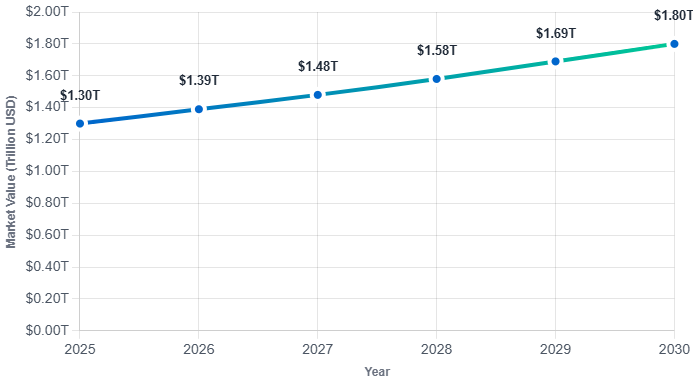
This explosive growth isn’t random it’s driven by fundamental business needs. Companies across industries face mounting pressure to accelerate time-to-market, reduce development costs, and incorporate advanced technologies like AI, IoT, and cloud computing into their products. Product engineering services provide the expertise and infrastructure to achieve all three simultaneously.
North America leads the market with a 46.8% share in 2025, while Asia Pacific, holding 29.8% of the market, is emerging as the fastest-growing region. This geographic distribution creates diverse cost optimization opportunities for businesses worldwide.
Understanding Product Engineering Services Costs
Before calculating ROI, you need to understand what you’re actually paying for. Product engineering services costs vary significantly based on several factors:
1. Service Types and Their Cost Ranges
Product engineering encompasses multiple service categories, each with distinct pricing models:
Product Design and Prototyping:
This typically involves the highest upfront investment. Design services can range from concept validation to detailed engineering, with costs scaling based on complexity. For instance, a basic MVP design might cost between $15,000 to $50,000, while comprehensive product architecture design for complex systems can exceed $200,000.
Product Development:
The core service where actual product code is written. Development costs are typically calculated on an hourly basis, ranging from $30 to $150+ per hour depending on the region and expertise level. A complete development project for a mid-sized application can range from $100,000 to $500,000+.
Product Testing and Quality Assurance:
Testing represents 36.5% of the total product engineering services market, reflecting its critical importance. Testing services help catch defects early, reducing costly production issues. Quality assurance services typically add 15-25% to development costs but prevent far more expensive failures downstream.
Product Modernization and Integration:
Legacy system updates and platform integration services are increasingly in demand. These typically range from $50,000 to $300,000+ depending on system complexity.
Maintenance, Repair & Operations:
Ongoing support services for product longevity. Annual MRO costs typically range from 10-20% of the original development cost.
2. Regional Cost Variations
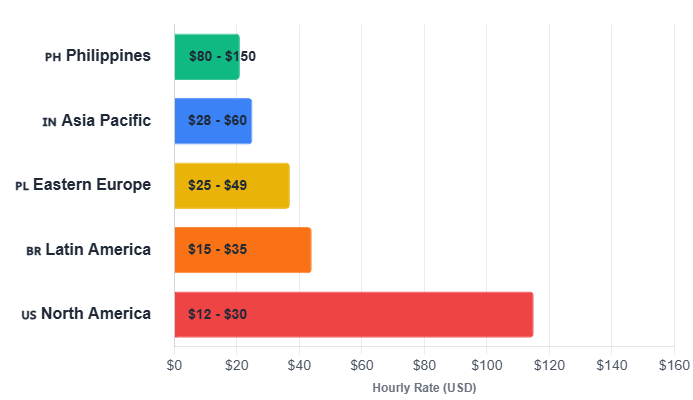
Geographic location dramatically influences product engineering costs. Understanding these variations is critical for cost optimization:
North America (United States & Canada):
Development rates range from $80-150+ per hour. While higher, this region offers established project management capabilities and proximity to domestic operations.
Eastern Europe:
Offering strong engineering talent at mid-range rates of $25-49 per hour, with high-quality output and strong technical education foundations.
Latin America:
Nearshore option for North American companies with rates of $28-60 per hour, providing cultural alignment and favorable time zone overlap.
Asia Pacific (India, Vietnam, Malaysia):
The most cost-competitive region with rates as low as $15-35 per hour for entry-level developers, rising to $40-80 per hour for senior engineers. Over 1,700 Global Capability Centers operate in India alone, handling end-to-end development for global enterprises.
The Real ROI of Product Engineering Services: Numbers That Matter
While cost is important, ROI tells the complete story. Companies that strategically invest in product engineering services see returns that extend far beyond simple cost reduction.
1. Direct Cost Savings
One of the most measurable advantages of outsourcing product engineering is the significant reduction in development costs.
According to Deloitte’s 2024 Global Outsourcing Survey, companies that strategically outsource their engineering processes can reduce expenses by up to 85%, with an average annual saving of around $87,000 when working with specialized providers.
Here’s a practical calculation: If your company maintains an in-house senior developer at $120,000 annually plus 25% benefits and overhead ($30,000), your total cost is $150,000. An equivalent outsourced developer in Eastern Europe costs approximately $50-65 per hour, or roughly $104,000-135,000 annually for full-time equivalent work (2,000 hours). Your savings: $15,000-46,000 per developer annually.
For teams of 10 developers, this translates to $150,000-$460,000 in annual savings. Multiply this across a 3-year engagement, and you’re looking at $450,000-$1.38 million in cost avoidance while potentially improving quality through specialized expertise.
2. Accelerated Time-to-Market
Companies outsourcing non-critical engineering tasks experience up to 25% faster time-to-market. This isn’t a minor benefit it can be transformative for revenue generation.
Consider a fintech startup bringing a product to market. If in-house development would take 12 months, outsourcing accelerates this to 9 months, providing a 3-month advantage in capturing market share. If that product generates $100,000 monthly revenue, the 3-month acceleration translates to $300,000 in earlier revenue exceeding typical project costs many times over.
Real-world examples validate this: WhatsApp outsourced initial app development to reduce costs while achieving global growth. Slack outsourced design and development, which accelerated its go-to-market timeline, enabling the internal team to focus on scaling. Google outsourced AdWords support to over 1,000 representatives, improving customer experience while freeing internal teams for innovation.
3. Improved Quality and Reduced Technical Debt
Outsourcing partners bring specialized expertise and proven methodologies. This translates directly to fewer bugs, better architecture, and lower maintenance costs.
Test automation outsourcing, for example, delivers ROI of 2:1 (for every $1 spent, you get $2 back) by reducing manual testing cycles from days to hours and catching defects early. This accelerates regression testing, enables faster builds, and supports more frequent releases critical in today’s CI/CD-dependent software landscape.
Quality improvements compound over time. Fewer production defects mean reduced customer support costs, lower churn, and improved brand reputation. American Express found that SMEs adopting technology improvements experienced 38% higher likelihood of investing in new product launches and upgrades.
4. Access to Specialized Skills Without Long-Term Commitment
Specialized expertise AI engineering, embedded systems, cloud architecture, blockchain development is expensive to maintain in-house. Outsourcing provides on-demand access to these skills without permanent headcount commitments.
When you need temporary expertise for a specific project phase, outsourcing is economically superior to hiring and training permanent employees. You pay only for the skills you need, when you need them, reducing organizational complexity and training costs.
Comprehensive ROI Framework: How to Calculate Your Return
Understanding the ROI formula is essential for making data-driven outsourcing decisions:
ROI (%) = [(Cost_in-house – Cost_outsourced) / Cost_outsourced] × 100
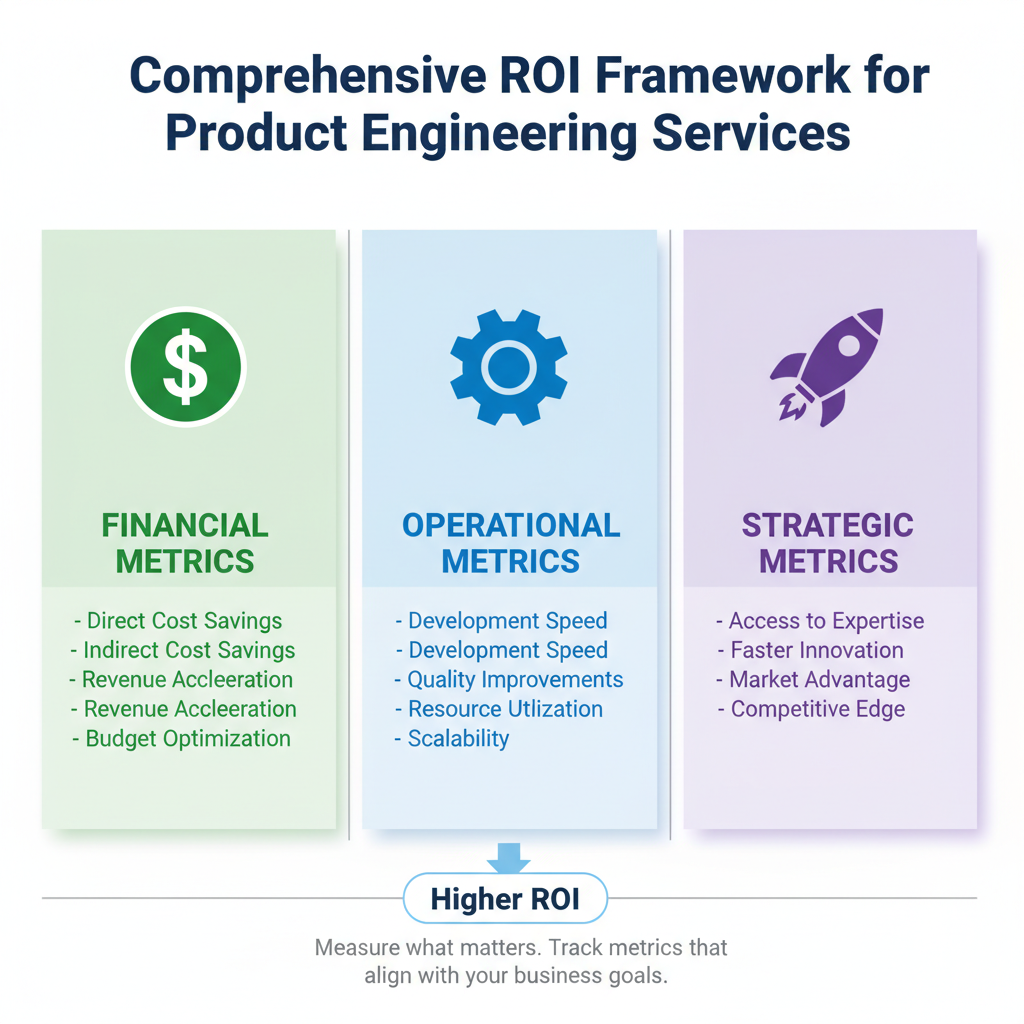
However, comprehensive ROI extends beyond this basic calculation. Here’s a complete framework:
1. Financial Metrics
- Direct Cost Savings: Compare total in-house costs (salaries, benefits, taxes, equipment, software, training) against outsourcing fees.
- Indirect Cost Savings: Factor in reduced recruitment costs, lower HR administration overhead, minimal onboarding expenses, and decreased infrastructure requirements.
- Revenue Acceleration: Quantify faster time-to-market by projecting earlier revenue from product launches.
2. Operational Metrics
- Development Speed: Measure reduction in project duration from inception to deployment. A 25% acceleration on a 12-month project equals 3 months of earlier revenue generation.
- Quality Improvements: Track bug escape rate reduction, fewer critical issues in production, and decreased customer support tickets related to product defects.
- Resource Utilization: Calculate time your internal team gains to focus on strategic initiatives rather than routine development tasks.
3. Strategic Metrics
- Access to Expertise: Value the cost savings from accessing specialized knowledge without hiring permanent staff.
- Scalability: Measure the ability to flex engineering capacity up or down based on project phases without maintaining overhead during low-activity periods.
- Reduced Time-to-Innovation: Track how much faster you can innovate when freed from routine development constraints.
4. Real ROI Example
Let’s model a practical scenario:
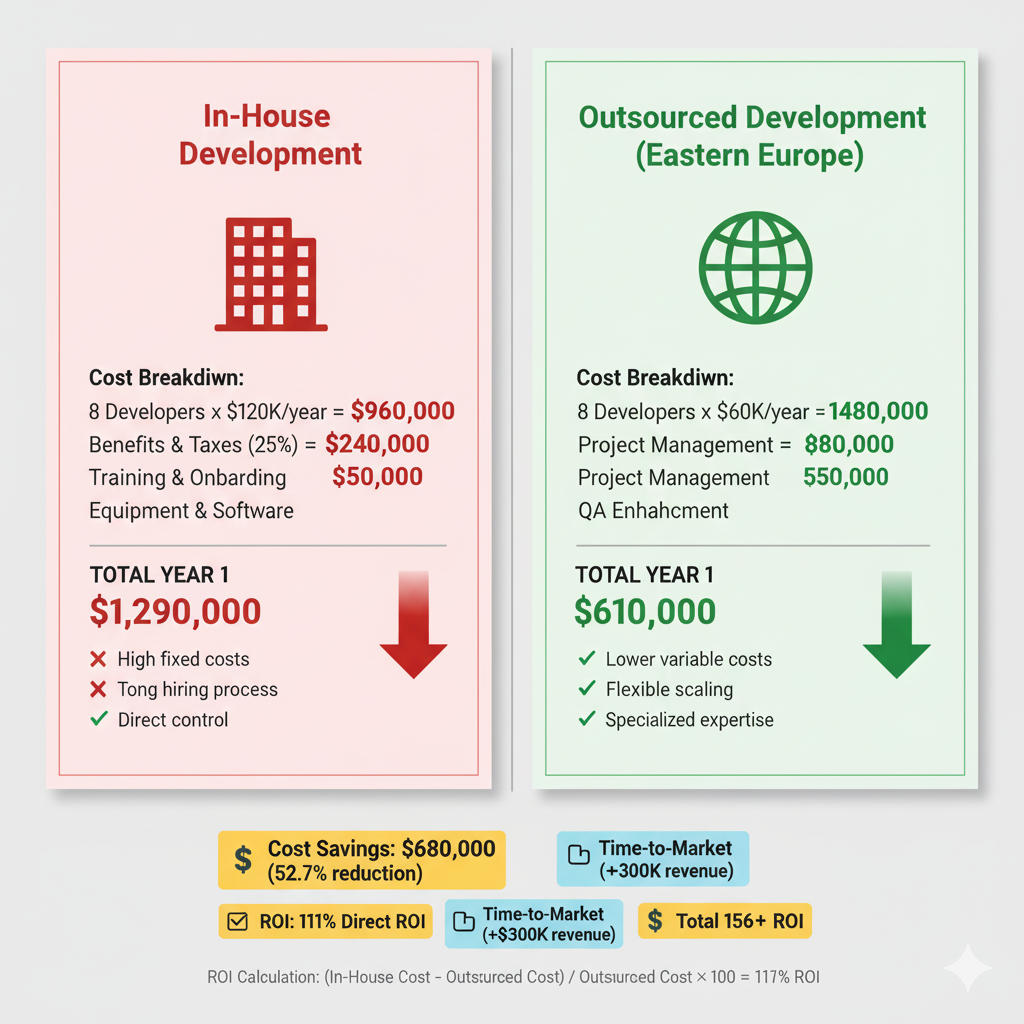
- Scenario: A mid-sized SaaS company needs to develop a new mobile application and enhance platform architecture. In-house development would require hiring 8 developers for 12 months.
- In-House Costs:
- 8 developers × $120,000/year = $960,000
- Benefits and taxes (25%) = $240,000
- Training and onboarding = $50,000
- Equipment and software = $40,000
- Total Year 1: $1,290,000
- Outsourced Model (using Eastern European developers):
- 8 developers × $60,000/year = $480,000
- Project management overhead = $80,000
- Quality assurance enhancement = $50,000
- Total Year 1: $610,000
Direct ROI: ($1,290,000 – $610,000) / $610,000 = 111% ROI
- Additional Benefits:
- 3-month acceleration to market = $300,000+ in earlier revenue
- Reduced technical debt = $50,000+ in future maintenance savings
- Extended ROI: 156%+ when including time-to-market acceleration
This calculation becomes even more compelling over multi-year engagements, as you eliminate recurring hiring and training costs.
Key Performance Indicators to Track Outsourcing Success
Measuring ROI requires the right KPIs aligned with your strategic objectives:
- Cost Metrics: Total cost comparison, cost per deliverable, cost trends over time.
- Schedule Metrics: Time-to-market reduction, project completion rates against timeline, development velocity trends.
- Quality Metrics: Defect escape rate, production issues per release, code quality scores, test coverage percentage.
- Productivity Metrics: Story points delivered per sprint, features deployed per month, engineering team capacity freed for strategic work.
- Business Impact Metrics: Revenue from accelerated launches, customer satisfaction scores, feature time-to-value, market share gains.
Why Most Companies Fail to Maximize Product Engineering ROI?
Understanding where companies go wrong helps you avoid costly mistakes:
1. Underestimating Hidden Costs:
Many organizations overlook management overhead, quality assurance enhancements, and communication tools required for distributed teams. Budget 10-15% above quoted rates for these essential expenses.
2. Choosing Based on Cost Alone:
The cheapest provider often delivers the poorest ROI due to quality issues, communication challenges, and rework requirements. Cheaper becomes expensive quickly when you’re fixing defects or rebuilding components.
3. Inadequate Knowledge Transfer:
Failing to invest in documentation and knowledge transfer creates long-term dependency and prevents your team from maintaining the product effectively.
4. Poor Communication and Governance:
Lack of clear processes, inadequate project management, and insufficient stakeholder alignment derail outsourcing initiatives. Invest in robust communication infrastructure and project governance.
5. Misaligned Expectations:
Unclear requirements, vague success criteria, and changing priorities waste time and inflate costs. Spend significant effort defining requirements and success metrics upfront.
Strategic Recommendations for Maximizing Product Engineering ROI in 2025
Based on market data and real-world implementations, here are proven strategies:
1. Match Service Type to Regional Strengths
Different regions excel in different areas. Use Asia Pacific for volume-based testing and development, Eastern Europe for complex system architecture, and North America for strategic advisory and leadership roles.
2. Adopt a Hybrid Model
The best ROI often comes from hybrid models combining onshore leadership with offshore execution. Keep strategic decision-making in-house while outsourcing routine implementation to lower-cost regions.
3. Focus on SMEs for Growth
Small and medium enterprises are the fastest-growing segment for outsourcing adoption, achieving highest CAGR through 2030. SMEs using modular, pay-as-you-go engineering models achieve significantly better ROI than those maintaining large permanent teams.
4. Leverage Emerging Technologies
Providers using AI-driven test automation, digital twins, and intelligent development platforms deliver faster results and higher quality. Prioritize partners investing in modern tooling and automation.
5. Establish Clear SLAs and Metrics
Define specific service level agreements covering response times, uptime guarantees, quality metrics, and delivery timelines. Clear metrics enable objective performance management and rapid course correction.
6. Plan for Scalability
Choose providers capable of scaling from small pilot projects to enterprise-scale engagement. Flexibility to expand services without switching partners protects your ROI investment.
The Future of Product Engineering Services ROI
Looking ahead to 2026 and beyond, several trends will shape ROI opportunities:
1. AI-Driven Development:
Providers integrating AI assistants and intelligent automation will deliver dramatically faster development with fewer human hours, improving ROI significantly.
2. Offshore Delivery Optimization:
India’s 1,700+ Global Capability Centers continue advancing capabilities in AI-driven automation, model-based systems engineering, and digital twins delivering higher value with lower costs.
3. Manufacturing and Automotive Focus:
With Johnson & Johnson investing $55 billion in manufacturing digitalization and TSMC investing $100 billion in US fabrication, demand for specialized engineering services is accelerating, creating competition that benefits buyers through better pricing and service.
4. Platform Modernization:
Legacy system modernization services are growing at 6.8% CAGR as companies migrate to cloud-native architecture. Early movers gain substantial competitive advantages.
Conclusion:
Product engineering today isn’t just about building software it’s about building the right thing, the right way. Companies that know how to combine strategy, design, and technology are the ones turning ideas into products that truly make an impact.
At ONEXT DIGITAL, we’ve had the chance to work with teams at different stages of their journey from startups shaping their first MVP to enterprises optimizing complex systems. What we’ve learned is simple: success comes from partnership, not just delivery. When both sides share the same vision and commit to quality, great products naturally follow.
If your team is exploring how to bring a new idea to life or strengthen your existing product, finding the right engineering partner is a good place to start.
FAQs: Product Engineering Services in 2025
Q1. What exactly are product engineering services?
Product engineering services (PES) cover the full lifecycle of a digital or physical product from ideation, design, and development to testing, modernization, and maintenance. In 2025, PES increasingly integrates AI, IoT, and cloud technologies to accelerate innovation and improve scalability.
Q2. How much do product engineering services cost in 2025?
Costs vary depending on project complexity, region, and team expertise. On average, rates range from $15–$35/hour in Asia-Pacific to $100–$150/hour in North America. A full-cycle mid-sized software project typically costs between $100,000 and $500,000+.
Q3. What are the main factors influencing product engineering costs?
Key cost drivers include service scope, technology stack, project duration, and team composition. Additional factors such as compliance, cybersecurity requirements, and integration with legacy systems also affect pricing.
Q4. How do I calculate the ROI of product engineering outsourcing?
A simple ROI formula is:
ROI (%) = [(In-house cost – Outsourced cost) / Outsourced cost] × 100
However, true ROI includes hidden gains such as faster time-to-market, higher quality, and access to specialized skills that boost long-term revenue growth.
Q5. How to choose the right product engineering partner?
Look for partners with proven expertise in your domain, transparent cost structures, and a clear communication and delivery framework. Review case studies, client testimonials, and technical certifications. Prioritize agencies that can scale resources and deliver measurable ROI, not just low hourly rates.