
 Services
 Solutions
 Main platform
 Technology
 White Label
  Offshore
 Hire developers



In 2025, cloud adoption across Asia-Pacific continues to surge, with the managed cloud services market projected to exceed $35 billion by 2026, growing at over 15% annually. As organizations in the region strive to modernize operations and optimize costs, many find themselves struggling to manage increasingly complex cloud environments on their own.
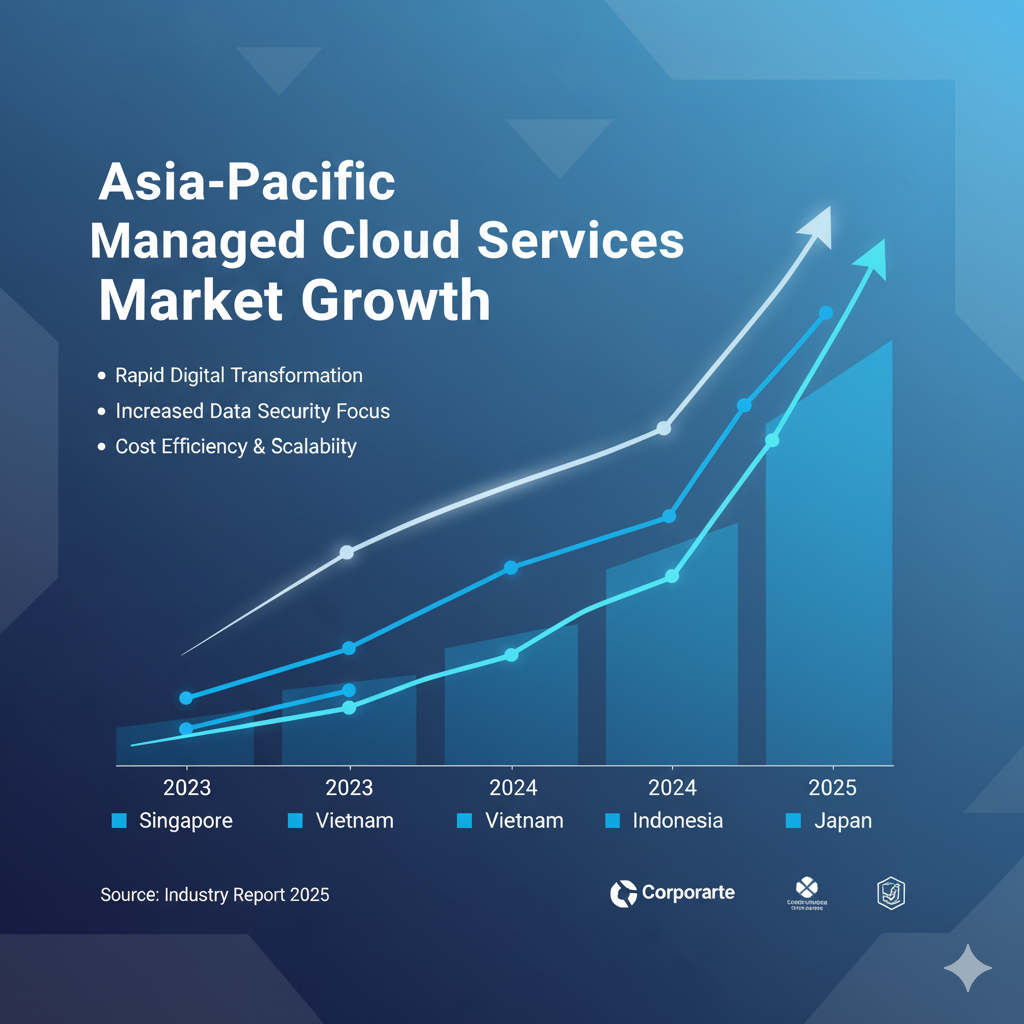
From handling multi-cloud infrastructures to maintaining compliance across multiple jurisdictions, the operational pressure is mounting especially for small and mid-sized businesses (SMBs) that often lack deep in-house expertise. The result? Rising costs, security vulnerabilities, and missed opportunities for innovation.
This is where managed cloud solutions come into play. By outsourcing cloud management to trusted experts, businesses can streamline performance, strengthen security, and focus on growth rather than maintenance. In this guide, we’ll explore what managed cloud solutions are, why they’ve become essential for APAC businesses, and how to evaluate the right provider for long-term success.
What Are Managed Cloud Solutions?
Managed cloud solutions are services where a specialized provider manages and maintains a company’s cloud infrastructure on its behalf. This includes everything from server setup and monitoring to security, backup, and disaster recovery. In simple terms, instead of your internal IT team handling daily cloud operations, a managed service provider ensures that the system runs smoothly, securely, and cost-effectively.
1. Common Types of Managed Cloud Services
There are several types of managed cloud services depending on business needs and technical scope:
- IaaS Managed Cloud: The provider manages infrastructure resources such as servers, storage, and networking. Examples include AWS, Microsoft Azure, and Google Cloud, where tasks like performance monitoring, patching, and scaling are automated.
- PaaS Managed Cloud: Ideal for developers, this model offers a managed platform for building, testing, and deploying applications. It often includes CI/CD pipelines, middleware, and container orchestration tools such as Kubernetes or Docker.
- DBaaS Managed Cloud: Focused on database management, this service automates maintenance, backup, and optimization. Examples include Amazon RDS, Google Cloud SQL, and MongoDB Atlas.
2. Managed Cloud vs. Other Cloud Models
| Model | Description | Management Responsibility | Typical Use Case |
| Managed Cloud | Fully managed by a third-party provider, offering proactive support and optimization | Service provider | Businesses seeking expert management and scalability |
| Hosted Cloud | Provides only the basic infrastructure without management | Customer | Companies with strong internal IT teams |
| Hybrid Cloud | Combines on-premises infrastructure with public cloud environments | Shared | Enterprises balancing data control and flexibility |
| Private Cloud | Dedicated infrastructure for a single organization | Customer or managed provider | Businesses with strict security or compliance needs |
In essence, managed cloud services bring together the scalability of public cloud, the control of private cloud, and the expertise of a dedicated team. They allow businesses to focus on innovation and strategy while experts handle the complex technical details behind the scenes.
Why Your Company (Especially SMBs in APAC) Needs It?
Across the Asia Pacific region, cloud adoption has moved beyond experimentation. It has become a foundation for how businesses operate, compete, and scale. By 2025, more than 80% of companies in APAC are expected to run a majority of their workloads in the cloud.
However, while adoption is growing, effective management remains a major challenge particularly for small and medium-sized enterprises that often work with limited technical resources.
1. Rising Costs and Operational Complexity
As cloud usage expands, many companies discover that their costs grow faster than expected. IDC predicts that APAC organizations will spend over $150 billion on public cloud services by 2026, but nearly 30% of that spending is often wasted due to poor optimization or mismanagement.
Managed cloud providers help businesses control and forecast expenses by continuously optimizing workloads, tracking usage, and adjusting resources in real time.
2. Limited In-House Expertise
Managing cloud platforms such as AWS, Microsoft Azure, or Google Cloud requires advanced technical knowledge and constant attention. Many SMBs struggle to recruit or retain skilled engineers capable of maintaining complex environments.
A managed cloud provider bridges this gap by offering a dedicated team that handles deployment, updates, performance tuning, and 24-hour monitoring freeing your internal staff to focus on innovation and customer value instead of technical maintenance.
3. Data Security and Compliance Pressures
Security and regulatory compliance are growing concerns across APAC, especially with frameworks like PDPA in Singapore, Cybersecurity Law in Vietnam, and Privacy Act in Australia. Businesses are expected to maintain strict control over data privacy, storage locations, and access permissions.
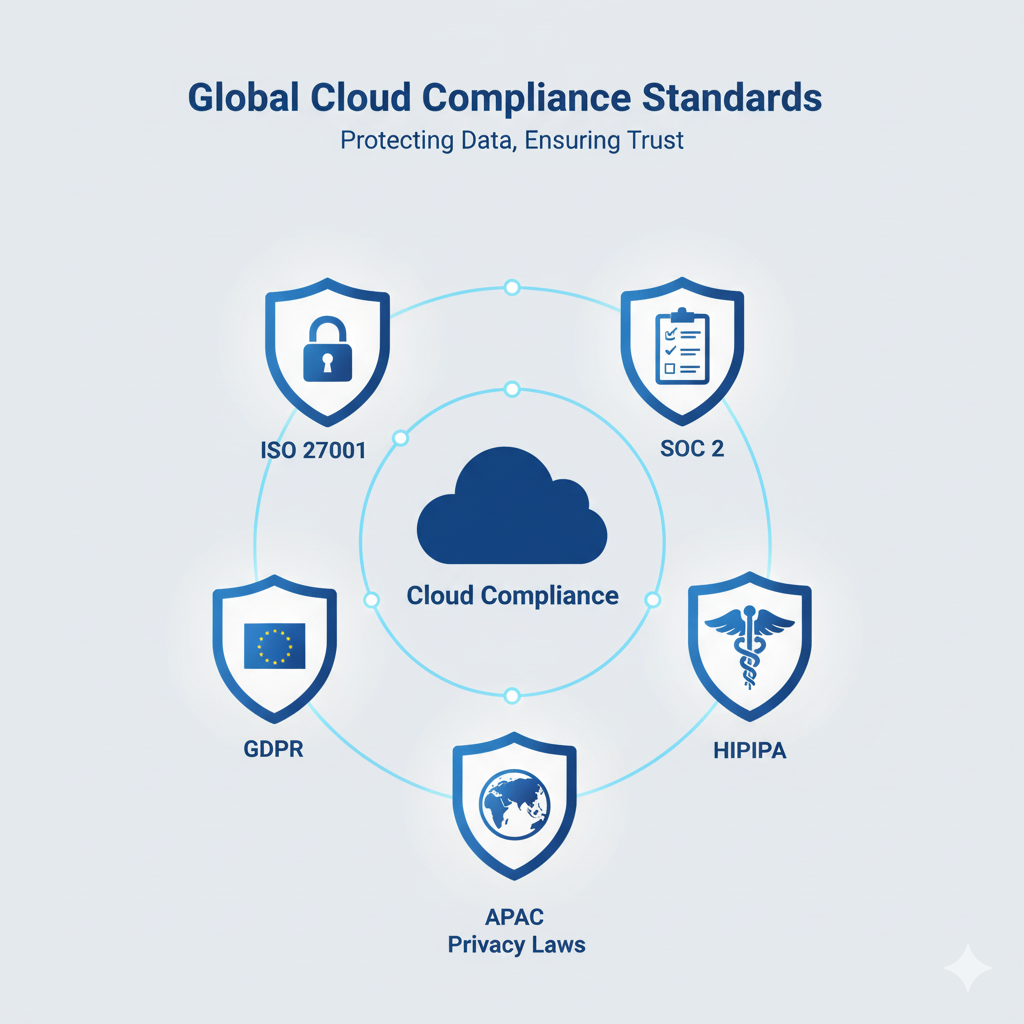
Managed cloud providers help ensure compliance with these regional standards, applying best practices in encryption, access control, auditing, and risk management. This not only protects critical information but also strengthens customer trust.
4. Need for Business Continuity and Disaster Recovery
Unexpected outages, cyberattacks, or data loss can cripple a business. Managed cloud solutions often include automated backup, disaster recovery, and high availability systems that minimize downtime. In an era where even an hour of interruption can mean lost revenue, having a managed service ensures continuous operations and faster recovery when disruptions occur.
5. Scalability and Agility
As companies grow, their infrastructure needs evolve. Managed cloud solutions provide on-demand scalability, allowing businesses to quickly adjust resources during seasonal peaks or rapid expansion without heavy upfront investment. This flexibility helps SMBs remain competitive and agile in a fast-changing market.
6. Focus on Core Business Growth
By outsourcing complex technical operations, leadership teams can redirect focus toward strategy, product development, and customer experience. Instead of constantly reacting to system issues or compliance audits, decision-makers can use data and technology to drive innovation and revenue growth.
For businesses across Asia Pacific, managed cloud solutions are more than just an IT service they are a catalyst for long-term success. They reduce operational stress, enhance resilience, and make advanced technology accessible even to smaller organizations. The right managed cloud partner empowers you to focus on what matters most: growing your business confidently in a digital-first world.
How to Evaluate a Managed Cloud Provider?
Selecting the right managed cloud provider is not just a technical decision. It is a strategic investment that shapes your company’s long term resilience, security, and scalability. The right partner can transform how you operate, while the wrong one can create hidden costs, compliance risks, and performance issues. Here is a practical framework to help you evaluate managed cloud providers effectively in 2025.
1. Service Level Agreements (SLA) and Reliability
A strong SLA defines the reliability and accountability of your provider. Look for a minimum uptime guarantee of 99.9 % and ensure the SLA clearly outlines incident response times, compensation terms, and maintenance windows. Leading providers also offer real time monitoring dashboards and proactive alerts, allowing you to track performance and service health continuously.
2. Security and Compliance Standards
Security remains the top priority for APAC businesses, especially those handling sensitive financial or customer data. Your provider should comply with international and regional standards such as ISO 27001, SOC 2, GDPR, HIPAA, and local data protection laws like PDPA in Singapore or the Cybersecurity Law in Vietnam.
A trustworthy provider will also offer advanced security measures including end to end encryption, multi factor authentication, role based access control, and regular third party audits. Ask for detailed documentation on how data is stored, transferred, and backed up across regions.
3. Regional Data Center Coverage
Latency, data sovereignty, and compliance are directly affected by where your data resides. Choose providers that maintain data centers within or near your operating markets such as Singapore, Vietnam, Hong Kong, or Japan.
Regional hosting not only ensures faster response times but also helps businesses meet local data residency requirements, which are increasingly mandated by regulators across Asia Pacific.
4. Support and Technical Expertise
The quality of customer support often defines your day to day experience. A top tier managed cloud provider should offer 24 hour multilingual support, ensuring rapid response regardless of your location or time zone.
Ask about the qualifications of their DevOps team. Are they certified on major platforms like AWS, Azure, and Google Cloud? Do they provide proactive maintenance, continuous monitoring, and detailed reporting? A skilled support team should act as an extension of your internal IT department, not just a reactive helpdesk.
5. Scalability and Flexibility
Your cloud infrastructure should grow alongside your business. Look for providers that offer auto scaling capabilities, load balancing, and multi cloud management. These features help maintain performance and cost efficiency even during sudden spikes in traffic or data volume.
Moreover, flexibility in service configuration, from infrastructure management to application level support, ensures the solution adapts to your evolving business goals rather than locking you into rigid packages.
6. Cost Transparency and Optimization
Pricing clarity is essential for predictable budgeting. Ensure your provider offers a transparent cost model, clearly defining what is included in base fees and what incurs additional charges.
Some businesses prefer pay as you go plans for flexibility, while others benefit from fixed monthly subscriptions for budget stability. Either way, your provider should deliver regular reports with usage analytics, cost breakdowns, and optimization recommendations to help prevent waste, which is critical when up to one third of cloud spending is lost due to inefficiencies.
7. Evaluating Long Term Partnership Value
Beyond technical capabilities, consider the provider’s vision, scalability roadmap, and client success track record. Do they actively help businesses innovate through automation, AI integration, or advanced analytics? Are they willing to tailor solutions for your growth strategy?
Look for case studies, client testimonials, and industry partnerships to validate their credibility. A strong managed cloud partner should act as your advisor, not just a vendor.
8. Key Questions to Ask Before You Decide
- What is your guaranteed uptime and response time under SLA
- How do you manage data security, encryption, and compliance audits?
- Where are your primary and backup data centers located?
- What certifications do your DevOps and cloud engineers hold
- How transparent is your pricing, and are there hidden costs?
- Can you automatically scale resources during peak demand?
- What level of customization and long term support do you offer?
By following this checklist, businesses can make informed decisions and select a provider that delivers both operational reliability and strategic value. A managed cloud partnership is more than an outsourcing arrangement. It is a collaboration that empowers your company to scale confidently, meet compliance demands, and innovate without boundaries.
Cost Modeling and Case Studies
Cost is one of the most important factors when deciding whether managed cloud services are the right fit for your business. For many organizations, especially small and medium sized enterprises in Asia Pacific, cloud expenses can quickly spiral out of control without proper planning or visibility. Understanding how managed cloud pricing works helps you budget effectively and evaluate long term value.
1. Understanding Managed Cloud Pricing Models
Managed cloud providers typically use three main pricing structures.
- Pay as You Go: This model charges you based on actual resource usage. It offers flexibility and is ideal for startups or growing companies that need to scale resources up or down quickly. However, without continuous monitoring, costs can fluctuate unpredictably.
- Fixed Monthly Subscription: A predictable monthly fee that covers infrastructure, monitoring, and management services. This model provides financial stability and easier budgeting, making it suitable for businesses that prefer consistent costs over variable usage fees.
- Hybrid Model: Some providers combine both approaches by offering a base management fee plus variable charges for specific workloads or premium services. This model gives flexibility while maintaining cost control.
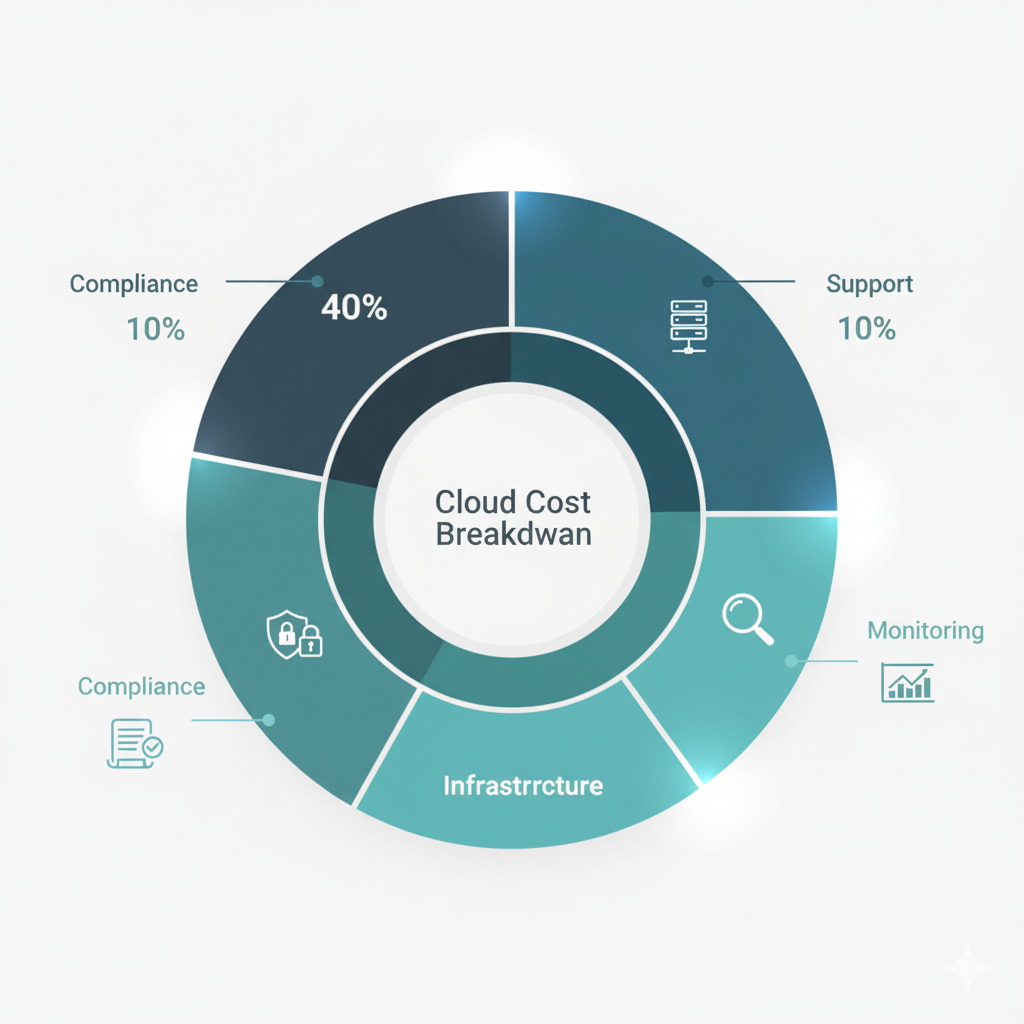
A well designed cost model should include clear details about what is covered from 24 hour support and security updates to data backup and recovery and what may incur additional charges such as large data transfers or advanced analytics.
2. The True Value Behind Managed Cloud Costs
While managed cloud services may seem more expensive at first glance compared to self management, the total cost of ownership often tells a different story.
According to IDC, companies in the Asia Pacific region that use managed cloud services reduce unplanned downtime by up to 60% and lower operational costs by 25%-40% within the first year. These savings come from improved workload optimization, proactive maintenance, and faster response to incidents.
Additionally, managed services free your internal team from daily monitoring and troubleshooting tasks, allowing them to focus on innovation and customer experience areas that directly impact business growth.
3. Cost Comparison Example for SMBs
| Cost Category | Self Managed Cloud | Managed Cloud Provider |
| Infrastructure setup | High upfront investment | Included in monthly service |
| Maintenance and updates | Requires in house IT team | Handled by provider |
| Security monitoring | Often reactive and partial | Continuous and proactive |
| Downtime risk | Higher, impacts revenue | Minimal with SLA guarantee |
| Total monthly cost | Variable, unpredictable | Stable and optimized |
For small and medium businesses, predictable monthly costs combined with reduced downtime and better performance often make managed cloud solutions the more cost effective choice over time.
4. Example Case Studies in Asia Pacific
Case Study 1: Grab (Singapore)
Grab, one of Southeast Asia’s largest super apps, serves more than 34 million monthly users across mobility, delivery, and financial services. As the platform expanded rapidly, managing infrastructure in-house became increasingly complex and resource-intensive.
To address these challenges, Grab adopted Amazon Web Services (AWS) managed services, including Amazon Simple Email Service (SES) and managed database solutions, to automate scaling and system monitoring. This approach allowed Grab to deliver millions of notifications daily without maintaining heavy backend systems.
By outsourcing critical infrastructure management, Grab reduced downtime risks, improved security compliance, and freed its internal teams to focus on enhancing customer experience and service innovation.
Case Study 2: Viettel Group (Vietnam):
Viettel Group, Vietnam’s largest telecom operator with over 110 million customers and 50,000 remote employees, faced mounting cybersecurity and infrastructure management challenges as it expanded digital services.
Partnering with Fortinet’s managed security platform, Viettel integrated next-generation firewalls and centralized monitoring through FortiManager. This managed solution helped the company reduce security incidents by 50% and cut incident response costs by around 30%, according to Fortinet’s public case study.
The transition to a managed approach not only improved Viettel’s threat visibility and compliance but also demonstrated how hybrid management models can effectively protect large-scale networks in emerging markets like Vietnam.
Case Study 3. Amaysim (Australia)
Amaysim, a major mobile virtual network operator (MVNO) in Australia serving over 1.2 million customers, migrated its workloads to AWS to enhance agility. However, as cloud usage grew, so did the company’s compute costs.
To regain control, Amaysim worked with AWS to implement managed optimization using Spot Instances a pay-as-you-go model for unused computing capacity. This strategy enabled Amaysim to reduce compute expenses by up to 75%, while maintaining high performance and scalability.
This case highlights how managed cloud partnerships can help organizations balance growth with cost efficiency a key priority for many small and mid-sized businesses in the Asia-Pacific region.
5. How to Build Your Own Cost Model
To get the most value from managed cloud services, businesses should regularly review cost and performance data. Here are key steps to create an effective cost model:
- Map your workloads and identify which applications require high availability or specific compliance measures.
- Set a budget range that aligns with business goals rather than short term cost cutting.
- Ask for detailed cost breakdowns from providers to understand what is included.
- Monitor performance and usage through dashboards or monthly reports.
- Review regularly to adjust plans as your business grows or workloads change.
Managed cloud solutions offer far more than cost savings. They deliver financial predictability, stronger performance, and greater operational control. For SMBs across Asia Pacific, the real return on investment lies in stability and scalability gaining enterprise level infrastructure management without the heavy cost of building it in house.
Top Challenges and How to Overcome Them
While managed cloud solutions bring efficiency, scalability, and cost control, they also introduce new layers of complexity that businesses must manage carefully. Understanding these challenges and knowing how to overcome them is essential for building a secure, sustainable, and high-performing cloud environment.
1. Vendor Lock-In and Limited Flexibility
One of the most common concerns for organizations moving to a managed cloud service is vendor lock-in the difficulty of switching providers once infrastructure and applications are deeply integrated. According to Gartner, nearly 60% of enterprises cite vendor dependency as a top obstacle to cloud agility.
To mitigate this risk, businesses should adopt multi-cloud strategies or container-based architectures using tools like Kubernetes or Docker. These approaches ensure workloads can move seamlessly between cloud environments. Partnering with a managed cloud provider that supports open standards and transparent data export also helps maintain long-term flexibility.
2. Hidden Costs and Budget Overruns
While managed services are designed to optimize spending, costs can escalate if usage is not monitored closely. IDC reports that one in three organizations in the Asia-Pacific region exceed their planned cloud budgets due to underused resources and inefficient scaling.
To prevent this, companies should demand cost visibility dashboards and real-time analytics from their managed service providers. Setting clear budget thresholds, implementing automatic shutdowns for idle instances, and conducting quarterly cost reviews can further improve financial control.
For example, Tokopedia, an Indonesian e-commerce giant, saved over 40% on cloud expenses after implementing automated cost optimization with AWS Trusted Advisor.
3. Multi-Cloud Complexity and Governance
As more businesses adopt multi-cloud strategies to improve resilience, managing multiple platforms often becomes a governance challenge. Each provider AWS, Microsoft Azure, or Google Cloud has unique compliance frameworks, billing systems, and performance metrics.
To address this, enterprises should leverage centralized management tools such as Google Anthos or Azure Arc, which provide unified visibility and policy enforcement across clouds. A reliable managed cloud provider should also deliver governance frameworks that align with your business’s compliance and security requirements. This not only simplifies management but also ensures consistent performance across all cloud environments.
4. Security Risks and Compliance Gaps
Data breaches remain one of the most pressing issues in cloud operations. According to IBM’s Cost of a Data Breach Report 2024, the average data breach in the Asia-Pacific region cost USD 2.75 million, with misconfigured cloud services being one of the main causes.
To overcome this, organizations should partner with managed cloud providers that offer end-to-end security monitoring, zero-trust access models, and automated patch management.
For instance, Singapore-based fintech startup Nium enhanced its compliance posture and reduced response time to security alerts by 35% after migrating to a managed security operations center on AWS.
5. Migration Risks and Downtime
Cloud migration can be risky if not executed with precision. Downtime, data loss, or incompatibility between systems can interrupt business operations. A study by Deloitte found that more than 50 percent of organizations experienced unexpected downtime during migration projects.
To minimize disruption, it is crucial to implement phased migration plans supported by thorough testing and rollback procedures. Managed cloud providers that offer migration assessment tools and disaster recovery plans can significantly reduce downtime.
For example, when Go-Jek migrated to Google Cloud, it used automated replication and managed load balancing to ensure continuous service for millions of users during peak hours.
The challenges of managed cloud adoption are real, but they are also manageable with the right strategy and partner. From avoiding vendor lock-in to controlling hidden costs and securing multi-cloud operations, success depends on proactive governance and transparent collaboration with your provider.
By anticipating these issues early, your organization can transform the cloud from a technical burden into a strategic advantage that accelerates innovation, resilience, and sustainable growth across the Asia-Pacific region.
Conclusion
As Asia-Pacific SMBs accelerate their digital transformation, the cloud has become more than just an infrastructure choice it is a growth enabler. Yet navigating cost efficiency, data compliance, and performance reliability remains a challenge for many growing businesses.
By partnering with a trusted managed cloud provider, SMBs can offload operational complexity, gain enterprise-grade security, and scale confidently across markets. The key in 2025 is not simply moving to the cloud, but managing it strategically to balance flexibility and control.
Looking to simplify your cloud journey?
Connect with ONEXT DIGITAL cloud specialists to design a solution that fits your goals, budget, and compliance needs or download our free evaluation checklist to find your ideal managed cloud solution for 2025.
Frequently Asked Questions (FAQs)
1. How much does a managed cloud solution cost per user?
Costs vary widely depending on infrastructure scale and services included. On average, SMBs in Asia-Pacific spend USD 50 to 150 per user per month, according to IDC. Most providers offer flexible pricing models such as pay-as-you-go or fixed monthly packages.
2. What happens if I decide to switch providers later?
A reputable managed cloud vendor will support data migration and transition planning without disruption. Look for providers that follow open standards and allow data export in portable formats to avoid lock-in.
3. How do I know if I am being overcharged?
Regularly review billing dashboards and resource utilization reports. Many businesses save up to 30 percent after a third-party cost audit, as found by CloudHealth by VMware’s 2024 study. Setting automatic alerts for unusual cost spikes is also a smart practice.
4. Can I use multiple cloud providers under one management platform?
Yes. Many managed cloud providers offer multi-cloud orchestration tools that integrate AWS, Azure, and Google Cloud under one control panel. This setup enhances flexibility, disaster recovery, and compliance management.
5. What should I expect from onboarding with a managed cloud provider?
The onboarding process typically includes an infrastructure assessment, migration roadmap, SLA agreement, and security setup. The best providers also conduct training sessions to help your internal team understand ongoing management and escalation procedures.