
 Services
 Solutions
 Main platform
 Technology
 White Label
  Offshore
 Hire developers



In the era of digital transformation, technology is no longer a supporting tool it has become the core foundation of every business strategy. Yet as companies expand their systems, adopt cloud platforms, secure data, and maintain 24/7 operations, managing IT infrastructure has become increasingly complex and costly especially for small and medium enterprises.
This is where the Managed Service Provider (MSP) model emerges as a strategic solution. Instead of maintaining a full in-house IT team with high operational costs, businesses can outsource part or all of their IT management to specialized providers, ensuring consistent performance, security, and scalability.
According to Grand View Research, the global managed services market was valued at USD 335.4 billion in 2024 and is expected to reach USD 731.1 billion by 2030, growing at a compound annual growth rate (CAGR) of 14.1% from 2025 to 2030.
In the Asia-Pacific region, which includes Vietnam, the market is forecasted to grow to USD 162.0 billion by 2030, with an even faster CAGR of 15.1% during the same period.
With this rapid growth, Southeast Asia particularly Vietnam is becoming one of the most promising destinations for managed service adoption. Strong digital transformation efforts in retail, finance, logistics, and manufacturing are driving demand for reliable, cost-efficient, and secure IT management solutions.
In this article, we will explore:
- What a Managed Service Provider is and how it works
- Why MSPs are becoming a strategic choice for businesses in Vietnam
- Common pricing models and key benefits
- The latest MSP trends shaping 2025 and beyond
- And finally, how to choose the right MSP partner for your organization in Vietnam.
What is a Managed Service Provider (MSP)?
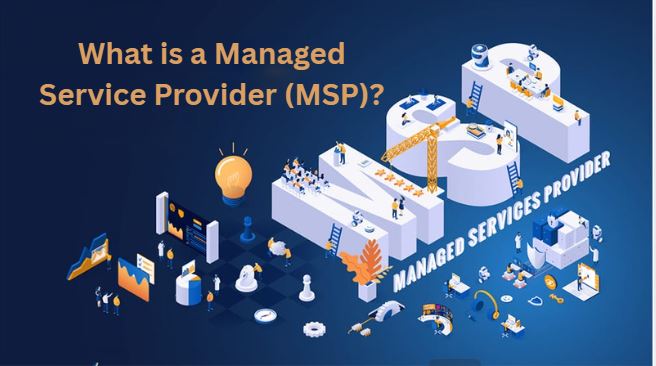
A Managed Service Provider (MSP) is a third-party company that remotely manages a client’s IT infrastructure, networks, or end-user systems under a subscription or service-level agreement. Instead of relying on a full in-house IT department, businesses partner with MSPs to handle essential functions such as network monitoring, cybersecurity, data backup, cloud management, and system maintenance.
The key idea behind managed services is proactive management rather than reactive support. While traditional IT support focuses on fixing issues after they occur, MSPs continuously monitor systems to prevent downtime, security breaches, and performance degradation before they affect business operations.
1. Core Functions of an MSP Include:
- Network and Infrastructure Management: Monitoring and maintaining network devices, servers, and connectivity to ensure optimal uptime.
- Cloud Service Management: Managing cloud migrations, optimizing cloud performance, and ensuring cost efficiency across public, private, and hybrid environments.
- Cybersecurity Services: Implementing threat detection, firewall management, endpoint protection, and data encryption to safeguard business assets.
- Backup and Disaster Recovery: Ensuring business continuity with automated backups, quick data restoration, and disaster recovery planning.
- Help Desk and User Support: Providing technical support and troubleshooting for employees to minimize productivity loss.
2. Managed Services vs. Traditional IT Outsourcing
Unlike traditional IT outsourcing, which often focuses on project-based or time-limited tasks, managed services are ongoing, long-term partnerships. The goal is not just to complete a project but to continuously optimize IT performance and reduce risk through regular maintenance, monitoring, and strategic improvements.
According to Gartner, over 60% of businesses worldwide are now partnering with managed service providers to streamline IT operations, lower costs, and strengthen cybersecurity resilience. This percentage is expected to grow further in emerging regions such as Southeast Asia, where digital infrastructure investment is accelerating.
Key Benefits of Working with a Managed Service Provider
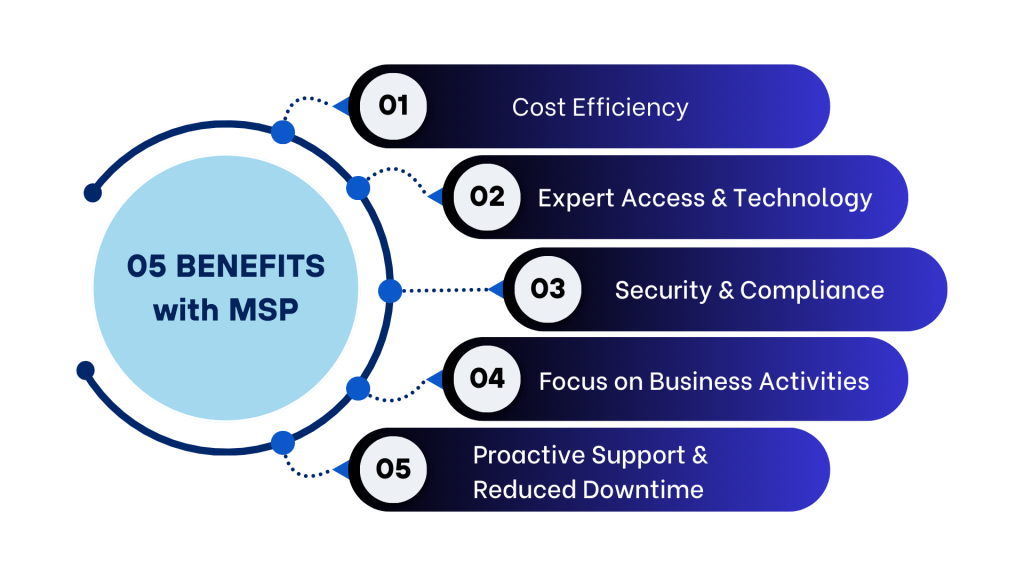
Partnering with a Managed Service Provider (MSP) offers more than just technical support it’s a strategic move that enhances efficiency, security, and scalability. Below are the most significant advantages businesses can gain, especially in fast-growing markets like Vietnam and Southeast Asia.
1. Improved Cost Efficiency and Predictable Spending
Hiring and maintaining an in-house IT team can be costly. A study by CompTIA (2024) found that businesses using managed services reduce IT operational costs by 25-45% on average. MSPs operate on subscription-based pricing, allowing companies to forecast IT expenses accurately while avoiding unexpected repair or replacement costs.
For small and medium enterprises in Vietnam, this financial predictability is crucial for maintaining stability during rapid digital expansion.
2. Access to Advanced Technology and Expertise
Technology evolves quickly, and staying current requires constant investment. MSPs provide immediate access to cutting-edge tools, certified engineers, and best practices that many companies cannot afford to build internally.
In Vietnam, where the tech talent gap is still developing, MSPs play a vital role in bridging that gap offering cloud, cybersecurity, and automation expertise that would otherwise require years of training.
3. Enhanced Security and Compliance
Cyber threats are increasing across Southeast Asia. According to Kaspersky (2024), Vietnam ranked among the top 10 countries globally for malware attacks detected in 2023. MSPs specialize in proactive cybersecurity management, including 24/7 monitoring, threat detection, patch management, and compliance with local data regulations such as Decree 53/2022 on data localization.
This helps businesses safeguard their systems and build customer trust in a more regulated digital environment.
4. Increased Business Agility and Scalability
MSPs help organizations scale resources up or down quickly based on business needs whether expanding to new branches, adding cloud workloads, or managing seasonal spikes in demand.
This flexibility is particularly beneficial in Vietnam’s dynamic economy, where companies are adopting hybrid work and multi-cloud models at record speed.
5. Consistent Performance and 24/7 Support
Downtime can cost thousands of dollars per hour for growing enterprises. MSPs use automation and AI-based monitoring tools to identify and resolve issues before they impact operations.
With Service Level Agreements (SLAs) in place, companies benefit from guaranteed uptime and round-the-clock support something many local IT teams cannot provide continuously.
In short, partnering with a managed service provider allows businesses in Vietnam to operate smarter, safer, and more efficiently, while focusing internal resources on innovation and growth.
Top Managed Service Provider Trends in 2025
As digital transformation accelerates across industries, the Managed Service Provider (MSP) landscape is undergoing a major shift. In 2025, MSPs are no longer just IT support vendors they are becoming strategic business enablers. Below are the key trends shaping the MSP industry globally and within the fast-growing Southeast Asian market.

1. The Rise of AI-Powered Managed Services
Artificial Intelligence (AI) and automation are redefining how MSPs deliver value. From predictive maintenance to automated security incident response, AI-driven platforms enable faster detection, smarter decision-making, and lower operational costs.
According to IDC, AI adoption in IT operations (AIOps) will help reduce system downtime by up to 40% by 2026. In Vietnam, more MSPs are integrating AI chatbots, network monitoring bots, and intelligent ticketing systems to deliver proactive support.
2. Cloud-Native MSPs Take the Lead
As cloud adoption continues to surge, businesses are increasingly looking for cloud-native MSPs providers specializing in managing hybrid and multi-cloud environments.
By 2025, over 85% of organizations worldwide will run workloads in multi-cloud environments (Gartner). MSPs in Vietnam are following this trend by offering integrated solutions across AWS, Google Cloud, Azure, and local cloud platforms like Viettel Cloud and FPT Cloud, providing businesses with flexibility and cost control.
3. Security-First Approach and Zero Trust Implementation
With rising cyberattacks, MSPs are adopting a security-first mindset. The focus in 2025 is on Zero Trust architecture, identity-based access control, and managed detection and response (MDR).
Vietnam’s cybersecurity market alone is projected to grow to USD 530 million by 2025 (Statista), creating strong demand for MSPs that can deliver managed security services and compliance solutions.
4. Growing Focus on Data Sovereignty and Local Compliance
Data privacy laws across Southeast Asia are tightening. In Vietnam, Decree 53/2022 requires certain types of personal data to be stored domestically. MSPs that understand local regulatory frameworks and offer compliance-ready cloud and data management services will have a major competitive advantage in 2025 and beyond.
5. Industry-Specific MSP Solutions
Businesses now seek customized MSP services tailored to their sectors.
For example:
- Banks and Fintechs demand stronger encryption and transaction monitoring.
- Manufacturers need predictive maintenance powered by IoT analytics.
- Retailers require integrated cloud POS and omnichannel data management.
This specialization trend is particularly visible in Vietnam, where industries like logistics, education, and retail are driving high MSP demand.
How to Choose the Right Managed Service Provider in Vietnam

Choosing the right Managed Service Provider (MSP) can determine whether your digital transformation journey succeeds or struggles. With hundreds of providers in Vietnam and across Southeast Asia, businesses need a clear framework to evaluate which MSP aligns best with their goals, budget, and compliance needs.
Here are the five essential factors to consider before signing a managed services agreement.
1. Evaluate Their Technical Expertise and Certifications
A trustworthy MSP should demonstrate proven experience and technical qualifications across multiple domains including cloud infrastructure, cybersecurity, networking, and enterprise applications.
Look for globally recognized certifications such as:
- Microsoft Azure or AWS Partner status
- ISO 27001 for information security management
- Cisco Certified Network Professional (CCNP)
- CompTIA Security+ or ITIL for service management best practices
In Vietnam, top-tier MSPs like ONEXT Digital, CMC, and FPT are investing heavily in training engineers with these global standards to ensure consistent service quality.
2. Check Their Service Portfolio and Industry Focus
A good MSP offers more than generic IT support. They provide industry-specific solutions tailored to unique challenges whether it’s data compliance for finance, automation for manufacturing, or scalability for eCommerce.
Before choosing a provider, review their case studies, client success stories, and technology partnerships to confirm they understand your sector.
3. Prioritize Security and Regulatory Compliance
Data protection is no longer optional it’s mandatory. Vietnam’s data localization law (Decree 53/2022) requires certain data to be stored and processed within the country.
Your MSP should offer:
- Secure cloud hosting within Vietnam
- Regular vulnerability assessments
- Disaster recovery and incident response plans
- Compliance with ISO, GDPR, and local cybersecurity standards
4. Review SLAs (Service Level Agreements) and Transparency
A solid SLA defines performance metrics, response times, uptime guarantees, and escalation procedures. Avoid vague contracts that lack measurable outcomes.
Ask your MSP for monthly or quarterly performance reports transparency builds long-term trust.
5. Consider Scalability and Future Partnership Potential
Digital growth is never static. Choose an MSP capable of scaling services as your company expands from cloud migration to AI integration.
An ideal partner doesn’t just fix problems; they act as a long-term advisor, helping align your IT roadmap with business goals.
Example: A Smart Evaluation Checklist
Evaluation Criteria | What to Look For | Why It Matters |
| Technical Expertise | Certified engineers, multi-cloud experience | Ensures system reliability |
| Security Framework | ISO 27001, regular audits | Protects data and brand reputation |
| Local Compliance | Decree 53/2022 readiness | Avoids legal and data localization risks |
| Service Flexibility | Customizable packages | Matches business growth pace |
| Proactive Support | 24/7 monitoring, real-time alerts | Reduces downtime, increases efficiency |
Choosing the right MSP in Vietnam means finding a balance between global capability and local understanding. The best providers are those who not only deliver reliable technology management but also act as strategic partners driving your company’s long-term success.
Conclusion
As digital transformation accelerates across every industry, partnering with a Managed Service Provider (MSP) is no longer just an IT strategy it’s a business necessity.
From cost control and security to innovation and scalability, MSPs empower organizations to focus on what truly matters: growth and customer value.
In Vietnam and the broader Southeast Asian market, MSPs are playing a crucial role in bridging the digital skills gap and helping enterprises modernize faster. Businesses that choose the right MSP gain not just a service vendor but a long-term partner who ensures technology drives sustainable success.
If your organization is ready to optimize performance, strengthen cybersecurity, and scale confidently in the digital era now is the time to partner with a trusted MSP in Vietnam.
Frequently Asked Questions (FAQs)
1. What does a Managed Service Provider (MSP) do?
An MSP remotely manages a company’s IT infrastructure, networks, and end-user systems. Services often include network monitoring, cloud management, cybersecurity, and technical support ensuring systems run efficiently and securely 24/7.
2. How can a Managed Service Provider help small businesses in Vietnam?
MSPs allow small and medium enterprises to access enterprise-level technology without heavy investment. They help reduce costs, improve system uptime, and ensure compliance with local data protection laws.
3. What’s the difference between an MSP and traditional IT outsourcing?
Traditional outsourcing focuses on specific, short-term tasks, while MSPs provide ongoing, proactive IT management focusing on prevention, monitoring, and strategic improvement rather than just issue resolution.
4. How much does it cost to hire a Managed Service Provider in Vietnam?
Pricing varies depending on service scope. Most MSPs offer monthly or yearly subscriptions, typically ranging from $15 to $50 per user per month, depending on the complexity of IT needs and the required support level.
5. What industries benefit the most from MSPs?
Industries such as finance, logistics, retail, manufacturing, and education benefit greatly from MSP partnerships, as they require reliable IT systems, strong cybersecurity, and scalable digital infrastructure.
6. How do I choose the best MSP in Vietnam?
Look for providers with global certifications, strong local presence, 24/7 support, and compliance readiness. Evaluate their SLAs, client portfolio, and scalability to ensure they can grow with your business.