
 Services
 Solutions
 Main platform
 Technology
 White Label
  Offshore
 Hire developers



Cloud migration companies are becoming a critical component of modern enterprise IT strategies as more organizations move their core systems, data, and applications to the cloud. The increasing demand for scalable infrastructure, secure and compliance-ready environments, and AI-ready workloads is driving rapid growth in this sector. According to industry forecasts, the global cloud migration services market is expected to reach USD 70.3 billion by 2030, reflecting businesses’ need for operational agility and cost efficiency over the long term.
In this article, we’ll explore the key trends shaping cloud migration today, outline what to look for when choosing a reliable provider, and highlight the top cloud migration companies leading the market in 2025. Whether your business is considering AWS, Azure, or Google Cloud, understanding these insights will help ensure a smooth, secure, and cost-effective transition.
What is Cloud Migration?

Cloud migration refers to the process of moving a company’s digital assets including applications, data, and workloads from on-premises infrastructure to a cloud environment. This transition allows organizations to leverage the flexibility, scalability, and cost-effectiveness of cloud computing while reducing dependency on physical servers.
There are several approaches to cloud migration, each suited to different business needs:
Lift-and-Shift (Rehosting): Moving applications to the cloud with minimal changes. This approach is fast and helps businesses reduce on-premises infrastructure costs quickly.
Re-platforming: Making slight optimizations during migration to take advantage of cloud features, such as managed databases or containerized environments.
Re-architecting (Refactoring): Redesigning applications to fully leverage cloud-native capabilities like serverless computing, AI integration, or microservices architecture.
The benefits of cloud migration are significant. Organizations gain access to cloud migration services that improve operational efficiency, enhance security and compliance, and enable rapid scaling of IT resources to meet changing demands. Moreover, migrating to the cloud provides a foundation for modern technologies, including AI, machine learning, and big data analytics.
Partnering with the right cloud migration solutions provider ensures a seamless transition, minimizes downtime, and helps businesses fully realize the potential of their cloud investment. As more enterprises move critical workloads to AWS, Azure, or Google Cloud, understanding the fundamentals of cloud migration is essential for making informed strategic decisions.
The Role and Benefits of Cloud Migration Companies
As businesses increasingly shift their IT infrastructure to the cloud, the role of cloud migration companies has become more critical than ever. These specialized providers guide organizations through the complex process of moving applications, data, and workloads while ensuring minimal disruption to daily operations.
A professional cloud migration partner offers end-to-end services, including:
Assessment and Planning: Evaluating existing infrastructure, identifying dependencies, and creating a customized migration roadmap.
Implementation: Executing the migration with precision, whether it’s a lift-and-shift, re-platforming, or full re-architecture.
Security and Compliance: Ensuring that all data and applications meet regulatory standards and remain secure during the transition.
Post-Migration Optimization: Monitoring performance, optimizing costs, and implementing cloud-native features to maximize efficiency.
Choosing the right cloud migration services provider brings numerous benefits:
Reduced Downtime and Risk: Experienced providers minimize operational disruption and prevent data loss during migration.
Cost Efficiency: By leveraging cloud-native features and optimizing workloads, companies can significantly reduce long-term IT expenses.
Scalability and Flexibility: A trusted provider ensures that infrastructure can grow with business needs, supporting everything from AI workloads to global expansion.
Expertise and Support: Access to certified cloud professionals with deep experience across AWS, Azure, and Google Cloud helps businesses avoid common pitfalls.
In today’s competitive market, selecting the right cloud migration solutions partner is not just a technical decision it’s a strategic choice that impacts operational efficiency, cost management, and long-term business growth. By working with a top-tier provider, enterprises can confidently embrace cloud technologies and focus on innovation rather than infrastructure challenges.
Cloud Migration Process: Step-by-Step Guide
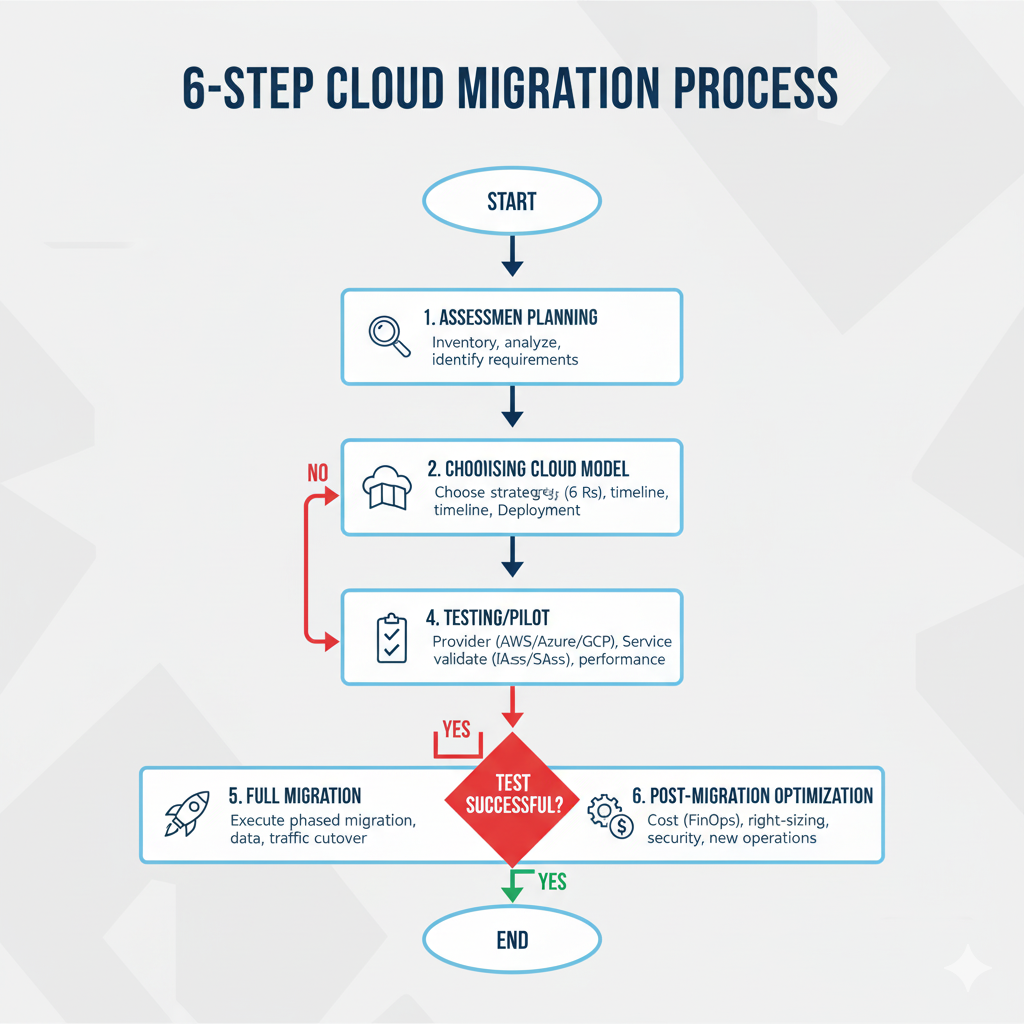
Successfully migrating to the cloud requires more than just moving data and applications it demands a structured approach to ensure efficiency, security, and minimal disruption. Top cloud migration companies follow a step-by-step process to help businesses transition seamlessly.
1. Assessment of Existing Infrastructure
The first step involves a thorough evaluation of your current IT environment. This includes identifying critical applications, data dependencies, and potential bottlenecks. A detailed assessment allows the migration partner to design a strategy tailored to your organization’s needs and goals.
2. Migration Planning and Strategy
Once the assessment is complete, the provider develops a comprehensive cloud migration strategy. This roadmap defines timelines, identifies which applications should be lifted-and-shifted or re-architected, and sets expectations for downtime and resource allocation.
3. Choosing the Right Cloud Model
Depending on business requirements, organizations may select public, private, or hybrid cloud environments. Experienced providers ensure the chosen model aligns with performance, security, and compliance objectives.
4. Testing and Pilot Migration
Before moving the entire infrastructure, pilot migrations are conducted to validate processes, detect potential issues, and fine-tune configurations. This step reduces risk and ensures a smoother full-scale migration.
5. Full-Scale Migration
With testing complete, the provider executes the complete migration. Using best practices and automation tools, data, applications, and workloads are transferred efficiently, minimizing downtime and operational impact.
6. Post-Migration Support and Optimization
After migration, continuous monitoring and optimization are crucial. Cloud migration services include performance tuning, cost optimization, and integrating cloud-native features such as AI or analytics capabilities. This ensures the business fully realizes the benefits of the cloud environment.
By following this structured approach, businesses can maximize the ROI of their cloud investment while reducing risk. Partnering with a reliable cloud migration solutions provider like ONEXT DIGITAL guarantees expertise at every stage of the journey.
Challenges and Solutions in Cloud Migration

While migrating to the cloud offers significant benefits, businesses often face several challenges that can impact timelines, costs, and operational continuity. Understanding these hurdles and how top cloud migration companies address them is essential for a successful transition.
1. Minimizing Downtime
One of the biggest concerns during migration is downtime, which can disrupt business operations and affect customer experience. Experienced providers use advanced planning, automation tools, and phased migration strategies to ensure minimal disruption, allowing critical workloads to remain operational throughout the process.
2. Ensuring Data Security and Compliance
Moving sensitive data to the cloud introduces potential security and compliance risks. Leading cloud migration services implement robust encryption, access controls, and compliance frameworks such as GDPR, HIPAA, or ISO standards to protect data and ensure regulatory adherence.
3. Managing Costs Effectively
Unexpected costs can arise from inefficient migration processes or underoptimized cloud usage. Top providers conduct detailed cost analysis and ongoing optimization, helping businesses achieve long-term financial efficiency while leveraging scalable cloud infrastructure.
4. Handling Complex Applications and Workloads
Some legacy applications may not be cloud ready or require rearchitecture. Cloud migration solutions experts assess each application’s architecture and dependencies, recommending the appropriate approach lift and shift, replatforming, or refactoring to ensure smooth functionality post-migration.
5. Change Management and Staff Training
Transitioning to the cloud often requires changes in workflows and IT management. Providers support organizations by offering training, documentation, and guidance to ensure teams can operate effectively in the new environment.
By proactively addressing these challenges, the right cloud migration company not only ensures a seamless transition but also enables organizations to fully capitalize on the benefits of cloud computing, including improved scalability, enhanced security, and long-term cost savings.
Market Trends and Forecast for 2025
The global cloud migration services market is experiencing robust growth. According to Grand View Research, the market size was estimated at USD 16.90 billion in 2024 and is projected to reach USD 70.34 billion by 2030, growing at a compound annual growth rate (CAGR) of 27.8% from 2025 to 2030.
Market Share of Leading Cloud Platforms (Q2 2025):
- Amazon Web Services (AWS): 32% global market share
- Microsoft Azure: 23% global market share
- Google Cloud Platform (GCP): 10% global market share
These figures underscore the dominance of AWS and Microsoft in the cloud infrastructure market, with GCP holding a smaller yet significant share.
Cloud Migration Trends in Vietnam:
In Vietnam, the cloud services market reached USD 196 million in 2020 and is anticipated to grow at a CAGR of 18.8% up to 2026. While specific data for 2025 is not available, this trend indicates a growing adoption of cloud services among Vietnamese enterprises.
Emerging Technology Trends in Cloud Migration (2025):
- AI-ready Workloads: Organizations are increasingly migrating to cloud platforms that support artificial intelligence and machine learning applications to leverage data analytics and process automation.
- Serverless Computing: This approach minimizes costs and accelerates application deployment by eliminating the need for managing physical servers.
- Hybrid Cloud: Combining public and private cloud environments to optimize performance and security, offering greater flexibility for businesses.
- Edge Computing: Processing data closer to its source to reduce latency and enhance real-time application performance.
These technological advancements are shaping the future of cloud migration, enabling businesses to achieve greater scalability, efficiency, and innovation.
Conclusion
Selecting the right cloud migration partner is essential for a smooth, secure, and cost-efficient move to the cloud. The right provider not only minimizes downtime and mitigates risks but also enables your business to fully harness advanced cloud technologies such as AI-ready workloads, serverless architectures, hybrid cloud, and edge computing.
To unlock the full potential of cloud migration and accelerate your digital transformation, don’t go it alone. Reach out to a certified cloud migration provider today for a personalized consultation, or download our free guide/ebook to discover proven strategies, best practices, and practical tips for a successful migration.
Your journey to the cloud starts with the right partner – take the first step today!
FAQs About Cloud Migration Services: Common Questions
1. How long does cloud migration take?
The duration of a cloud migration depends on your system size, data volume, and application complexity. Small projects may take a few weeks, while enterprise-level migrations can last several months. Using a phased migration strategy helps reduce downtime and risks.
2. What is the average cost of cloud migration services?
Costs vary depending on data volume, application complexity, and the chosen cloud migration provider. Small to medium businesses typically spend $10,000-$50,000, while large enterprises may incur hundreds of thousands of dollars. Partnering with an experienced provider ensures cost efficiency and long-term savings.
3. Do we need to stop operations during cloud migration?
Not usually. Reliable cloud migration services use phased migration, data replication, and pilot testing to keep applications running. Only highly complex legacy systems may require short downtime.
4. How do I choose the right cloud model for my business?
Selecting a cloud model depends on business goals, security needs, performance, and budget:
- Public Cloud: Cost-effective and scalable for non-sensitive workloads.
- Private Cloud: Secure and controlled, suitable for sensitive data or compliance requirements.
- Hybrid Cloud: Flexible for complex or legacy systems.
5. What are common challenges during cloud migration?
Key challenges include downtime, data security, regulatory compliance, and migrating legacy applications. Top cloud migration providers use automation and structured planning to overcome these issues.
6. How can we ensure a successful cloud migration?
A successful migration requires careful assessment, strategic planning, choosing a trusted cloud migration partner, testing before full deployment, and post-migration optimization to maximize performance and ROI.