
 Services
 Solutions
 Main platform
 Technology
 White Label
  Offshore
 Hire developers



Understanding web portal development cost is one of the first and most important steps before launching a successful digital project. Many businesses set out to build a portal expecting a clear price tag, only to discover that the actual cost can range anywhere from a few thousand dollars to more than $70,000, depending on the project’s scale and complexity. This wide gap often leaves decision-makers wondering what really drives those numbers and which factors are quietly influencing their budget.
The truth is, there’s much more to web portal development than just coding and design. The technology stack you choose, the expertise of your development team, the level of customization, integration needs, scalability, and even post-launch maintenance all play crucial roles in shaping the final cost.
In this article, we’ll uncover the hidden factors that impact web portal development cost in 2025. You’ll gain a clearer understanding of where your money goes, how to optimize your spending, and what to consider before starting your next portal project ensuring every dollar of your investment counts.
What Is a Web Portal and Why Does It Matter?
Before exploring web portal development cost, it is important to understand what a web portal is and why it matters in today’s digital world. A web portal is an online platform that brings together information, tools, and services from different sources into one unified space. It allows users such as customers, employees, or business partners to access personalized content and perform various tasks easily through a single interface.
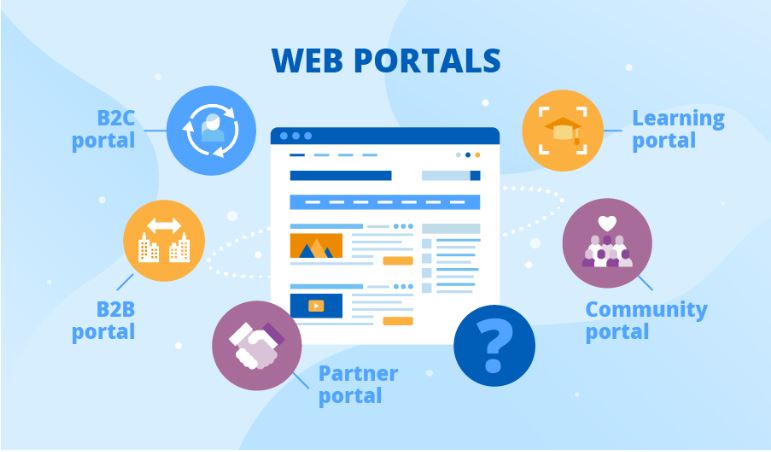
Businesses use web portals for many purposes to improve internal communication, enhance customer engagement, automate workflows, and manage data more effectively. Whether it is a customer portal, employee platform, vendor system, or eCommerce portal, each type is designed to streamline interactions and improve efficiency.
A well-built web portal can boost productivity, strengthen customer relationships, and increase brand value. However, creating a functional and scalable portal requires thoughtful planning, the right technology, and an experienced development team. All these factors play a crucial role in shaping the overall web portal development cost.
Key Factors That Influence Web Portal Development Cost
The cost of developing a web portal is shaped by many factors, each contributing to the final budget in different ways. Understanding these elements helps you make informed decisions and plan your resources effectively before starting the project.
1. Project scope and complexity
The larger and more complex your portal is, the higher the cost will be. A simple portal with basic features like user login, dashboards, or contact forms requires less effort. In contrast, a portal with advanced functions such as real-time analytics, multi-user roles, or third-party integrations demands more development time and expertise.
2. Design and user experience
A well-designed, intuitive interface attracts users and keeps them engaged. However, achieving a high-quality user experience often requires professional UI and UX designers, which increases development costs. Custom animations, responsive layouts, and accessibility features also add to the budget.
3. Technology stack
The choice of programming languages, frameworks, and hosting solutions directly affects both cost and performance. Modern technologies like React, Node.js, or Laravel may offer scalability and flexibility but often require skilled developers, influencing the hourly rate.
4. Team composition and location
Hiring an experienced team that includes developers, designers, testers, and project managers ensures better results but also impacts your budget. Rates can vary greatly depending on the team’s location for example, development in Southeast Asia may cost less than in North America or Europe.
5. Maintenance and post-launch support
After the portal is launched, regular updates, performance optimization, and security monitoring are necessary to keep it running smoothly. These ongoing services add to the total web portal development cost over time.
By understanding these key factors, you can better estimate your budget and choose a development approach that aligns with your business goals.
Hidden Costs That Often Go Unnoticed

While businesses usually plan for obvious development costs, there are several hidden factors that can quietly inflate your web portal budget. Overlooking these can lead to unexpected expenses that impact ROI. Here’s a deeper look at the most common hidden costs:
1. Software Licensing and Third-Party Services
Beyond initial development, many portals rely on paid plugins, frameworks, or APIs to function efficiently. For example:
- Integrating a payment gateway like Stripe or PayPal can include transaction fees of 2-3% per transaction, which accumulate over time.
- Using enterprise software such as Salesforce, HubSpot, or SAP for CRM or analytics may cost $1,000-$5,000 per year per license.
These recurring fees are often underestimated in the initial budget and can represent 10-15% of total operational costs annually.
2. Employee Training and Change Management
Launching a new portal often requires employees to adapt to new workflows and tools. Without proper training, efficiency drops and mistakes increase. For instance:
- A company deploying an internal HR portal might spend $3,000-$8,000 on workshops, tutorials, and manuals.
- Medium to large enterprises may also need change management programs to ensure adoption across departments.
Neglecting training can indirectly increase costs through productivity loss and support tickets.
3. Downtime and Unexpected Maintenance
Even with careful planning, portals can experience server outages, bugs, or critical system failures. According to Gartner:
- The average IT downtime costs businesses $5,600 per minute, with critical systems potentially costing tens of thousands per hour.
- Planning for redundancy, monitoring tools, and emergency support adds upfront and recurring costs but prevents costly disruptions.
4. Compliance, Security, and Data Privacy
Web portals that handle sensitive data must comply with industry regulations such as GDPR, HIPAA, or local data privacy laws. Hidden costs in this area include:
- Security audits, penetration testing, and encryption implementation.
- Hiring legal or IT compliance consultants.
- Potential fines for non-compliance, which can range from $10,000 to several hundred thousand dollars.
Skipping compliance considerations may seem like a short-term saving but can lead to catastrophic long-term costs.
5. Ongoing Content Updates, Feature Enhancements, and UX Improvements
A web portal is never truly static; it evolves with user feedback, market trends, and technology upgrades. Common hidden costs include:
- Adding new modules, such as analytics dashboards, AI search, or e-commerce features, which can cost $5,000-$20,000 depending on complexity.
- Continuous UX/UI enhancements to improve engagement.
- Updating content and integrations to stay relevant.
Ignoring these ongoing needs can reduce the portal’s value and lead to higher redesign costs in the future.
Hidden costs can easily account for 10-30% of the total web portal budget. Early identification and planning for these factors not only prevents budget overruns but also ensures the portal remains scalable, secure, and effective long-term.
Estimated Web Portal Development Cost by Type and Features
The web portal development cost can vary widely depending on the type of portal you want to build and the level of functionality it requires. Each business has unique needs, so it is important to understand how different portal types affect overall pricing.
1. Basic informational portals
These portals focus on delivering essential information, such as company updates, articles, and contact details. They usually include simple navigation, a content management system, and a user-friendly interface. The cost for developing such portals typically ranges from $2,000 to $10,000.
2. Mid-level business portals
This category includes portals for small to medium-sized businesses that need interactive features like user registration, dashboards, data integration, or internal communication tools. With more design customization and dynamic functionality, these portals usually cost between $10,000 and $50,000.
3. Advanced enterprise portals
Large organizations often require enterprise-grade portals that integrate multiple systems and support heavy traffic, complex workflows, and real-time analytics. These portals may include role-based access, eCommerce modules, and API connections with third-party software. Development costs for such solutions generally start at $50,000 and can exceed $100,000 depending on the level of complexity.
4. Custom-built portals with unique features
Some businesses need highly tailored portals designed for specific industries, such as healthcare systems, learning management platforms, or B2B marketplaces. These projects require extensive planning, advanced security, and scalable infrastructure. Their costs can vary greatly based on custom requirements and development time.
Ultimately, the more features and integrations your portal includes, the higher the web portal development cost will be. The key is to balance functionality and budget focus on essential features first, then expand as your business grows.
To help you visualize these cost differences more clearly, here’s a quick summary of estimated web portal development costs by type and features:
| Portal Type | Key Features | Estimated Cost Range (USD) | Best For |
|---|---|---|---|
| Basic Informational Portal | Company info, news, content updates, contact forms | $2,000 – $10,000 | Small businesses, startups |
| Mid-Level Business Portal | User registration, dashboards, internal tools, simple integrations | $10,000 – $50,000 | SMEs, service-based companies |
| Advanced Enterprise Portal | Role-based access, analytics, automation, API connections | $50,000 – $100,000+ | Large enterprises and organizations |
| Custom Industry Portal | Specialized workflows, strong security, high scalability | $80,000 – $150,000+ | Healthcare, education, B2B sectors |
By understanding these cost tiers, you can better align your budget with your business goals and choose the right development approach from the start.
How to Optimize Your Web Portal Development Budget
Building a web portal is a significant investment, but there are several strategies to optimize your budget without compromising quality or functionality. Careful planning and smart decisions at each stage can help you control costs while ensuring a portal that meets your business needs.
1. Define clear objectives and priorities
Start by identifying the main goals of your portal and the features that are essential for your users. Focus on core functionalities first and avoid adding non-critical features at the beginning. This approach helps reduce development time and cost while delivering immediate business value.
2. Choose the right technology stack
Selecting technologies that are scalable, maintainable, and supported by your development team can prevent costly revisions later. Open-source frameworks or cloud-based solutions can offer flexibility and lower initial costs, while still supporting future growth.
3. Work with an experienced team
Hiring skilled developers, designers, and project managers ensures efficient workflows and fewer mistakes during development. Experienced teams can often anticipate challenges and recommend cost-effective solutions, saving both time and money in the long run.
4. Plan for scalability and maintenance
Building a portal that can grow with your business helps avoid expensive redesigns in the future. Consider long-term maintenance, security updates, and performance optimization as part of your initial budget.
5. Use an iterative development approach
Instead of developing the entire portal at once, break the project into smaller phases or modules. This allows you to test and launch core features first, gather user feedback, and gradually add advanced functionalities. Phased development can prevent overspending and reduce the risk of unnecessary features.
By applying these strategies, you can optimize your web portal development cost, ensuring that your investment delivers maximum value for your business. Smart planning, clear priorities, and collaboration with an experienced team are key to building a portal that is both cost-effective and highly functional.
Conclusion
Understanding the web portal development cost is essential for businesses looking to establish a strong digital presence. Costs vary widely depending on portal type, complexity, features, technology, and team composition. By identifying your core objectives, prioritizing essential features, and working with an experienced development team, you can manage your budget effectively while building a portal that delivers real value.
A well-planned web portal not only streamlines operations and enhances user experience but also supports long-term growth and scalability. By considering hidden cost factors and optimizing each stage of development, businesses can avoid unexpected expenses and make informed investment decisions.
If you are ready to bring your web portal vision to life, ONEXT DIGITAL offers expert web portal development services tailored to your business needs. Our team helps you design, develop, and maintain portals that are cost-effective, scalable, and aligned with your goals.
Contact us today to discuss your project and discover the best solution for your budget and requirements.
FAQs About Web Portal Development Cost
1. How do integration requirements with existing enterprise systems affect development costs?
Integrating a web portal with ERP, CRM, or legacy databases can significantly increase complexity, requiring additional development hours, testing, and API management.
2. What role does security architecture play in influencing the total cost?
Designing robust security features such as multi-factor authentication, encryption, and intrusion detection adds to both development and long-term maintenance expenses.
3. How does portal scalability impact cost projections?
Portals designed to support thousands of concurrent users or high-volume transactions require more advanced architecture, cloud resources, and load testing, which increases initial investment.
4. To what extent do UI/UX customization and personalization influence expenses?
Custom dashboards, responsive layouts, accessibility features, and AI-driven personalization may substantially raise development costs due to additional design and front-end engineering effort.
5. How can choosing between on-premises and cloud hosting affect the budget?
On-premises solutions incur higher upfront infrastructure costs and maintenance, while cloud hosting often reduces initial investment but adds recurring subscription fees depending on traffic and storage requirements.
6. What hidden costs arise from regulatory compliance in different industries?
Industries like healthcare, finance, or education often require specialized data protection, auditing, and reporting. Ignoring these compliance measures can lead to fines or portal redesigns, indirectly inflating the total cost.