 Services
 Solutions
 Main platform
 Technology
 White Label
  Offshore
 Hire developers



Vietnam’s rise as a software outsourcing powerhouse is underpinned by government policies, investments in education, and ongoing infrastructure development. These factors have cultivated a skilled, competitive workforce, enabling Vietnam to rival giants like India and China in the outsourcing sector. Consistently ranking among the top 10 global software outsourcing providers, Vietnam has demonstrated its ability to meet and exceed international standards. Remote work is bringing big changes to Vietnam’s work culture. With good conditions and modern ways of managing employees, Vietnam is becoming a strong choice for attracting talent and adapting to remote work.
Growth of the IT Industry in Viet Nam Overview
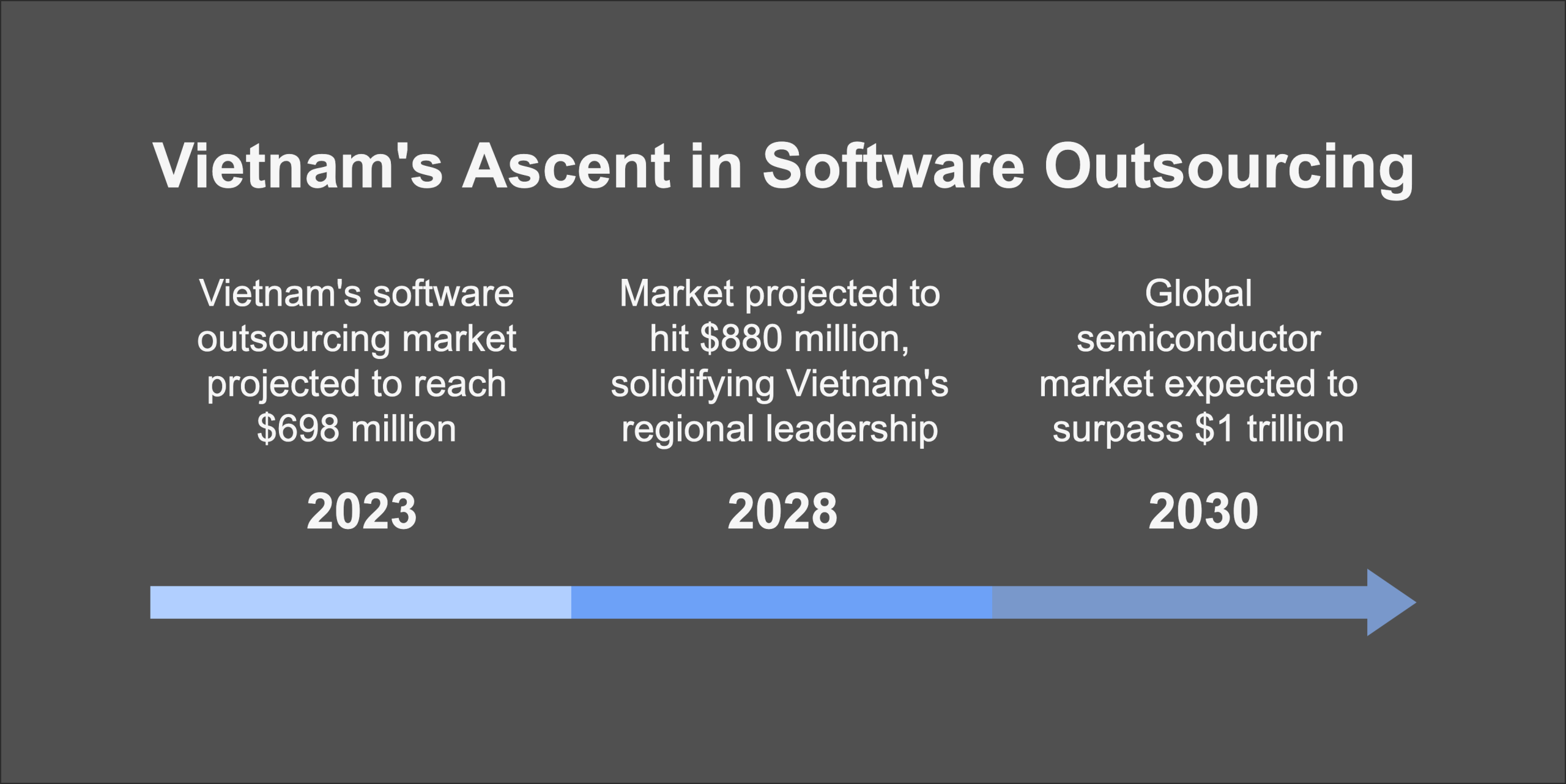
Vietnam’s software outsourcing industry has become a key economic driver, generating hundreds of millions of dollars annually. According to Statista, the market is projected to reach $698 million this year, growing at an impressive annual rate of 16.38%. At this pace, it could hit $880 million by 2028, positioning Vietnam as a leading outsourcing destination in the region.
Vietnamese IT engineers are particularly valued for their adaptability and proficiency with new technologies. Despite their salaries being roughly 1/10 of the global average, they deliver high-quality work, giving Vietnam a unique competitive edge.
Why Businesses Are Building Their Remote Tech Teams In Vietnam
The growth of remote work, combined with increasingly strict visa regulations, creates significant opportunities for businesses to tap into remote talent in emerging economies to meet their workforce needs. With over half of its population under age 35, Vietnam is emerging as Southeast Asia’s next growth story, establishing itself as a talent hub with a highly skilled, well-connected, and cost-effective remote workforce.

1. The Rapid Growth and Strong Ecosystem of the IT Industry
2. Competitive Edge of Vietnamese Developers: Youthful Energy and Global Work Ethic
Vietnam’s developer workforce is increasingly shaped by Gen Z and Millennials, with 28.8% of developers aged 20-24 and 29.3% aged 25-29. This younger generation brings strong digital skills, flexibility, and a willingness to embrace new technologies, creating a fresh and modern work culture in Vietnam’s IT industry. Gen Z-Y developers, in particular, focus on balancing work and life, maintaining a healthy lifestyle, and valuing honesty and transparency at work. They seek meaningful involvement in business processes and highly value opportunities for personal and professional growth.
Vietnamese developers have also gained valuable experience working in multinational teams. As Vietnam’s IT outsourcing industry attracts more international clients, developers are adapting quickly to global work cultures, improving their collaboration, communication, and cultural sensitivity. Many Vietnamese developers, especially Gen Z, are proficient in English and are learning other languages like Japanese, Korean, and Chinese. This multilingual ability helps them communicate effectively and overcome language barriers in international projects.
These qualities make Vietnamese developers a strong asset for companies looking to expand globally or tap into Vietnam’s growing IT talent pool. Their technical skills and ability to work across cultures make them ideal for businesses seeking adaptable, innovative, and globally-minded professionals.
3. Government Policies and Support for IT Workforce
The Vietnamese government has played a key role in developing a skilled IT workforce through strategic policies and investment in education and training. By partnering with universities, the government ensures updated curricula in fields like software engineering, AI, and data science, while offering scholarships and technical training programs. High-tech parks in cities like Hanoi and Ho Chi Minh City provide innovation hubs with tax incentives and infrastructure support, attracting global tech firms.
Continuous learning initiatives, such as upskilling in emerging technologies and language training, further enhance workforce capabilities. Programs like the “Make in Vietnam” strategy and the National Digital Transformation Program foster local innovation and create more opportunities for IT professionals. These efforts have significantly expanded Vietnam’s IT talent pool, making the country a competitive destination for global tech investments and outsourcing.
3. Problem-solving, Creative Thinking, and Technical Expertise
Developers in Vietnam not only stand out for their creativity and problem-solving abilities but also possess high skills in various programming languages, including Java, ASP .NET, PHP, Golang, JavaScript, and Python. They stay up-to-date with the latest technologies such as blockchain, AI/ML, and data analytics. Whether it’s developing custom APIs, improving system performance, or integrating new backend technologies, Vietnamese developers bring fresh ideas and innovative approaches to tackle your challenges. Their ability to think outside the box can be the key to building the next big solution for your business.
Things to Know Before Hiring Remote Workers in Vietnam

- Culture and Characteristics of Vietnamese Workers
Vietnamese workers are known for being smart, hardworking, and eager to learn. They adapt quickly to new work environments and challenges. Career growth is a strong motivator, and many Vietnamese employees are willing to work extra hours or handle pressure to reach their professional goals.
Culturally, Vietnam is influenced by Confucian values, which emphasize respect for hierarchy. Employees often show great respect for older people or those in higher positions and usually avoid openly disagreeing with their managers. A smile or saying “yes” might only mean they acknowledge what you’re saying, not necessarily that they agree. It’s important to pay attention to any hesitation to build clear and effective communication.
The concept of “saving face” is very important in Vietnamese culture and helps prevent misunderstandings, especially with Western colleagues. Building trust and relationships outside of work is highly valued and can improve teamwork and collaboration. Companies often set aside budgets for team dinners, drinks, or team-building activities. Taking time to have friendly conversations, share personal stories, and learn about your Vietnamese remote workers can strengthen your relationship with them.
This approach also works with clients and business partners. Business deals are more likely to succeed after social activities like dinners, drinks, or other entertainment events
2. Employment Laws and Termination
Vietnamese labor law requires reasonable notice and legal grounds for termination. Unilateral termination by employers is restricted. In most cases, mutual agreement between the employer and employee is necessary for termination to comply with statutory requirements.
3. Understanding of Specific Programming Skills
The primary requirement for your remote developers is a strong grasp of specific programming skills. They should be individuals who enjoy exploring new technologies and keeping up with industry advancements. This helps in finding developers who are passionate about their work and possess the necessary technical expertise to handle any project with confidence.
4. Salaries and Benefits
Salaries in Vietnam are lower than in countries like India or China, while the quality of talent remains high. Additional benefits typically account for 10-15% of base salary, including health insurance, Tet bonuses (often a 13th-month salary), and allowances for work equipment (e.g., laptops) or co-working spaces. Employees often negotiate for additional leave days (beyond the 12-day minimum under labor law) and value team-bonding activities like company outings or team-building events.
5. Public Holidays
Vietnam has 11 official public holidays, including the week-long Tet Lunar New Year celebration. This is the most significant holiday when workers usually reunite with their families.
Why Hire Vietnamese Remote Developers from an Agency?
Hiring remote developers from an agency is becoming a popular choice due to its numerous advantages over direct hiring or working with freelancers. It not only helps businesses save costs but also ensures quality, minimizes risks and boosts productivity. Here are five compelling reasons supported by specific statistics.
1. Guaranteed Quality and Expertise
According to a report by Glassdoor, hiring through an agency can reduce recruitment time by 30% and increase work efficiency by 40% due to the high-quality talent provided. Agencies have rigorous screening and skill evaluation processes to ensure they provide only highly skilled and experienced developers. These developers are typically well-trained and have worked on various projects, giving businesses confidence in their quality of work.
According to a report by Glassdoor, hiring through an agency can reduce recruitment time by 30% and increase work efficiency by 40% due to the high-quality talent provided.
Working with an agency also allows businesses to access a multi-skilled team, covering everything from backend and frontend development to specialized areas like Artificial Intelligence (AI), blockchain, and DevOps.
3. Easy Scalability
One of the biggest advantages of working with an agency is the ability to scale your team flexibly. Businesses can quickly increase or decrease the number of developers based on project needs without worrying about long-term contracts or staffing risks. A Statista report shows that 56% of businesses prefer hiring through agencies for the flexibility they offer in managing their workforce.
This is especially beneficial for short-term projects, product testing phases, or when there’s an urgent need for experts to meet tight deadlines.
4. Enhanced Security and Risk Mitigation
Agencies offer clear contractual terms covering legal responsibilities, quality commitments, and data security. This reduces risks related to intellectual property rights and misuse of project information—common concerns when working with individual freelancers. According to a survey by Upwork, 48% of businesses worry about security issues when working with freelancers, while partnering with agencies lowers this risk to just 12%.
Moreover, agencies typically implement strict security measures such as data encryption, access control, and non-disclosure agreements (NDAs), providing businesses with greater peace of mind when sharing sensitive information.
5. Comprehensive Support and Advanced Technology
Hiring through an agency provides developers access and includes support services like project management, maintenance, and product upgrades post-launch. This ensures smooth operations and long-term quality assurance. A Forrester study revealed that projects managed by agency teams are 30% more likely to be completed on time compared to freelancers or in-house teams.
Additionally, agencies often have experience in various cutting-edge technologies like IoT, fintech, e-commerce, and healthcare, enabling them to deliver optimal and innovative solutions for your projects.
Conclusion
Hiring remote developers from an agency offers many advantages, including guaranteed quality, cost savings, flexibility in workforce management, and reduced risks. With pre-vetted talent, comprehensive support, and robust security measures, this is an ideal solution for businesses looking to optimize their software development processes while ensuring efficiency.
Choosing an agency is the fastest way to turn your ideas into fully realized, high-quality products delivered on time.